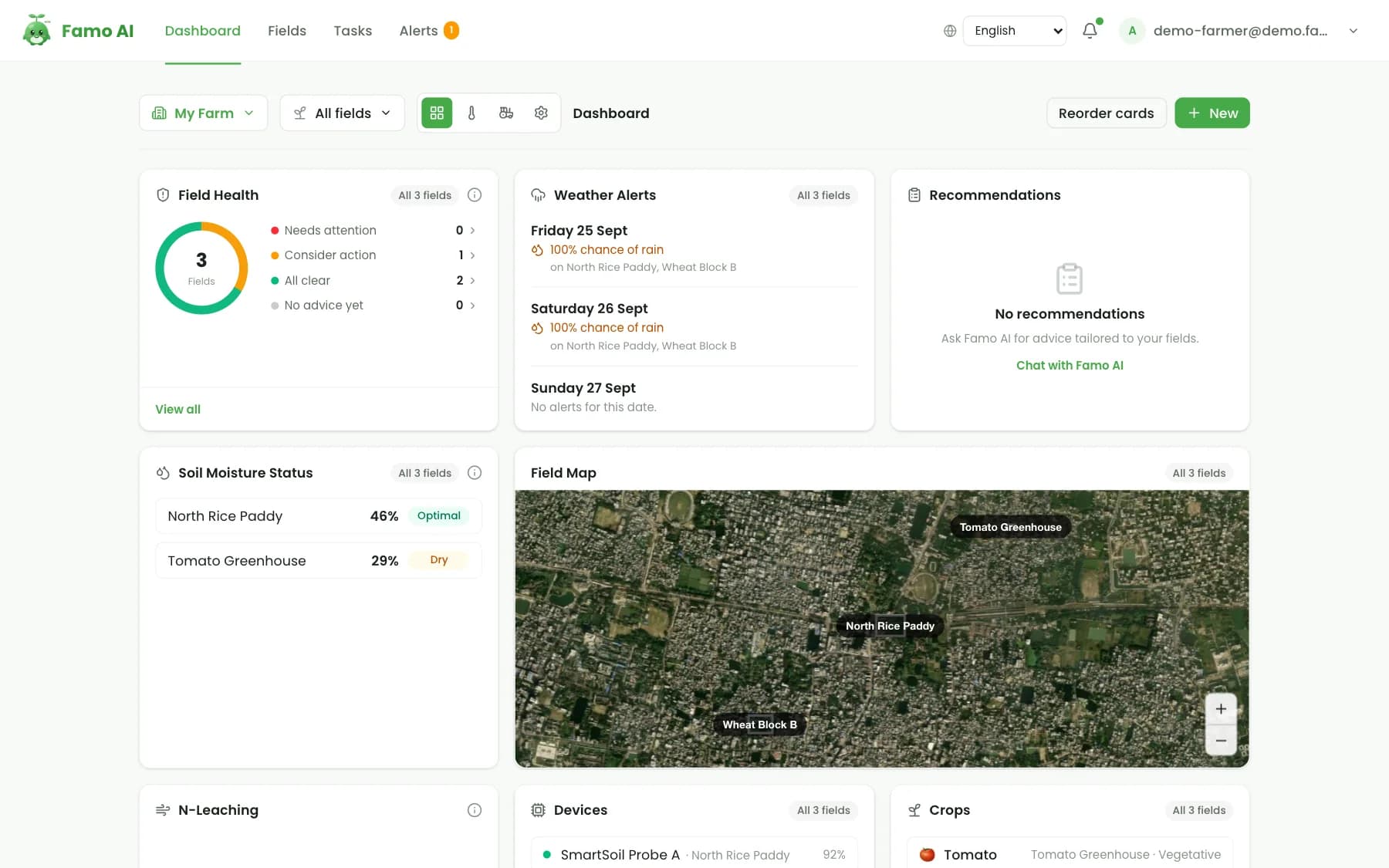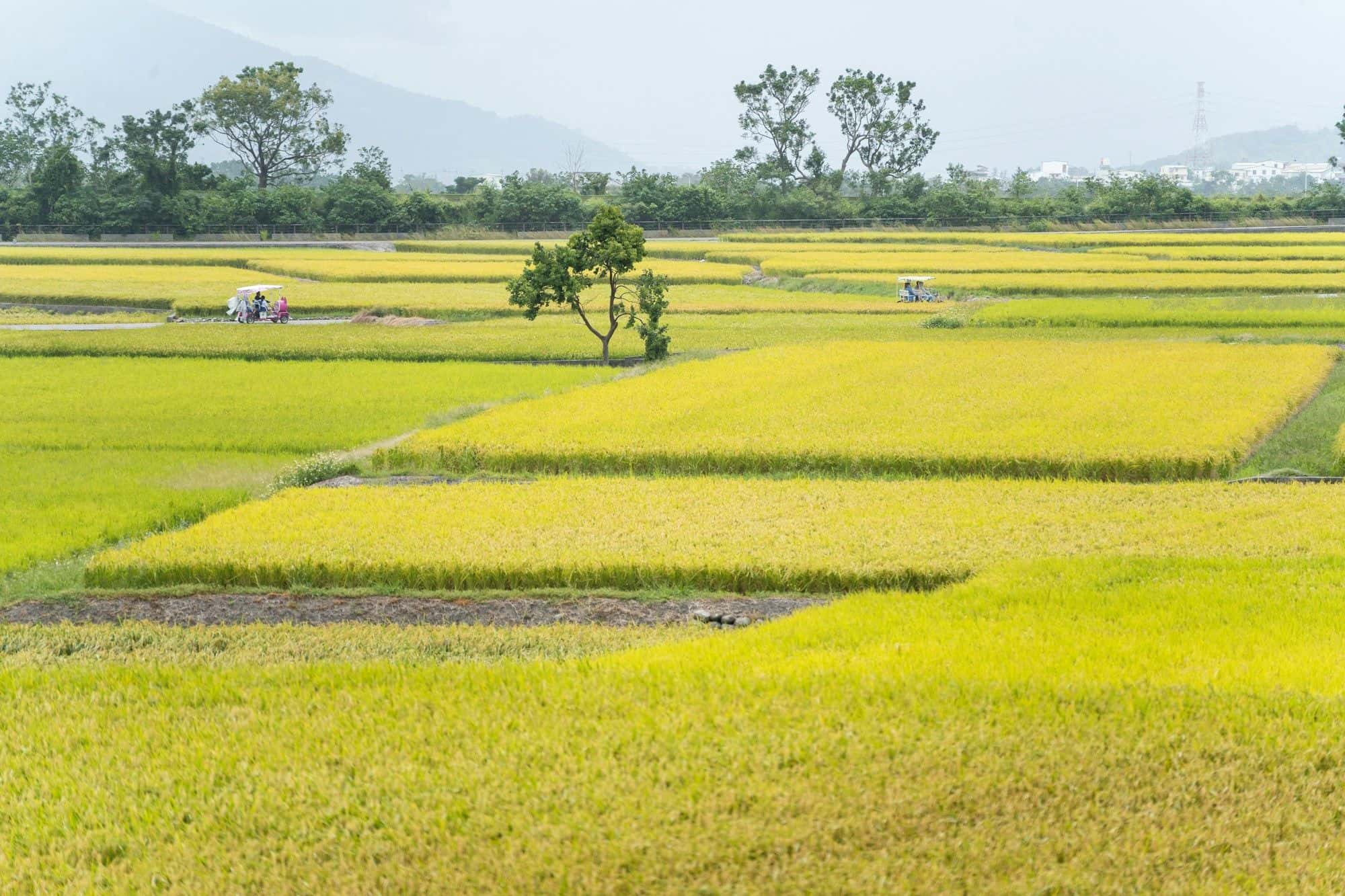
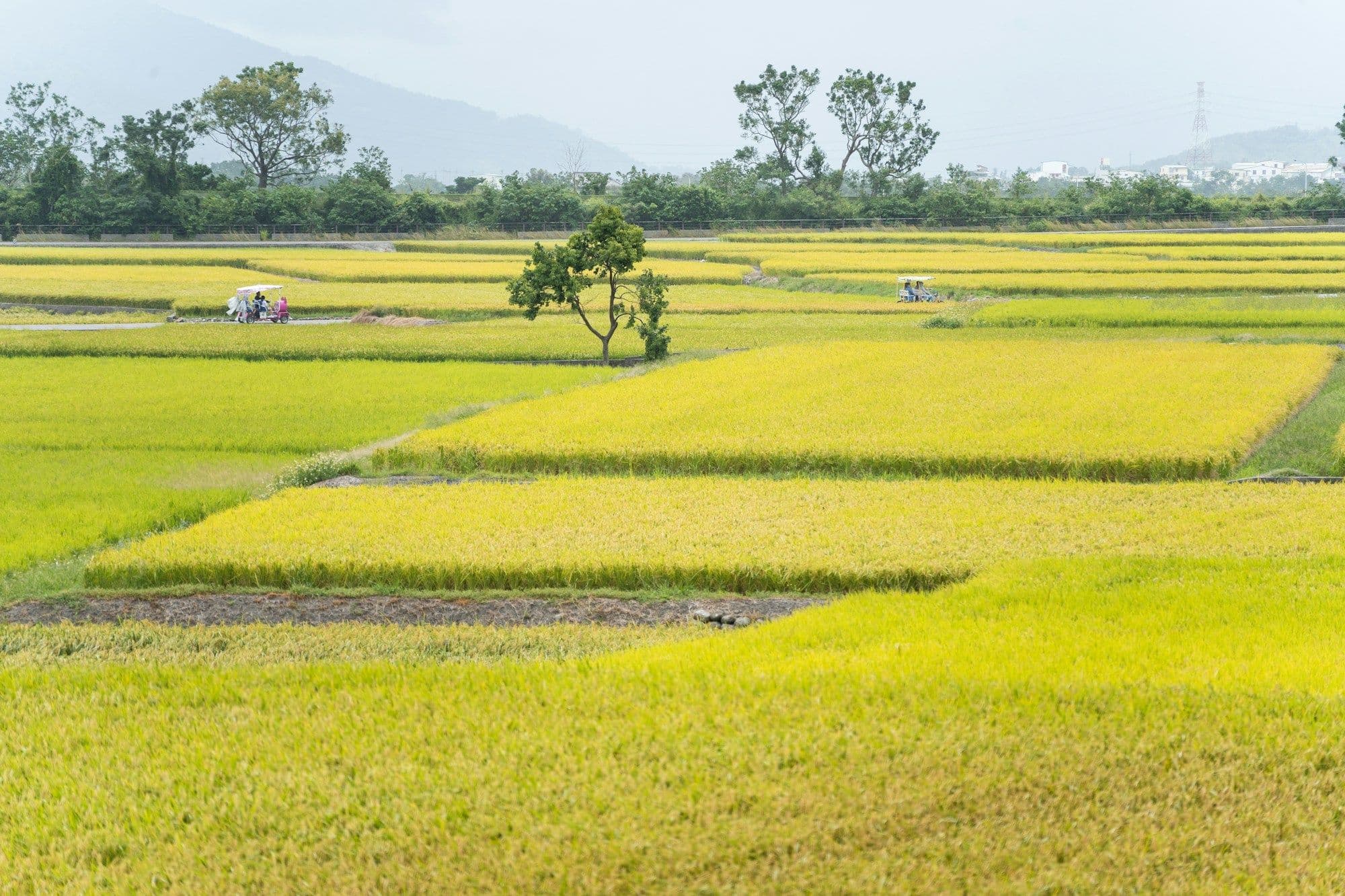
Picture a farmer standing in a rice field at noon, hands muddy, phone in a pocket. They have noticed yellowing leaves along one edge. They are not going to type a long question into an app — and they may not read English, or read comfortably at all. They need to ask, out loud, in their own language, and hear an answer that is about their field.
That is the situation Famo AI was designed for.
Voice-first, not voice-also
Many apps add a microphone button as an afterthought. Famo was designed the other way round: talking is the main way in.
- Ask out loud. Tap Famo and speak naturally: "Why are the leaves turning yellow on my east field?" or "Should I irrigate before the rain?"
- Hear the answer. Famo replies in a natural spoken voice, in the same language, and shows the text as well.
- Interrupt and follow up. Tap Famo to stop it mid-sentence, then ask the next question — like a conversation with an agronomist walking beside you.
- Your own tasks, read aloud. In the morning, Famo can read out today's plan: which field to irrigate, which to scout.
Twelve languages
The Famo app, the farmer dashboard and the website are available in 12 languages:
| Language | Script / notes |
|---|---|
| English | |
| Chinese (中文) | Simplified |
| Japanese (日本語) | |
| Bangla (বাংলা) | |
| Hindi (हिन्दी) | |
| Urdu (اردو) | Right to left |
| Punjabi (پنجابی) | Pakistani Punjabi, Shahmukhi script, right to left |
| Arabic (العربية) | Right to left |
| Portuguese (Português) | Brazilian Portuguese |
| Dutch (Nederlands) | |
| French (Français) | |
| Bulgarian (Български) |
This is not just a translated menu. The crop plans, stage guidance, fertiliser and pest advice, alerts and notifications that come from Famo's agronomy data are translated too, so a farmer who chooses Urdu or Portuguese sees and hears the whole experience in that language. Right-to-left languages are laid out right to left throughout.
A farmer's language choice follows them: set it once, and the app, the dashboard and Famo's answers all use it.
Answers about your farm, not a generic guide
A voice assistant is only as good as what it knows. When a farmer asks Famo a question, the answer is grounded in that farmer's own data:
- the crops in each field and their current growth stage,
- the latest soil readings against the crop's targets,
- satellite health and stress zones,
- the weather forecast for that field,
- recent crop-health scans and open alerts.
So "Do I need fertiliser?" gets an answer based on the last soil test of that field and the crop's stage — not a paragraph from a textbook.
Made for weak signal
Rural connectivity is patchy. Famo keeps its core features — fields, tasks, readings and scans — working offline and syncs when the connection returns. Voice answers need a connection, so Famo is designed to keep exchanges short and clear.
Who benefits most
- Farmers with limited literacy, who can now use expert advice without reading.
- Farmers who speak a regional language, who no longer have to translate in their head.
- Older farmers who find small text and complex menus hard.
- Busy farmers whose hands are full, who would rather ask than type.
- Extension workers and cooperatives, who can support farmers across a district in the languages those farmers actually speak.
Privacy
Farmers own their data. Questions and answers are used to help that farmer, and organisations see only what a farmer chooses to share.
Try talking to Famo
Download Famo AI on Google Play, choose your language on the first screen, and tap Famo to ask your first question. To see how Famo's answers are produced, read how Famo AI works. For larger farms and indoor growers, Famo's voice advisor is also part of Famo Open Field, Famo Controlled Field and Famo Organic Farming.