"NPK" appears on every fertiliser bag, but what do the three letters mean for your field? This guide explains nitrogen (N), phosphorus (P) and potassium (K) in plain language, and shows how to turn a soil test into a fertiliser plan that wastes less money.
In short
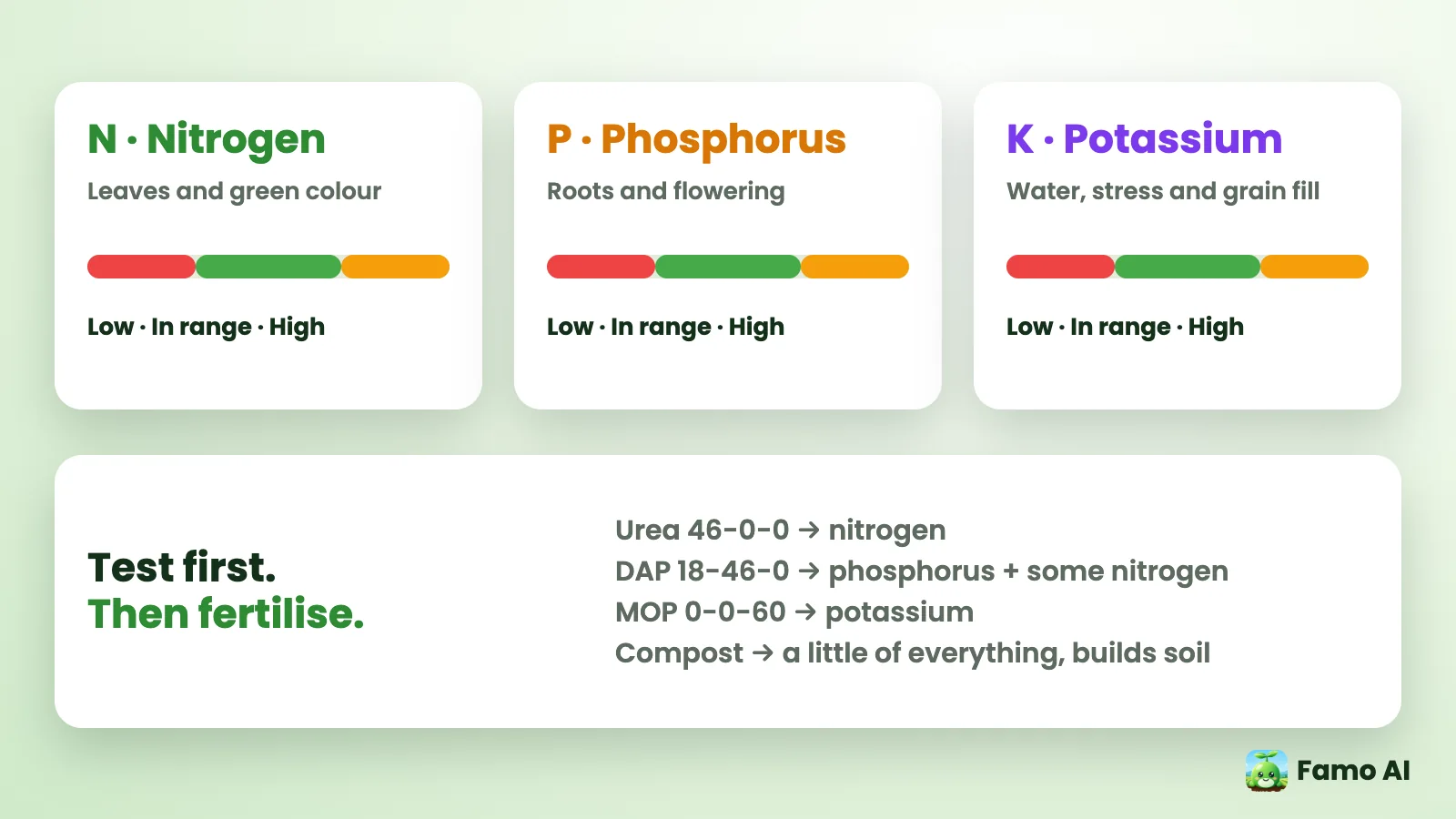
- Nitrogen (N) drives leafy growth and green colour.
- Phosphorus (P) supports roots, early growth and flowering.
- Potassium (K) helps the plant manage water, fight stress and fill grain or fruit.
- Read a result as low, in range or high for your crop, not as a number on its own.
- Do not guess a fertiliser rate. Use a test and your local agronomic advice.
What each nutrient does
| Nutrient | Role in the plant | Typical sign when short |
|---|---|---|
| Nitrogen (N) | Leaves, stems, protein, green colour | Older leaves turn pale yellow; slow, thin growth |
| Phosphorus (P) | Roots, early growth, flowers and seed | Stunted plants; dark green or purplish leaves |
| Potassium (K) | Water balance, stress and disease resistance, grain and fruit quality | Yellow or brown edges on older leaves; weak stems |
Deficiency signs can look like disease, drought or pH problems, so a soil test is the safest way to tell them apart.
How to read a soil test result
Soil test values are usually shown in ppm or mg/kg. The "right" amount depends on the crop and the lab method, so look at where your number sits against the target range.
| Result | What it means | What you usually do |
|---|---|---|
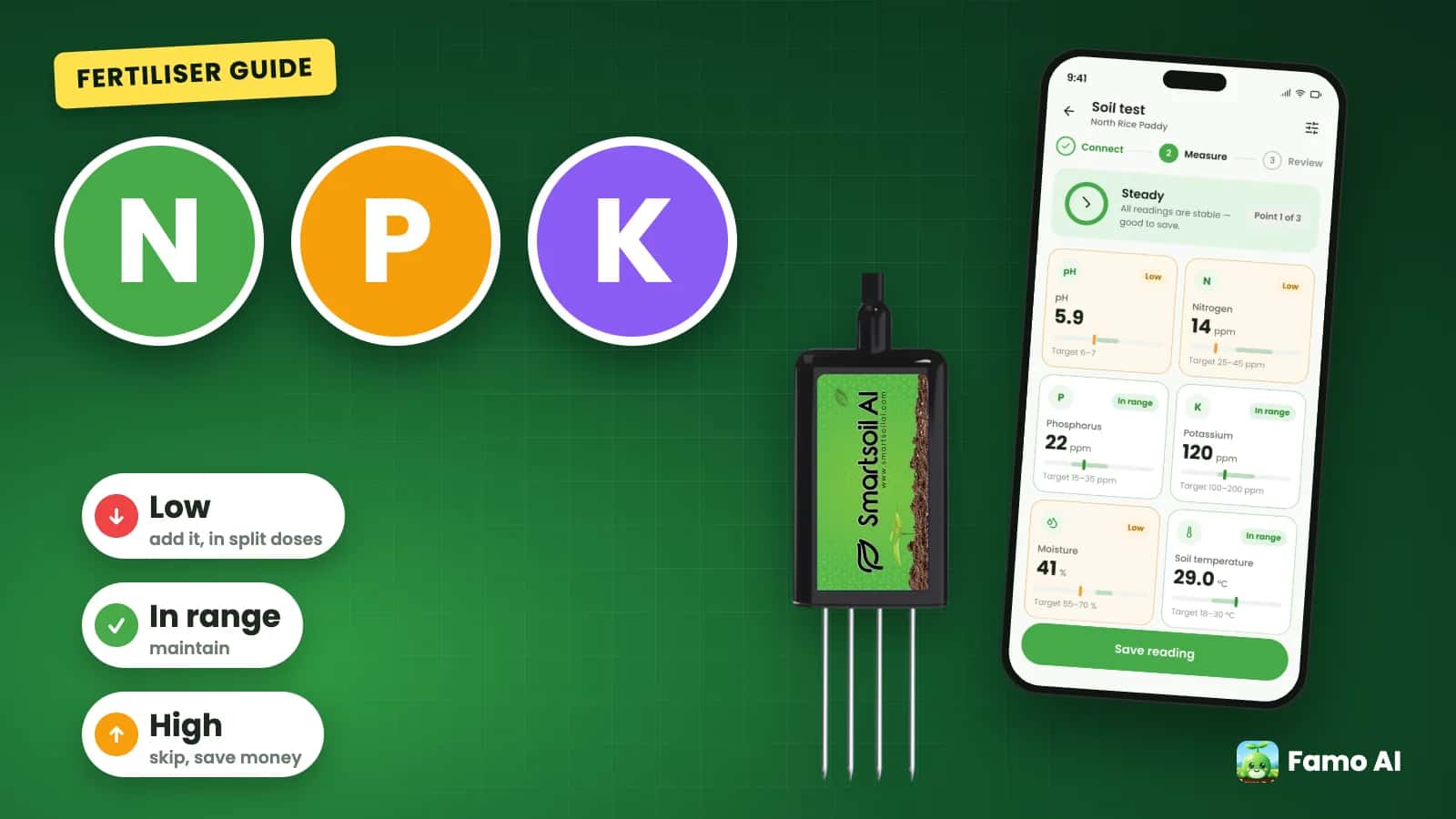
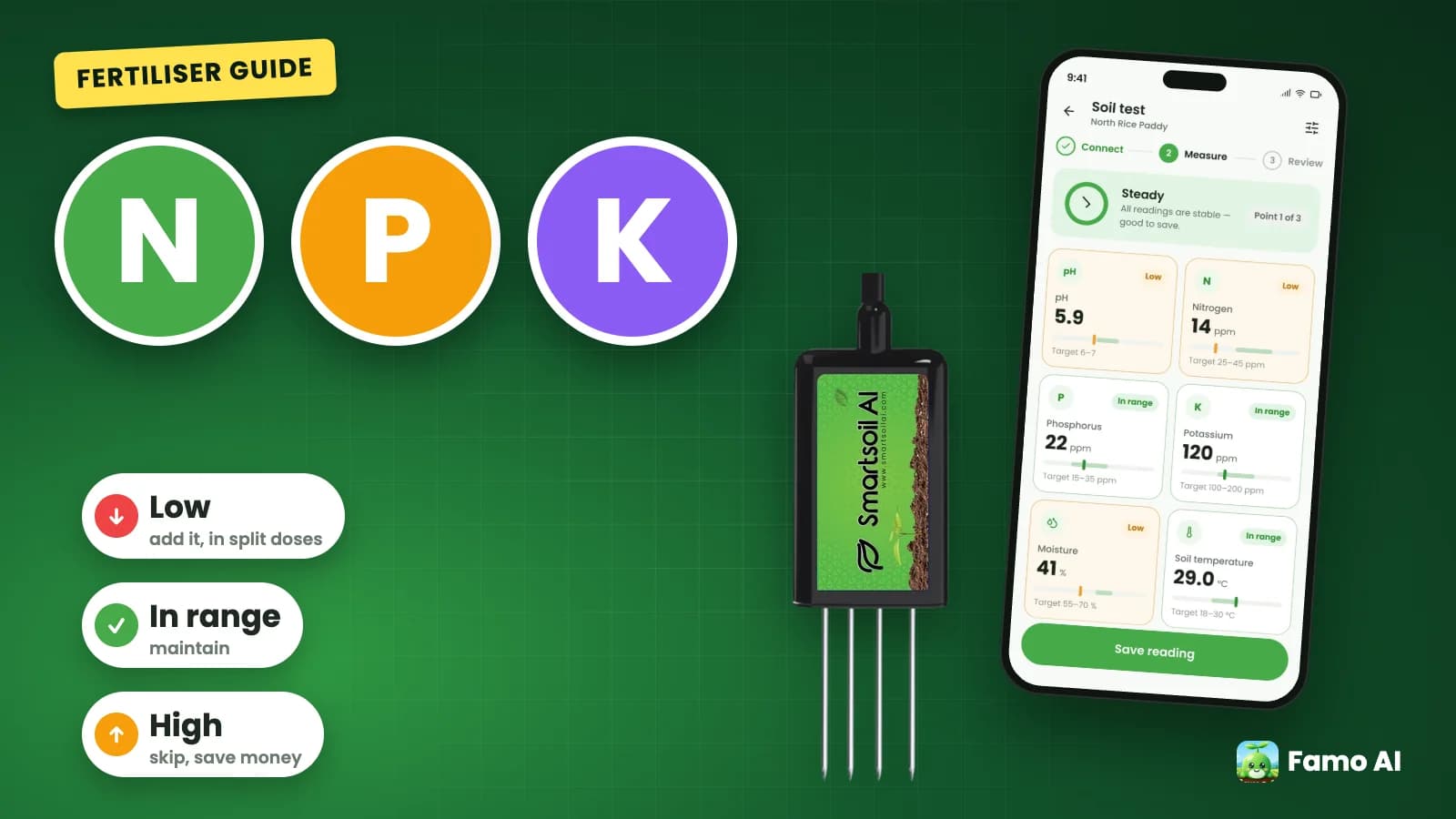
| Low | The soil cannot supply enough for a good crop | Plan to add the nutrient, and spread nitrogen across several applications |
| In range | Enough for now | Maintain: replace roughly what the crop will remove |
| High | More than the crop needs | Skip it. Extra can waste money and run off into water |
Match the fertiliser to the gap
Fertiliser bags show the percentage of each nutrient. Some familiar examples:
| Fertiliser | Approximate N-P-K | Mainly supplies |
|---|---|---|
| Urea | 46-0-0 | Nitrogen |
| DAP | 18-46-0 | Phosphorus and some nitrogen |
| MOP (potash) | 0-0-60 | Potassium |
| Compost or farmyard manure | low, varies | A little of everything, plus organic matter that improves soil |
Compost works slowly and builds soil health over seasons. Mineral fertiliser acts faster. Many farms use both.
Three habits that save money
- Split your nitrogen. Nitrogen is easily lost to water and air. Applying it in two or three smaller doses matched to growth stages usually uses it better than one big dose.
- Fix pH first. If pH is far from the best range, phosphorus and other nutrients can be locked up, and more fertiliser will not help. See our soil pH and NPK testing guide.
- Test again after you change something. Retesting shows whether your plan worked.
Mistakes to avoid
- Too much nitrogen. Lush, soft growth can fall over and attracts disease and pests.
- Copying a neighbour's rate. Soils and crops differ.
- One test spot. Average several points across the field.
- Skipping organic matter. It helps soil hold nutrients and water.
How Famo AI helps
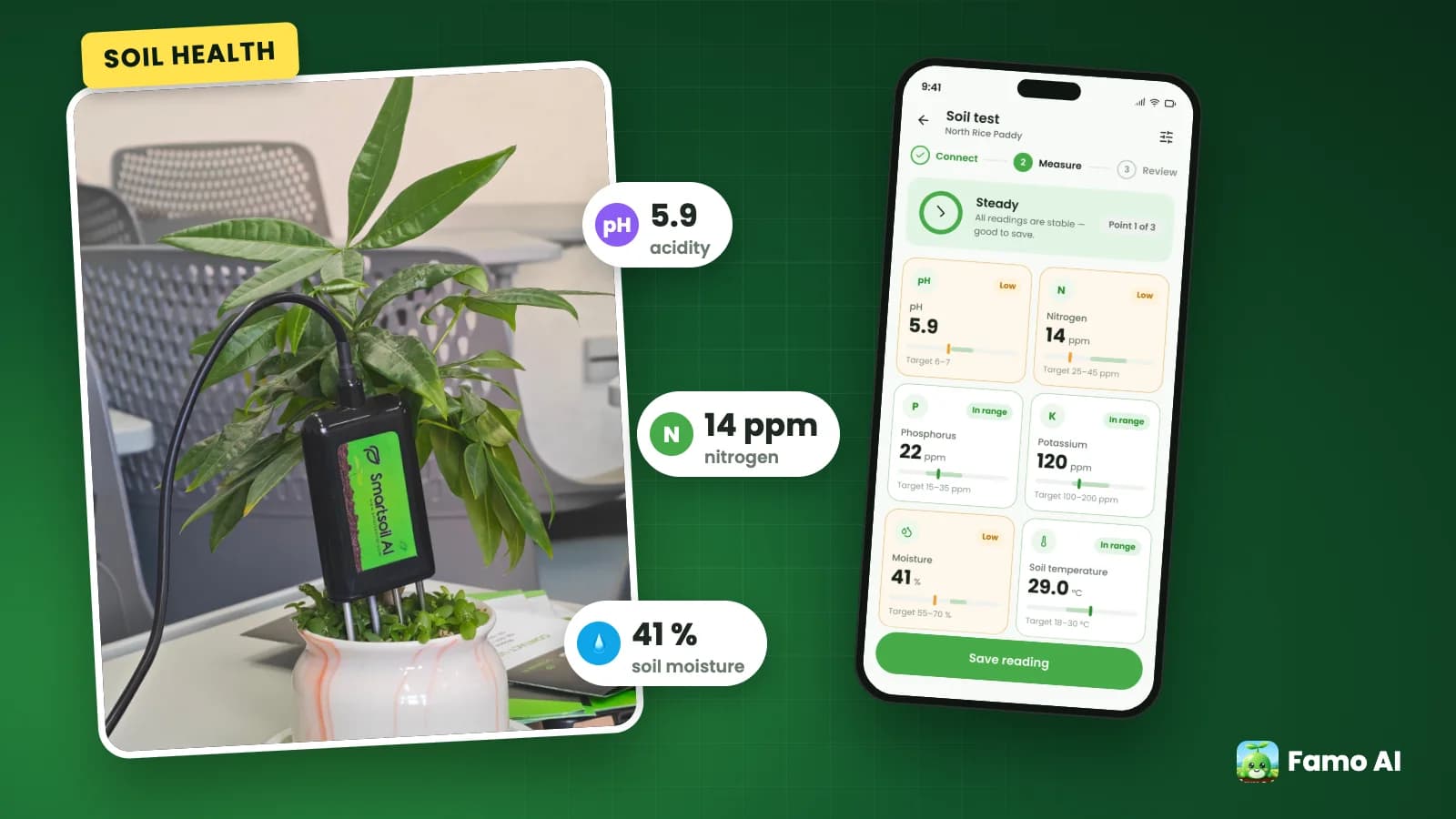
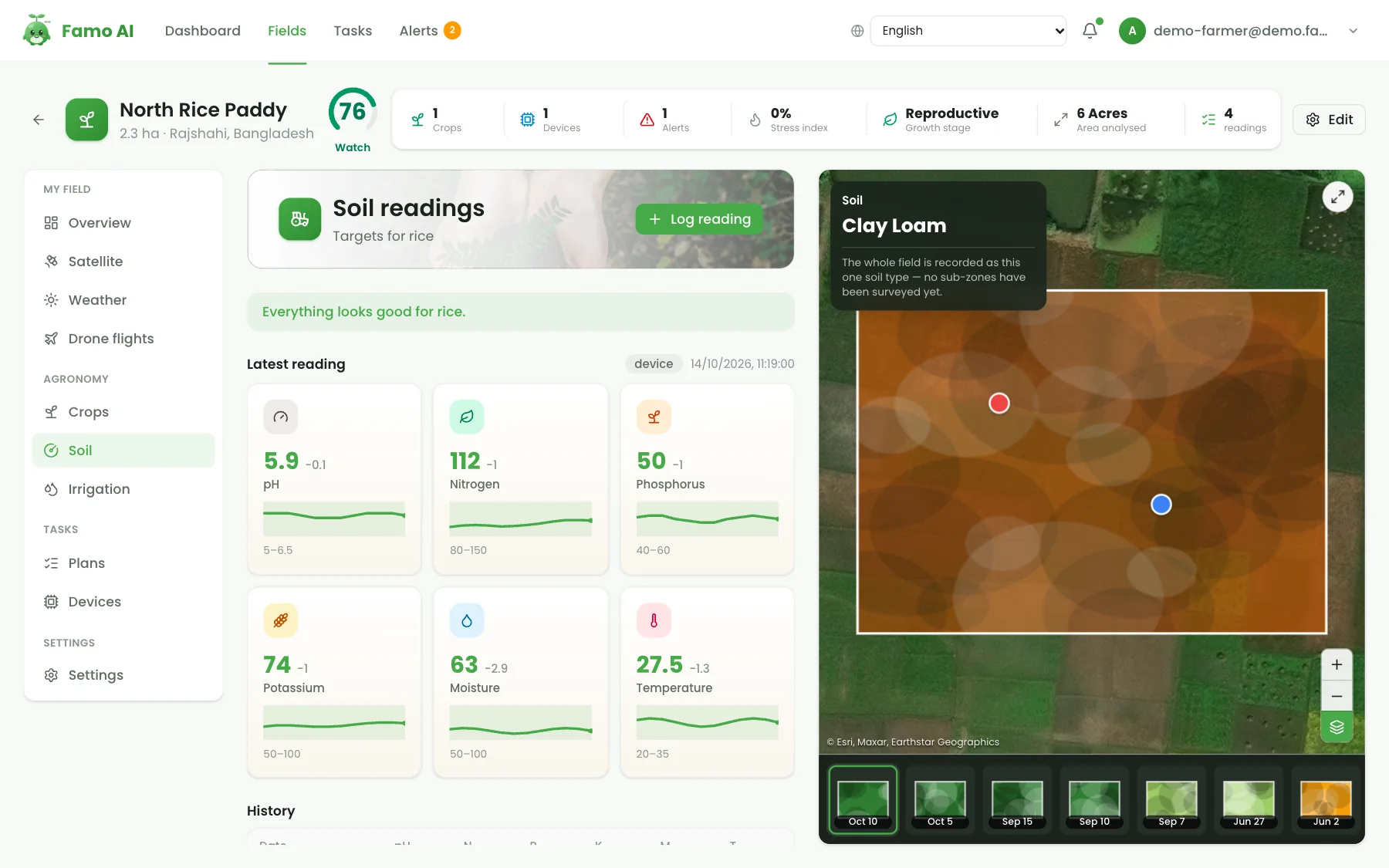
Famo AI shows nitrogen, phosphorus, potassium, pH, moisture and temperature in one test, marks each as low, in range or high, adds follow-up tasks, and keeps the history so you can see the trend. In the web dashboard you can compare fields and seasons side by side. Learn more about soil testing with the SmartSoil sensor.
Get Famo AI on Google Play or try the live demo.
Frequently asked questions
What do the numbers on a fertiliser bag mean?
They are the percentages of nitrogen, phosphorus and potassium (in the form the label states). A 46-0-0 bag is mostly nitrogen. A 0-0-60 bag is mostly potassium.
Can I just apply NPK every season?
It is better to test first. Applying nutrients the soil already has in plenty wastes money, while missing a real shortage costs yield.
How do organic and mineral fertilisers compare?
Mineral fertiliser acts quickly and is easy to measure. Compost and manure act slowly but improve soil structure and life. A mix often works well.
Why do my plants look yellow even after fertiliser?
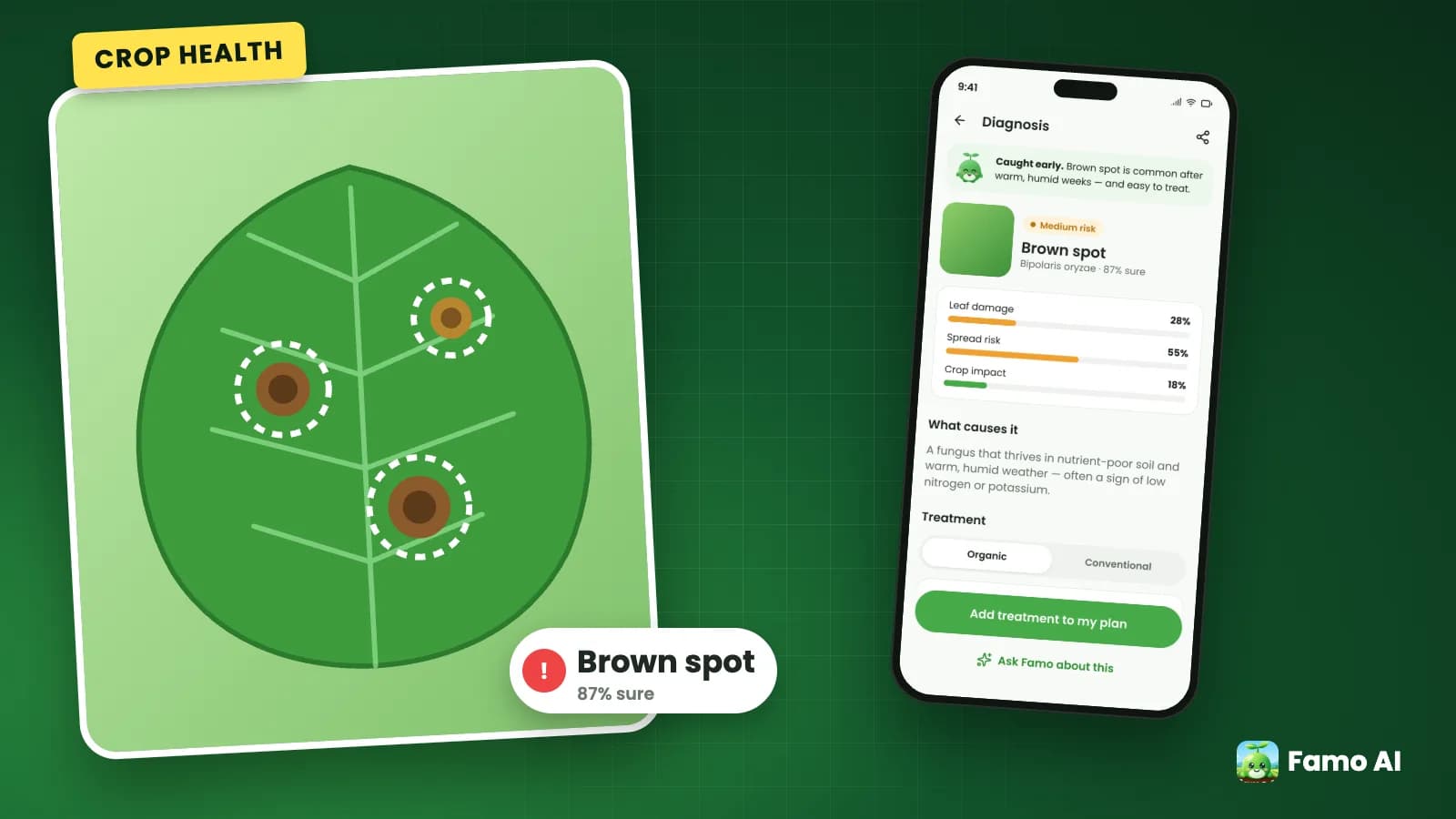
Yellow leaves can come from many causes: a different nutrient, pH, waterlogging, disease or pests. Test the soil and scan a leaf to narrow it down.