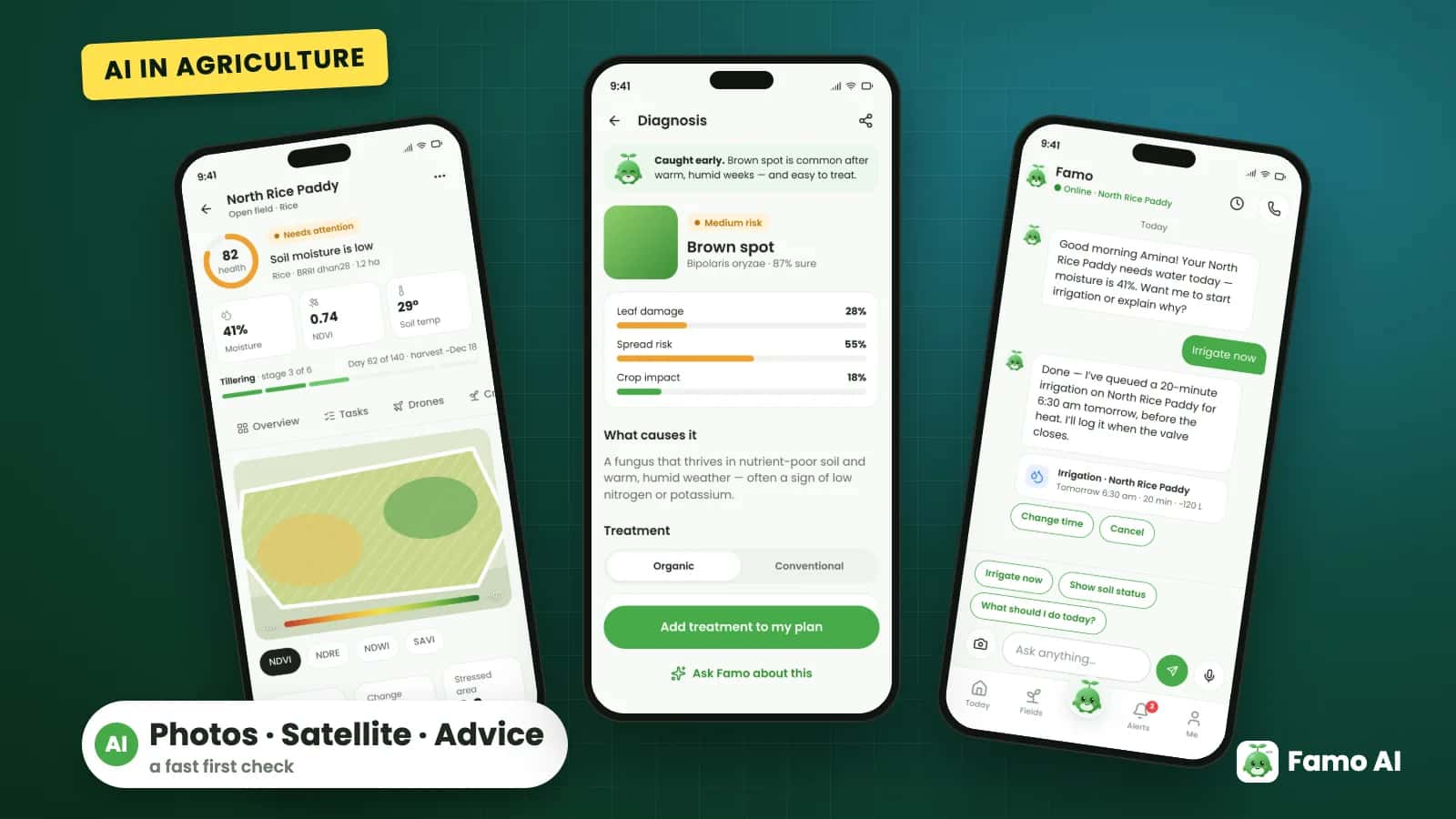
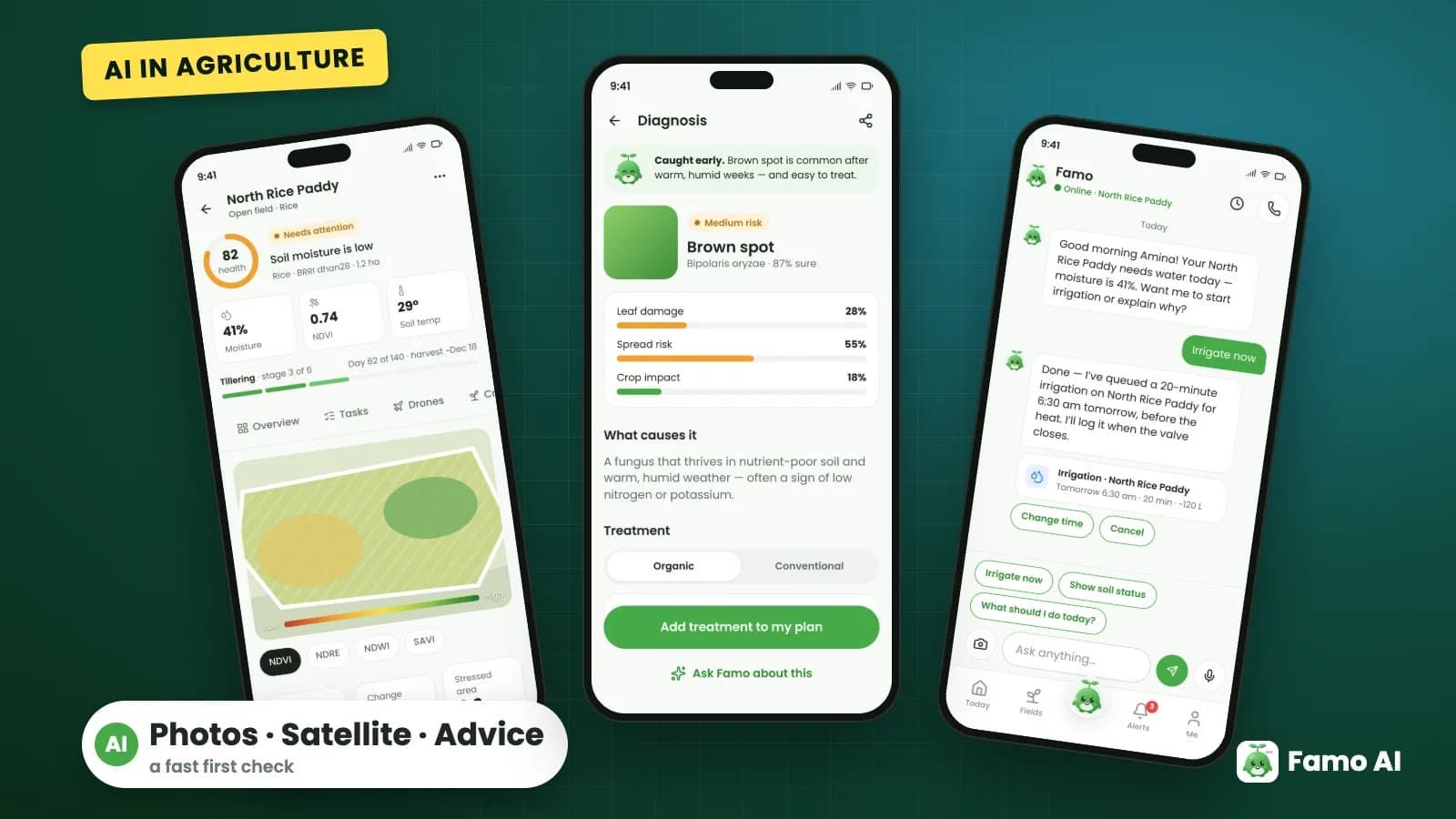
Artificial intelligence in agriculture is already at work on farms: reading leaf photos, analysing satellite images, planning irrigation and answering questions. This guide shows what AI does well, where it falls short and how to judge a tool.
In short
- AI finds patterns in photos, satellite data and sensor readings faster than people can.
- Common uses: disease detection, crop monitoring, irrigation planning, yield forecasts, advisor chat.
- AI advice is a first check. It can be wrong, especially for rare or local problems.
- Good tools show confidence and explain, and work in your language.
What AI does on the farm
| Use | How AI helps |
|---|---|
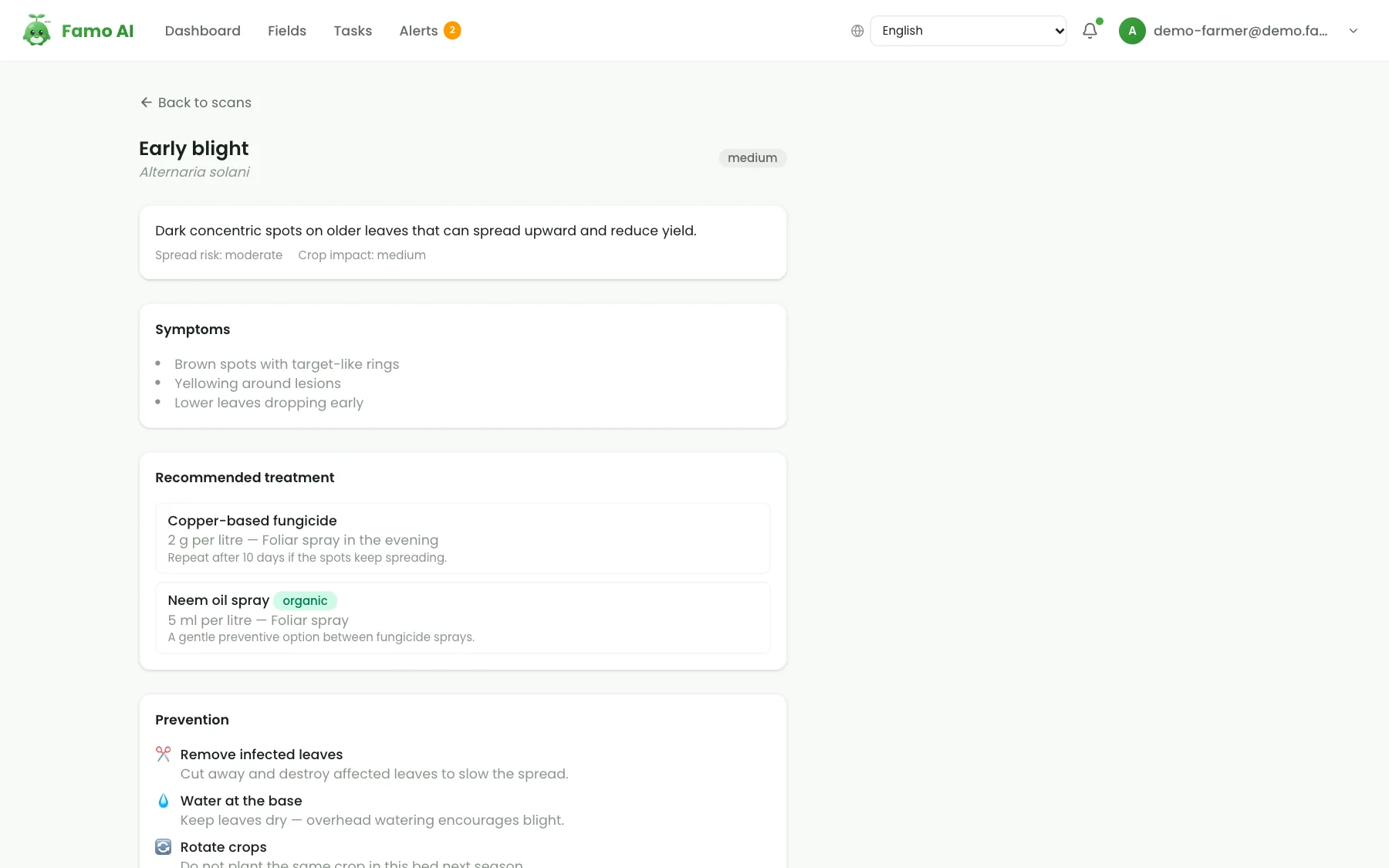
| Disease detection | Compares a leaf photo with known cases and suggests the likely disease |
| Crop monitoring | Turns satellite imagery into health maps and flags changes |
| Irrigation planning | Combines soil moisture, forecast and crop stage |
| Yield forecasting | Estimates harvest from weather, satellite and field history |
| Advisor chat and voice | Answers questions in everyday language |
Where AI falls short
- It needs good data. A blurry photo or a bad sensor reading gives a poor answer.
- It may not know your local variety, soil or disease.
- Some features need an internet connection.
- It can sound sure and still be wrong, so confirm important decisions.
How to judge an AI farming tool
- Does it show how sure it is?
- Does it explain the reason, not just give an order?
- Does it work in your language?
- Does it tell you its limits?
- Can you check its advice against a local expert or a test?
How Famo AI helps
Famo AI uses AI for leaf scans, satellite analysis, irrigation advice and a voice advisor in 12 languages, and always keeps you in charge of the decision. Learn how it works.
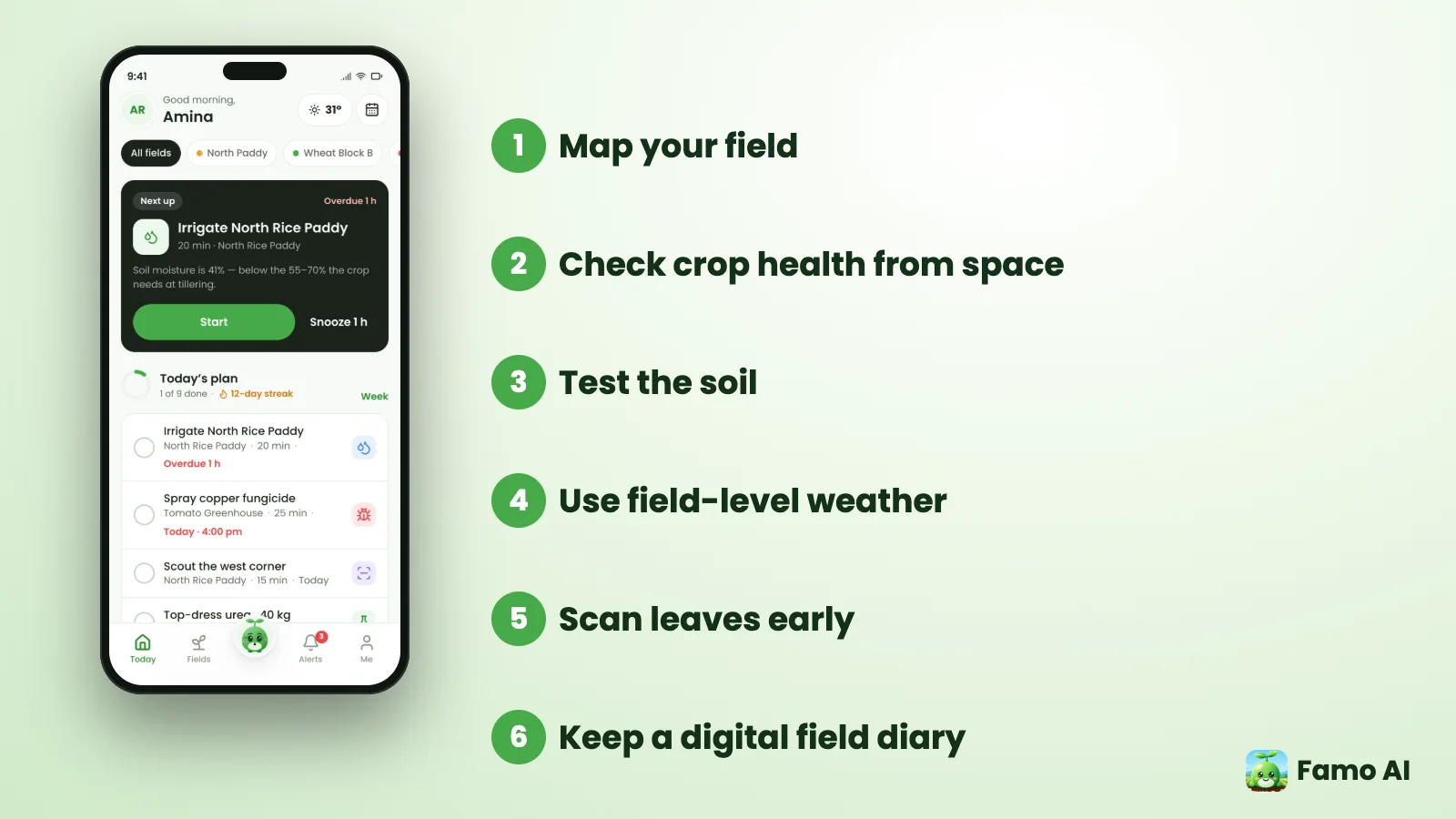
Get Famo AI on Google Play or try the live demo, no sign-up needed.
Frequently asked questions
Can AI replace an agronomist?
No. It is a fast first check and a helper; complex or serious problems still need an expert.
Does AI farming need a lot of data?
Better data gives better advice, but you can start with a phone, photos and satellite checks.
Is AI advice reliable?
It is useful for common cases and improves with good inputs, but always verify important decisions.