Agriculture has entered the digital age. The combination of artificial intelligence (AI), Internet of Things (IoT), and satellite technologies is reshaping how food is grown, managed, and distributed. But while industrial farms have rapidly adopted smart farming tools, smallholder farmers — who produce over 70% of the world’s food — are often left behind.
SmartSoil AI bridges this gap by bringing AI-powered precision agriculture to every farmer’s smartphone.
From Reactive to Predictive Farming
Traditional farming relies heavily on reactive decisions — responding to droughts, pests, or poor yields after they occur. SmartSoil AI introduces predictive intelligence to agriculture. By combining real-time sensor data from our portable soil device with AI-based crop models, farmers can anticipate problems before they happen.
Our system predicts nutrient deficiencies, water stress, and disease risks — enabling farmers to plan irrigation and fertilization proactively.
How the IoT Device Works
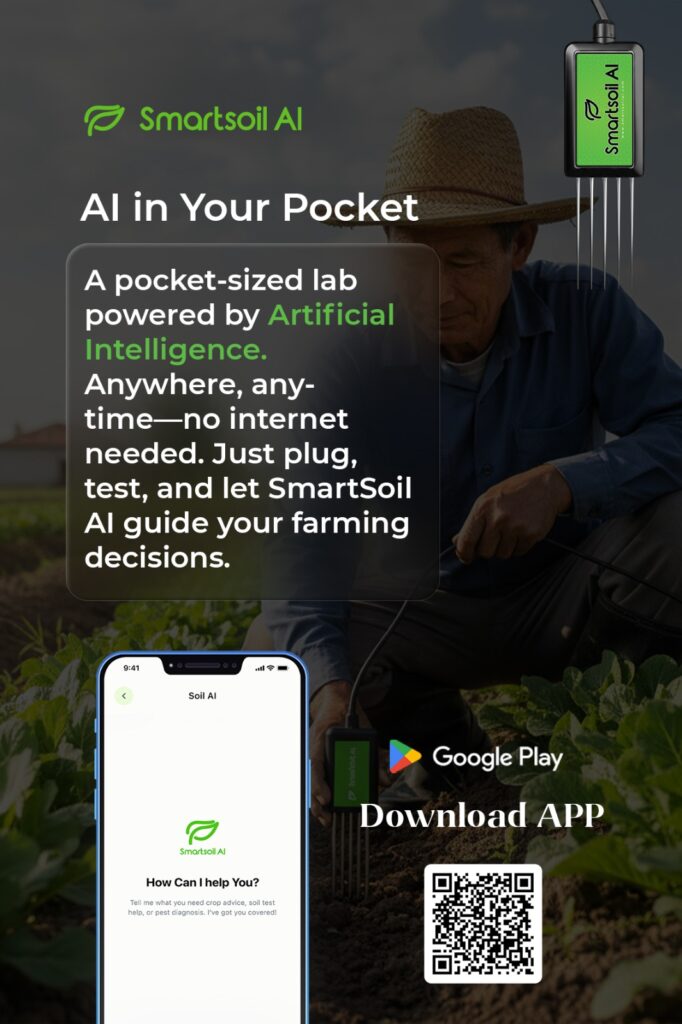
SmartSoil AI’s portable device is designed for simplicity and precision. Farmers insert the device into the soil, and within seconds, it measures essential parameters like pH, NPK, and moisture. This data is transmitted to the mobile app, where it’s analyzed instantly.
The result is a digital twin of the soil, accessible anytime and anywhere — even offline in remote regions.
AI-Powered Decision Support
Our mobile app is powered by a robust AI model trained on vast datasets of soil profiles, crop responses, and weather data. It doesn’t just show numbers — it explains them. For instance, if the soil’s pH is too acidic, the app recommends lime treatment and even provides local suppliers nearby (in the future, through partnerships).
The more data the system receives, the smarter it becomes, adapting to regional soil behaviors and crop needs.
Satellite-Based Crop Monitoring
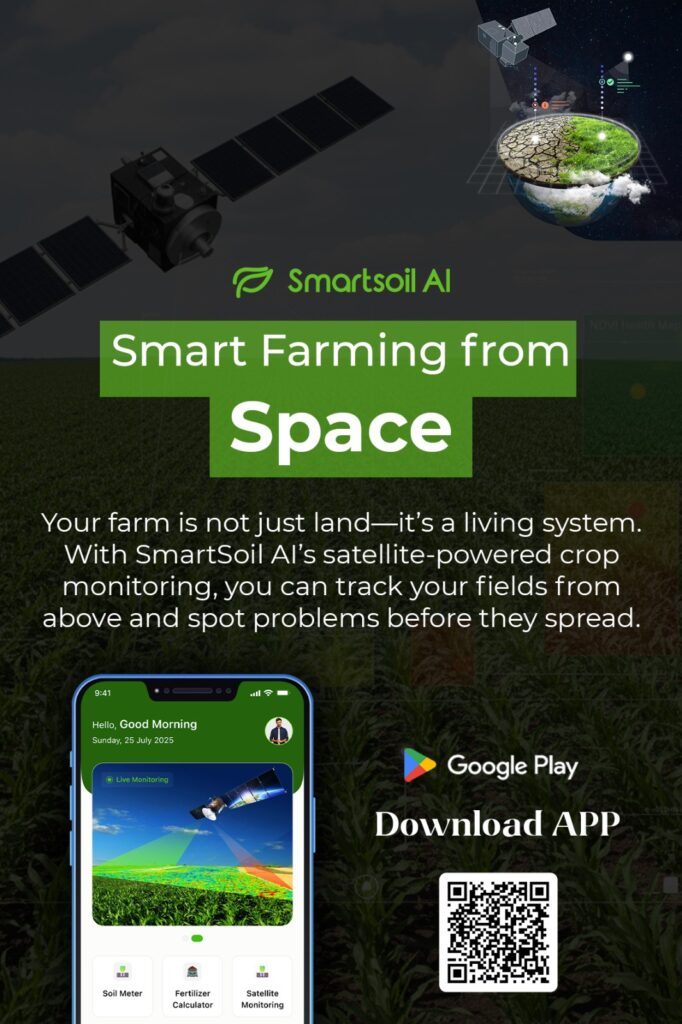
SmartSoil AI integrates satellite imagery and remote sensing to offer farmers a bird’s-eye view of their fields. This feature tracks vegetation health, chlorophyll levels, and plant vigor using advanced algorithms.
By analyzing changes in vegetation index (NDVI), farmers can detect early signs of disease, pest attack, or drought stress. Combined with ground sensor data, it gives a complete 360° view of the farm ecosystem.
Why This Matters for Smallholder Farmers
For too long, high-tech farming tools have been accessible only to large agribusinesses. SmartSoil AI changes that by making powerful tools portable, multilingual, and affordable. Farmers no longer need expensive lab tests or consultants — just a small device and a smartphone.
Conclusion
AI and IoT are no longer futuristic concepts — they are today’s reality in agriculture. SmartSoil AI is leading this transformation, turning smallholder farms into smart farms. Through innovation, data, and accessibility, we are building a future where every farmer can harness the power of technology to grow more sustainably and intelligently.