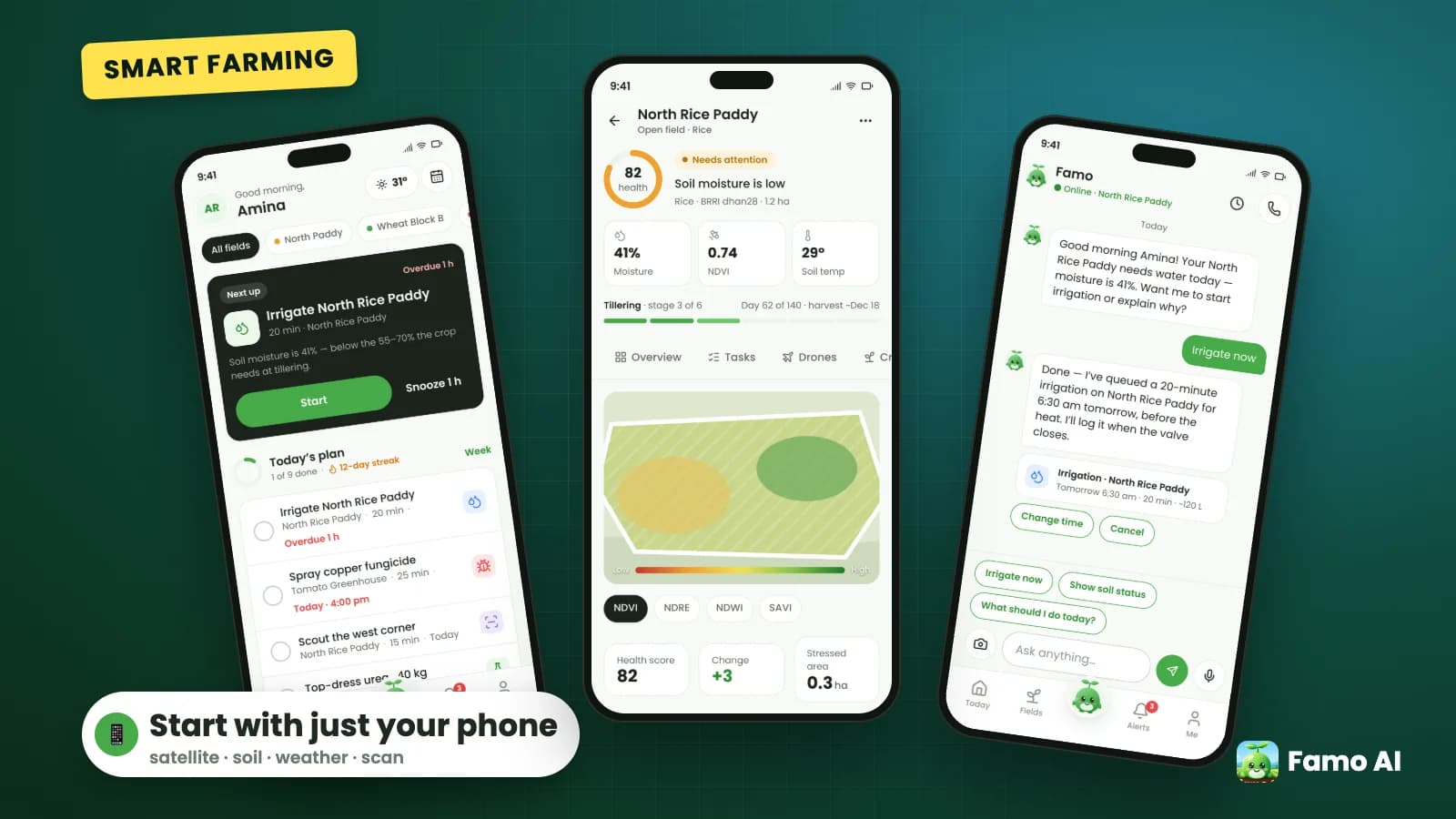
"Smart farming" sounds expensive, but you can begin with the phone already in your pocket. These seven steps work on small farms and cost little or nothing to start. You do not have to do them all at once. Pick one, learn it, then add the next.
In short
- Start with what is free or cheap: mapping your field, satellite crop checks and weather.
- Add soil testing when you are ready for a sensor. It is the biggest step toward better fertiliser and water decisions.
- Keep simple records. They help you plan, borrow and (if needed) certify.
- Use your own language. Advice you understand is advice you use.
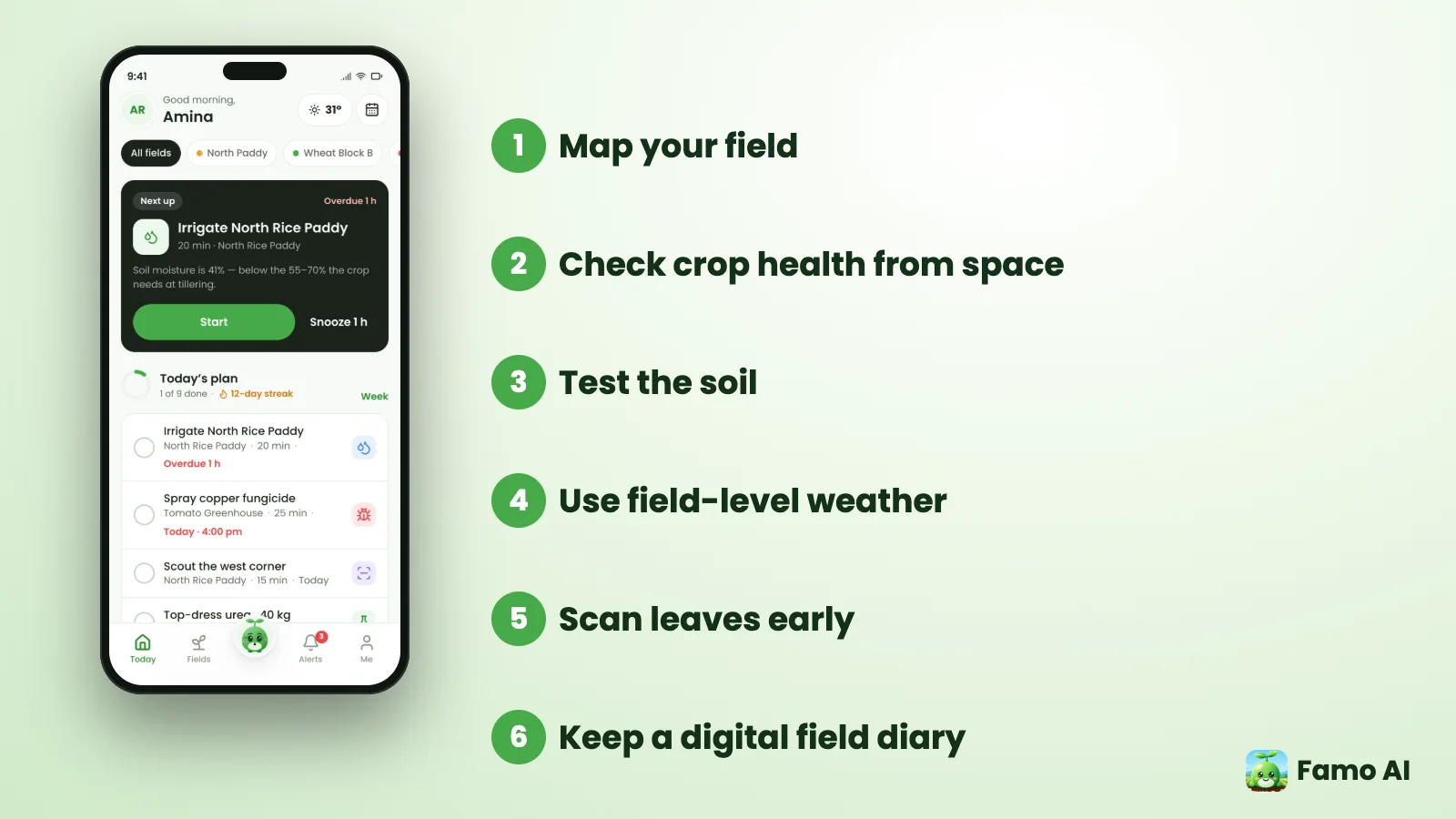
1. Map your field
Draw your field's boundary on a map. This gives you the true area (useful for fertiliser, seed and cost per acre) and lets satellites watch exactly your land. It takes a few minutes and you only do it once.
2. Check your crop from space
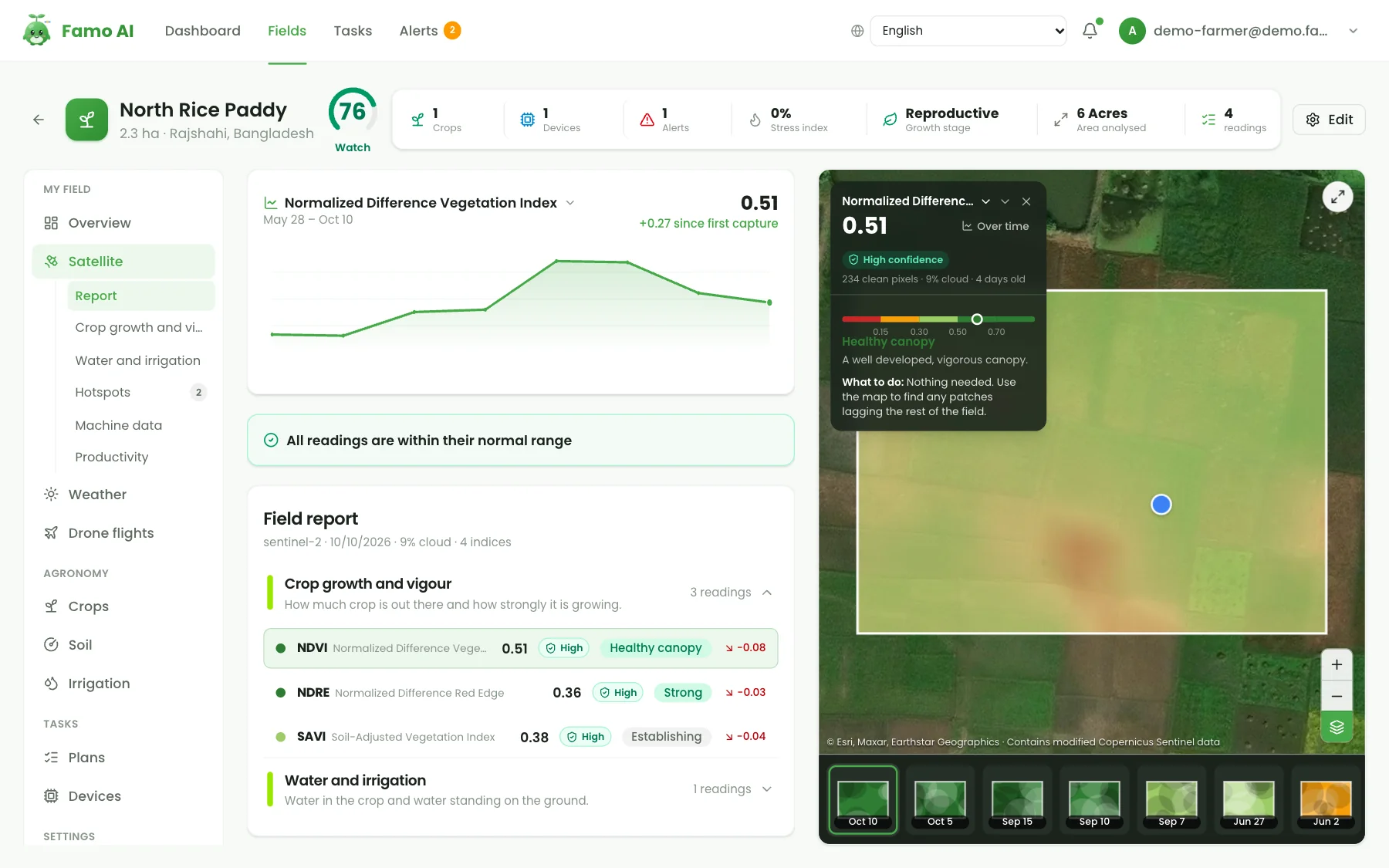
Satellites such as Sentinel-2 photograph the same field every few days. From those images, apps show crop vigour and stress as colour maps, so you can see weak patches before they are obvious from the ground. Cloud can delay a clear picture, but the trend over weeks is what matters. Read more in Satellite crop monitoring and NDVI.
3. Test your soil
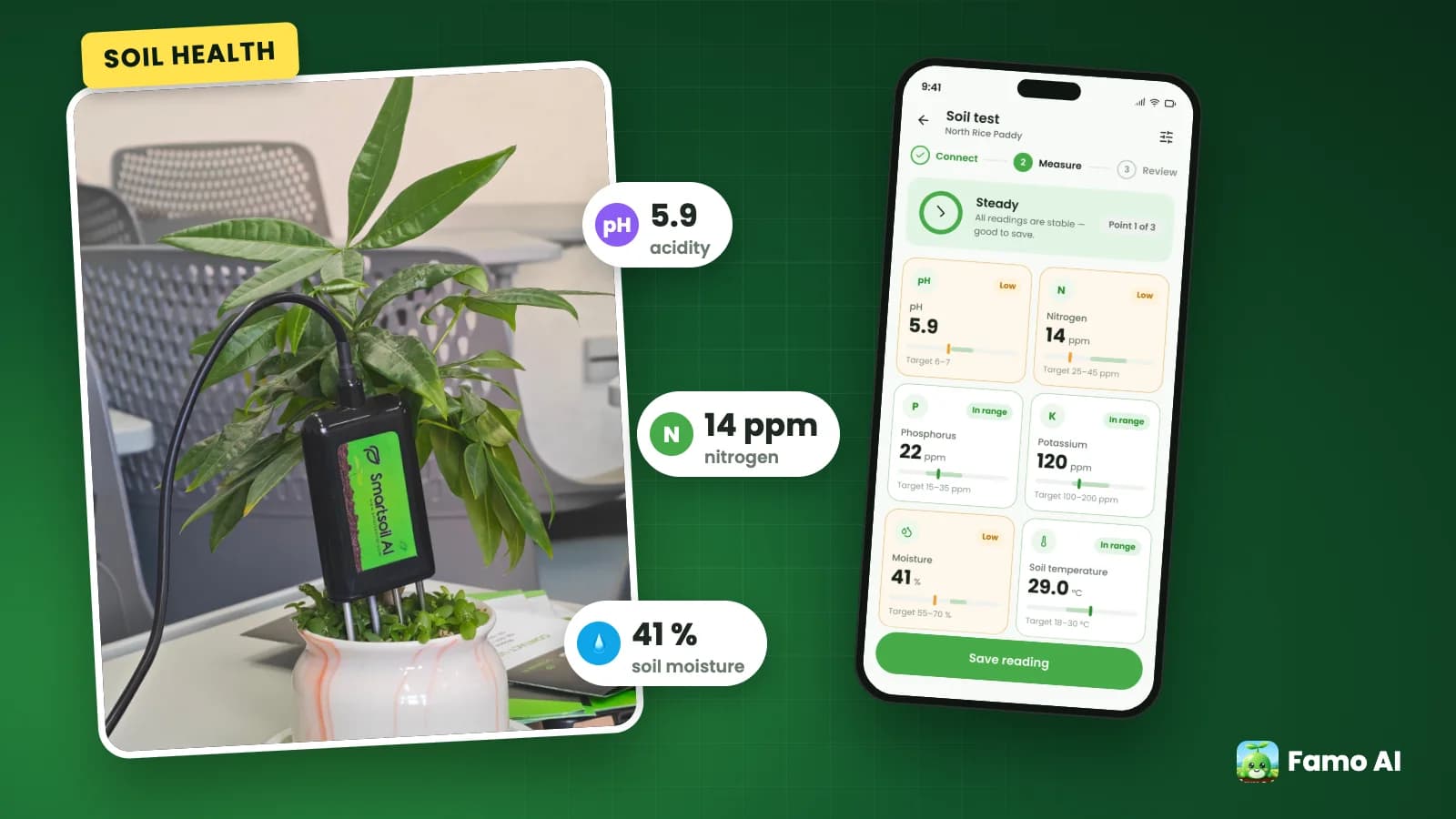
A soil sensor measures moisture, temperature, pH and nutrients in minutes. Start with one test before planting and one mid-season. Our step-by-step soil testing guide shows how.
4. Use field-level weather
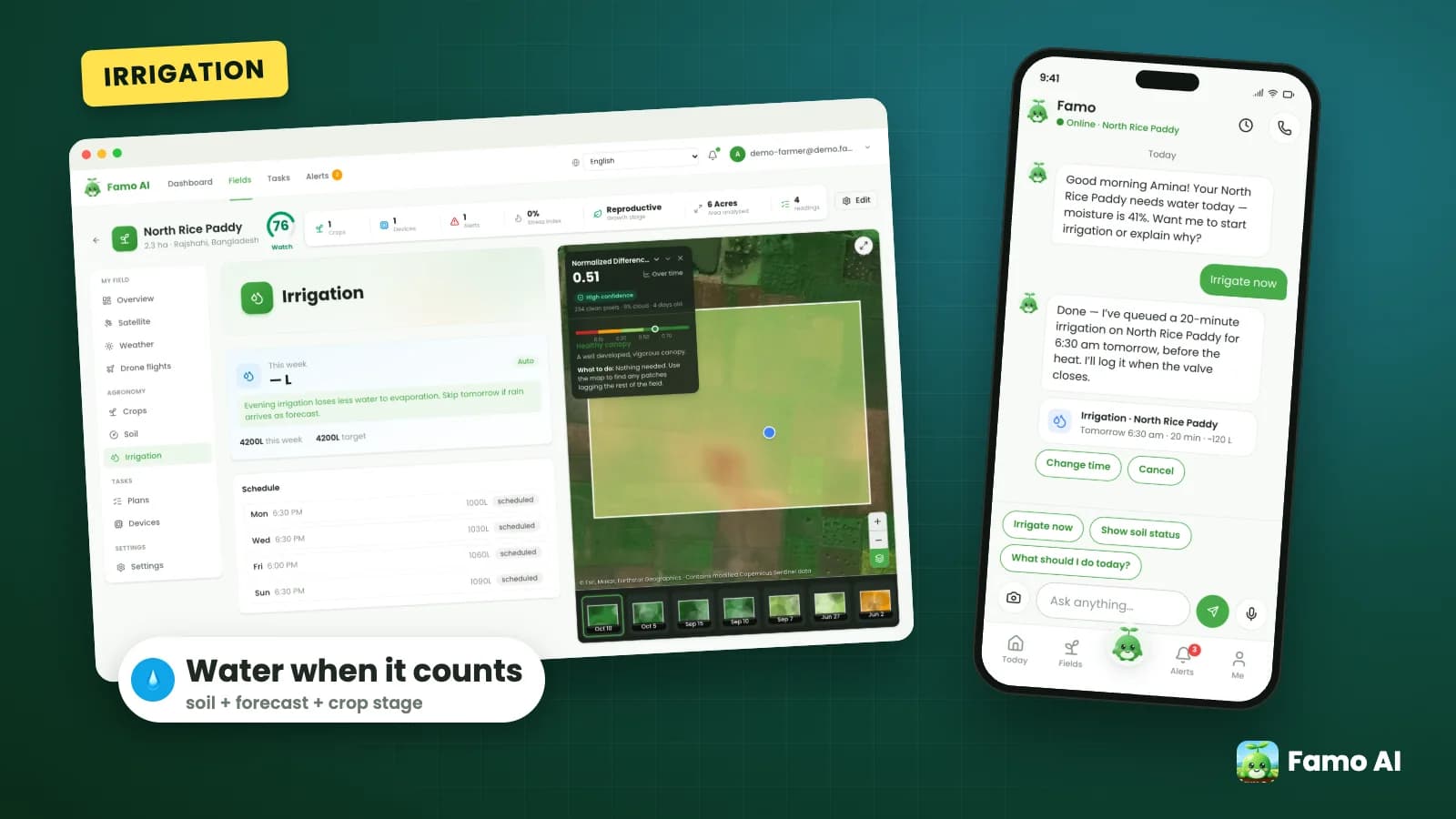
Check the forecast for your field's location before you irrigate, spray or harvest. It helps you avoid watering before rain and spraying in wind.
5. Scan sick leaves early
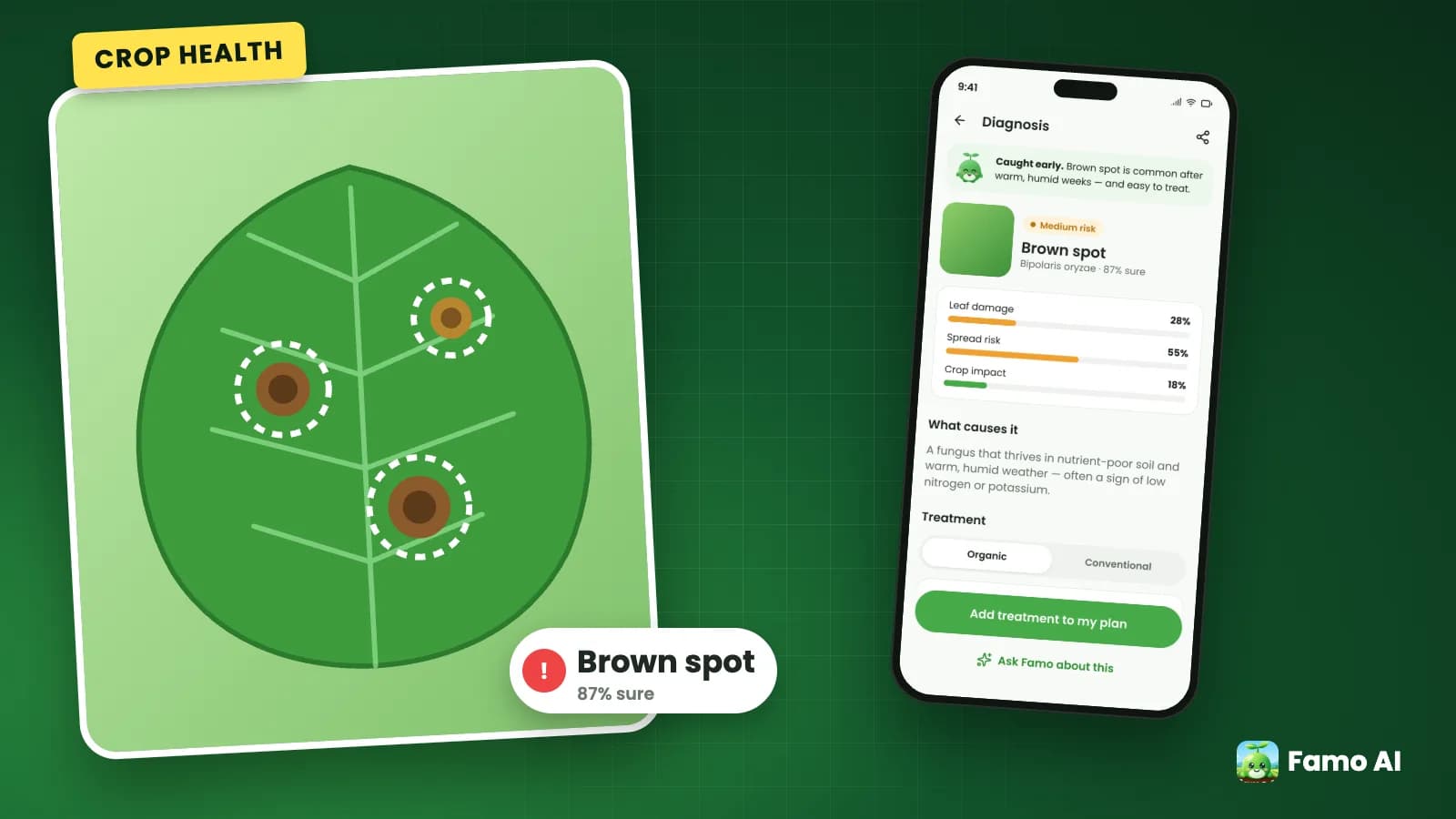
Photograph a leaf that looks wrong and let an AI scan suggest the likely problem and the first actions. Catching a disease early is cheaper than treating it late. See how the leaf scan works.
6. Keep a digital field diary
Record what you planted, what you applied, when you irrigated and what you harvested. Even a simple list helps you spot what worked, and records make it easier to talk to buyers, lenders and certifiers.
7. Ask in your own language
Ask questions by voice or text in your own language, such as when to irrigate or what a reading means. You do not have to type or read long instructions.
A simple start-this-week plan
| Day | Do this | Time |
|---|---|---|
| 1 | Install the app and map your main field | 10 minutes |
| 2 | Look at your first satellite crop-health map | 5 minutes |
| 3 | Check the forecast and plan watering or spraying | 5 minutes |
| 5 | Walk the field, photograph one doubtful leaf | 10 minutes |
| 7 | Add a soil test, if you have a sensor or access to one | 15 minutes |
What does it cost?
You can start free. Famo AI has a free Starter plan, and extra features are charged per field and crop season, so a small farm pays only for the land it uses. A soil sensor is an optional extra that adds measured ground data. Check the current plans in the app.
How Famo AI helps
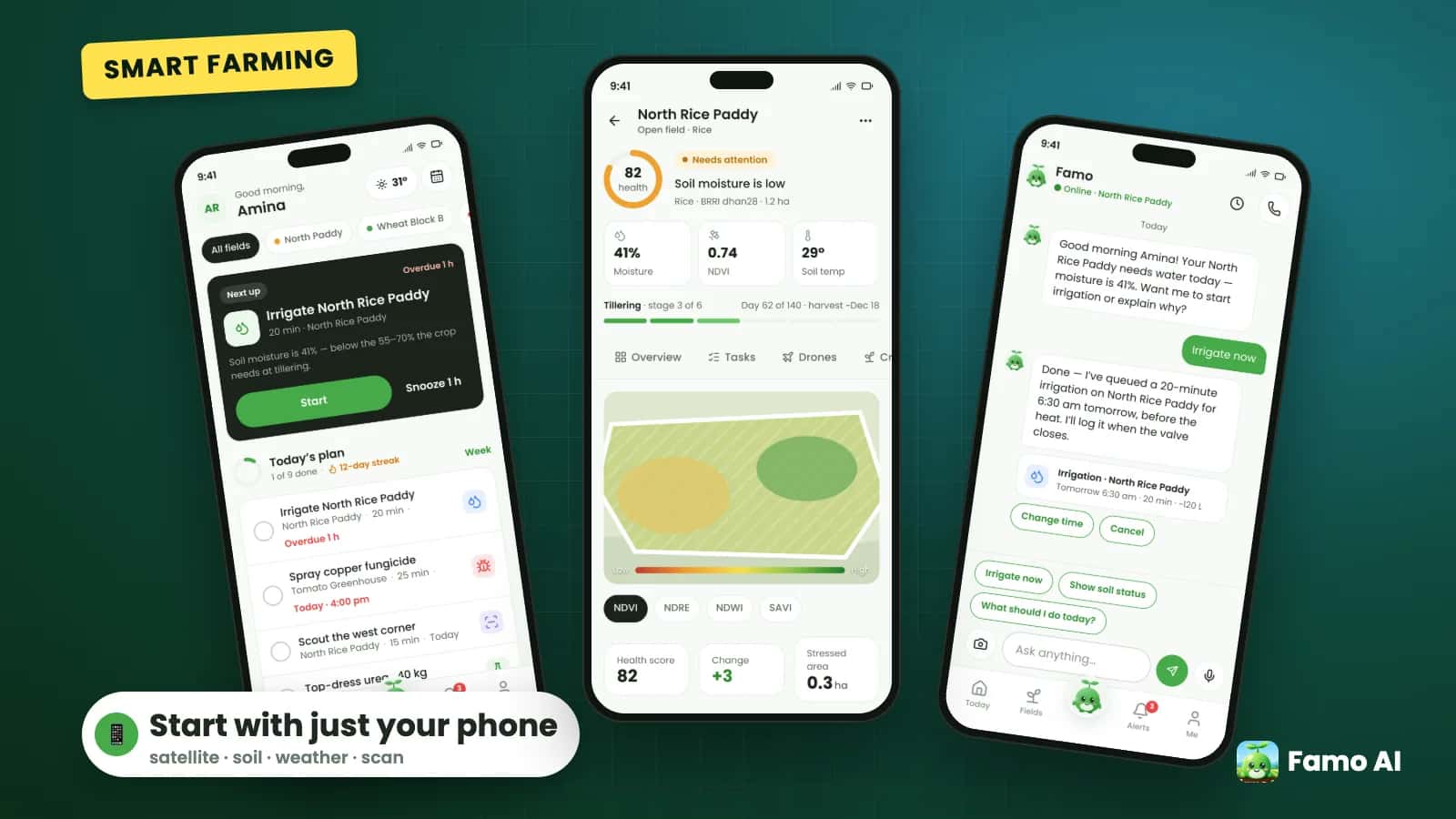
Famo AI puts these steps in one app: field mapping, satellite monitoring, soil tests, weather, leaf scans, a task list and a voice advisor in 12 languages. Recent fields and tasks stay available on your phone when the signal drops, and most live features, such as satellite maps and leaf scans, need a connection. A web dashboard shows the same farm on a computer.
Get Famo AI on Google Play or try the live demo.
Frequently asked questions
Do I need a sensor to start?
No. Satellite monitoring, weather, leaf scans and the advisor work with just a phone. A sensor adds measured soil data when you are ready.
Do I need the internet?
Most features need a connection. Recent fields and tasks stay readable offline, and you can note things in the field and look at your results when the signal returns.
Is it only for large farms?
No. Satellite pixels are about 10 metres, so very tiny plots show less detail, but a field of around half a hectare or more gives useful trends. The soil sensor, weather and scan features work at any size.
Can I use it in my language?
Yes. Famo AI works in 12 languages, including Bangla, Urdu, Punjabi, Arabic and Hindi, by voice or text.