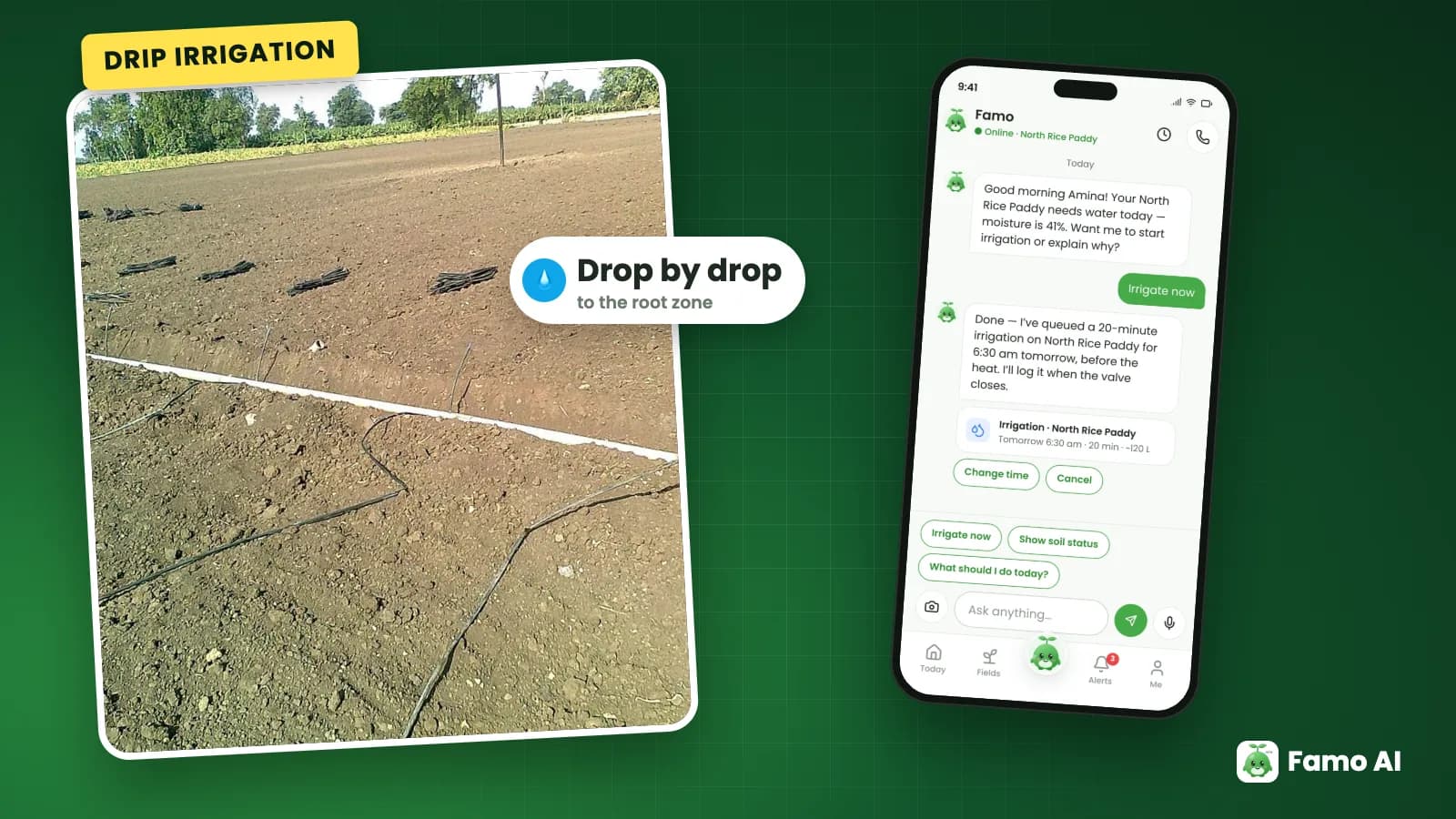
Drip irrigation delivers water slowly and directly to the root zone through small emitters. Done well, it uses water efficiently and keeps leaves dry. Here is how it works and how to start.
In short
- Water goes to the roots, drop by drop, so less is lost to evaporation and runoff.
- A filter is essential. Clogged emitters are the main problem.
- It can carry fertiliser to the root zone (fertigation).
- Start small and learn before you expand.
How a drip system works
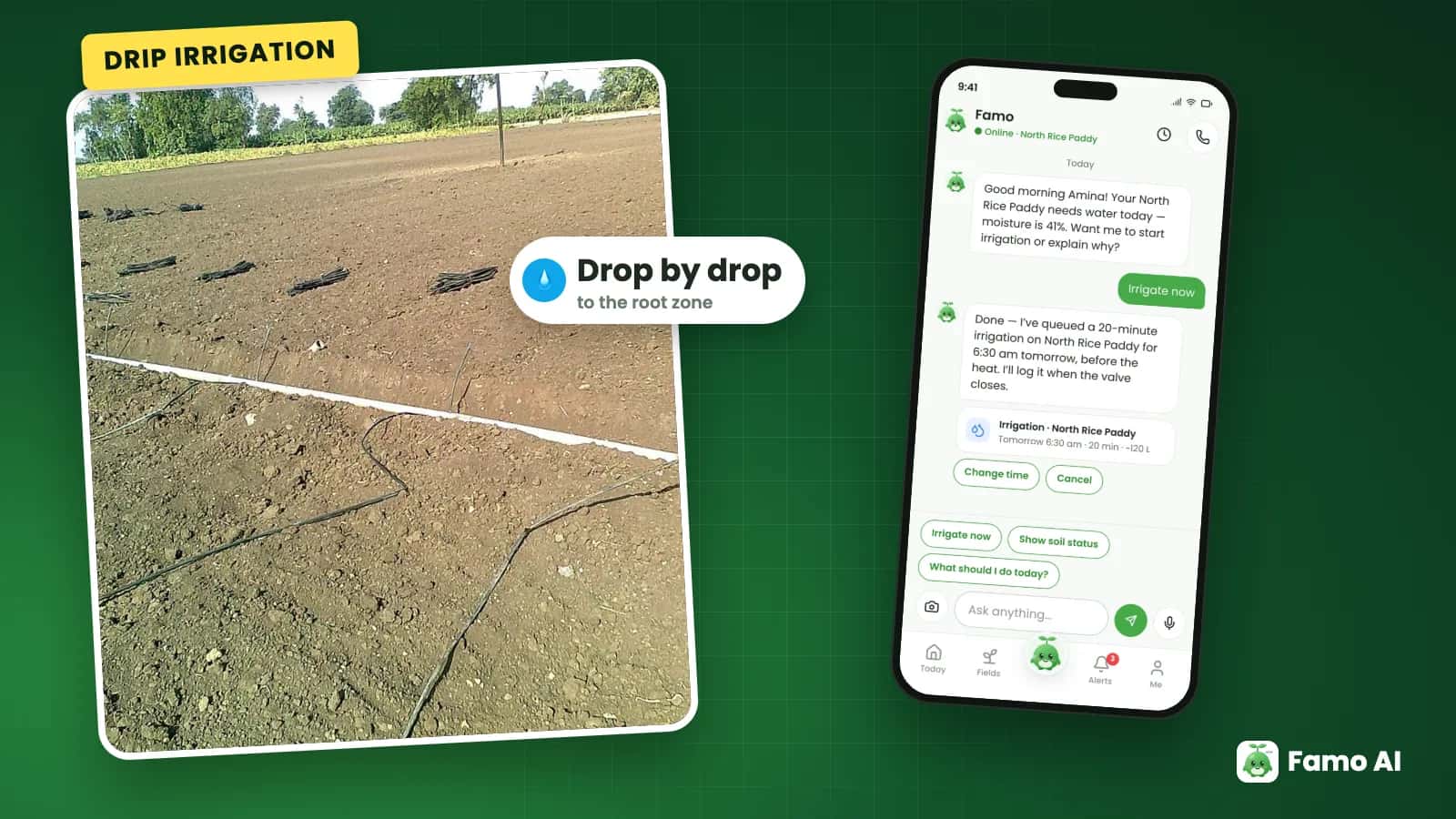
A pump or tank feeds water through a filter into a main line, then to thinner lateral lines with emitters at each plant or at set spacing. A valve or timer controls when it runs.
| Part | Job |
|---|---|
| Pump or tank | Supplies pressure and water |
| Filter | Stops particles clogging emitters |
| Main and sub-main lines | Carry water across the field |
| Laterals with emitters | Release water at the root zone |
| Valves and timer | Control when and how long |
Benefits and drawbacks
| Benefits | Drawbacks |
|---|---|
| Efficient water use | Upfront cost |
| Fewer weeds between rows | Emitters can clog |
| Works on slopes | Needs maintenance and checks |
| Can deliver fertiliser | Pipes can be damaged by animals or tools |
How to start
- Map your beds or rows and measure the length of lateral line you need.
- Check water quality, because muddy or hard water needs a better filter.
- Choose emitter spacing to suit your crop and soil.
- Install a filter and a pressure-suitable layout.
- Test and flush the lines before planting.
- Water by moisture, not habit.
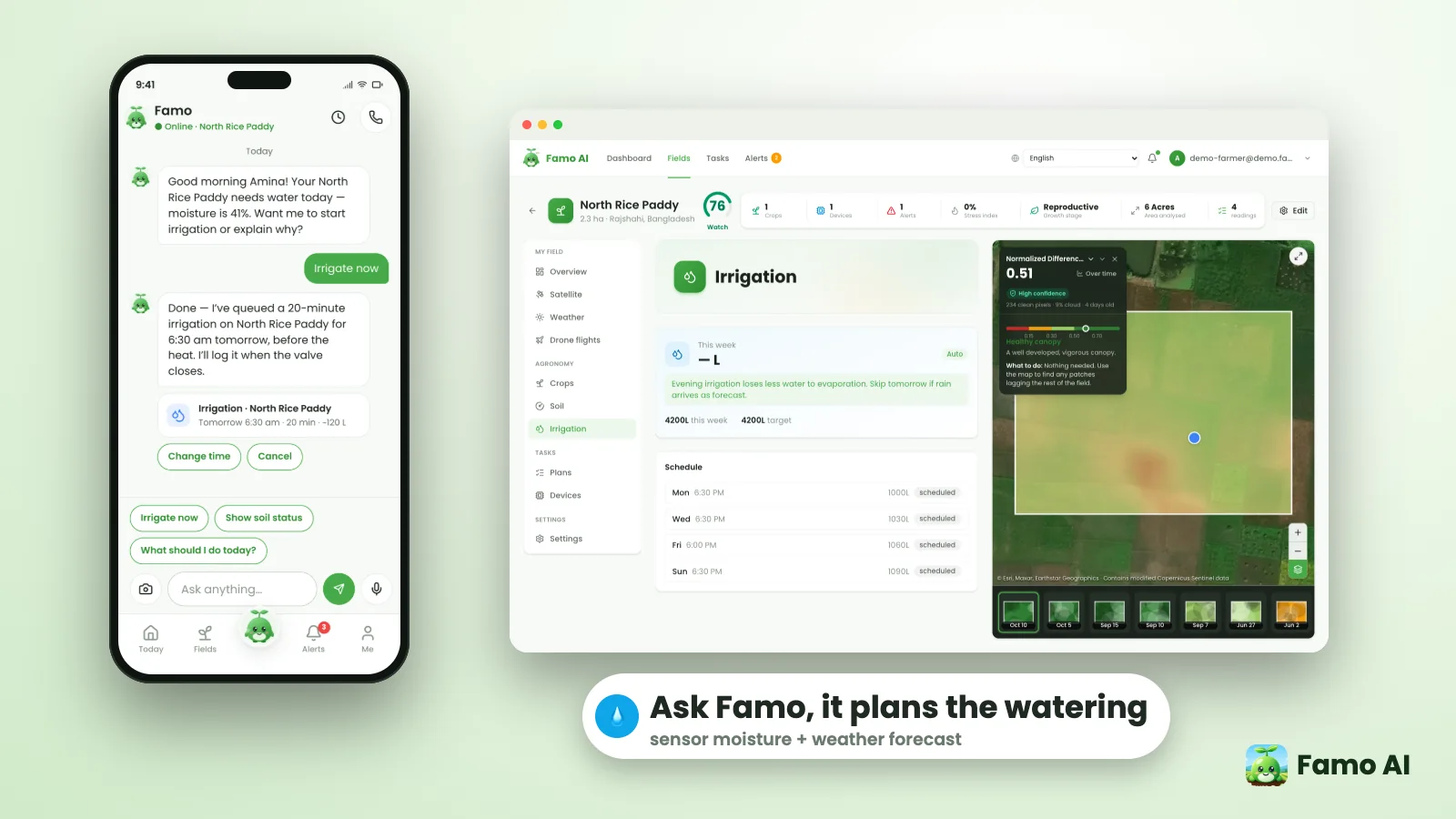
How Famo AI helps
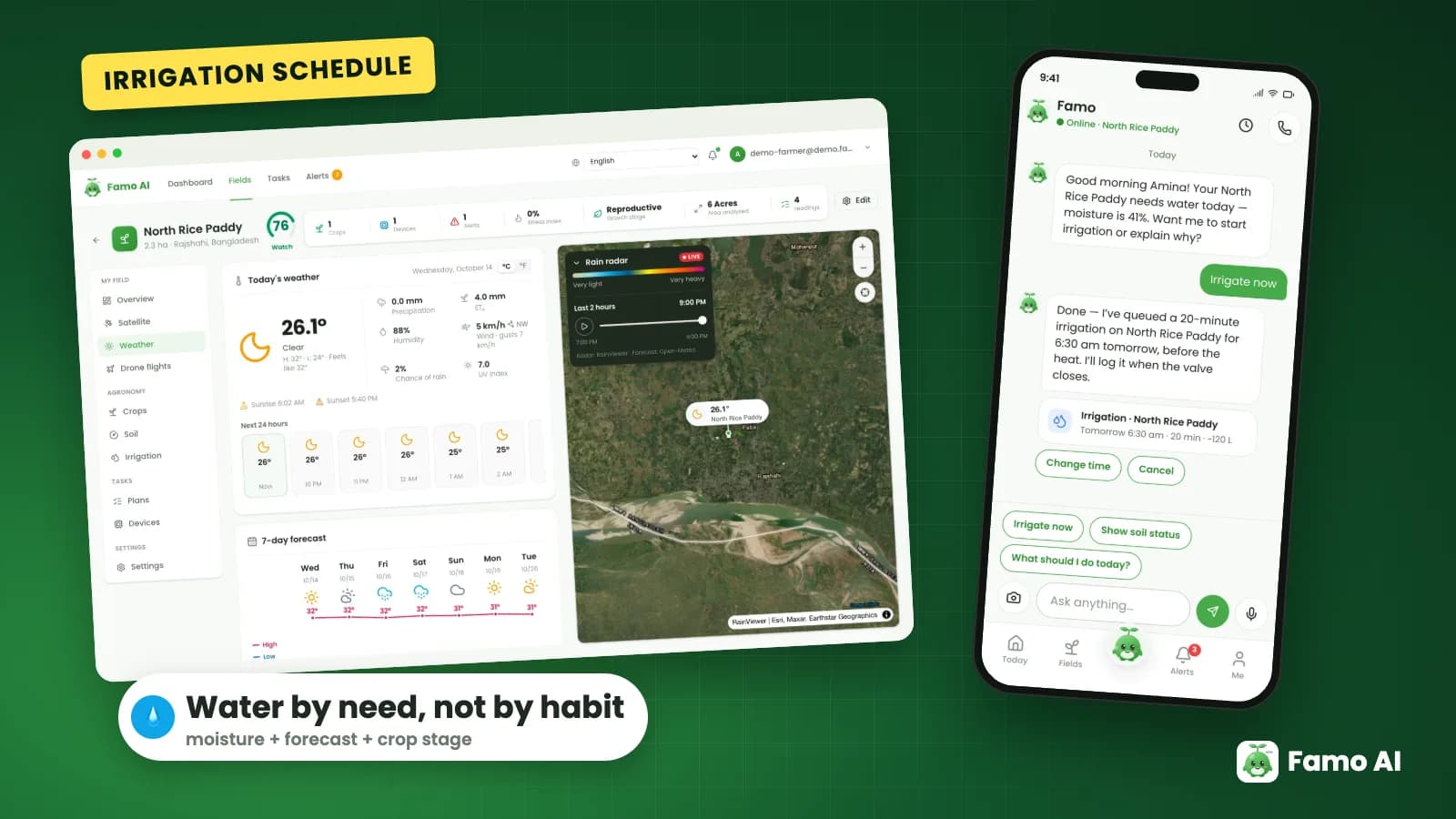
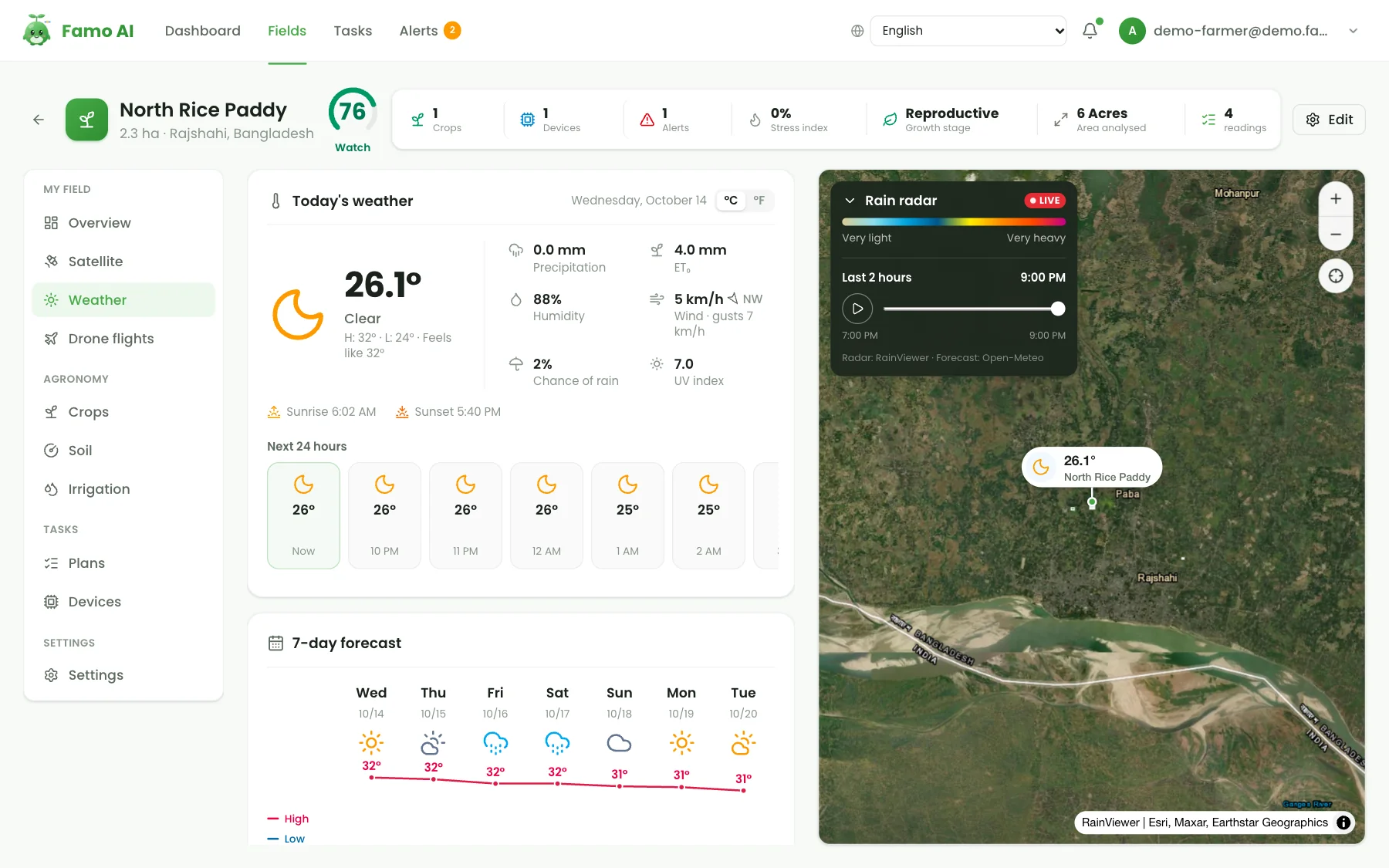
A drip system works best when you water by need. Famo AI uses soil moisture and the forecast to suggest when to run it, and compatible smart irrigation devices can connect to the same dashboard.
Get Famo AI on Google Play or try the live demo, no sign-up needed.
Frequently asked questions
Is drip irrigation worth the cost?
Often yes for high-value crops and where water is scarce, but compare costs with your acreage and crop.
How do I stop emitters clogging?
Use a proper filter, flush lines regularly and avoid untreated muddy water.
Can I use drip irrigation for rice?
Rice is usually flooded or managed with alternate wetting and drying; drip is used mostly for vegetables, orchards and row crops.