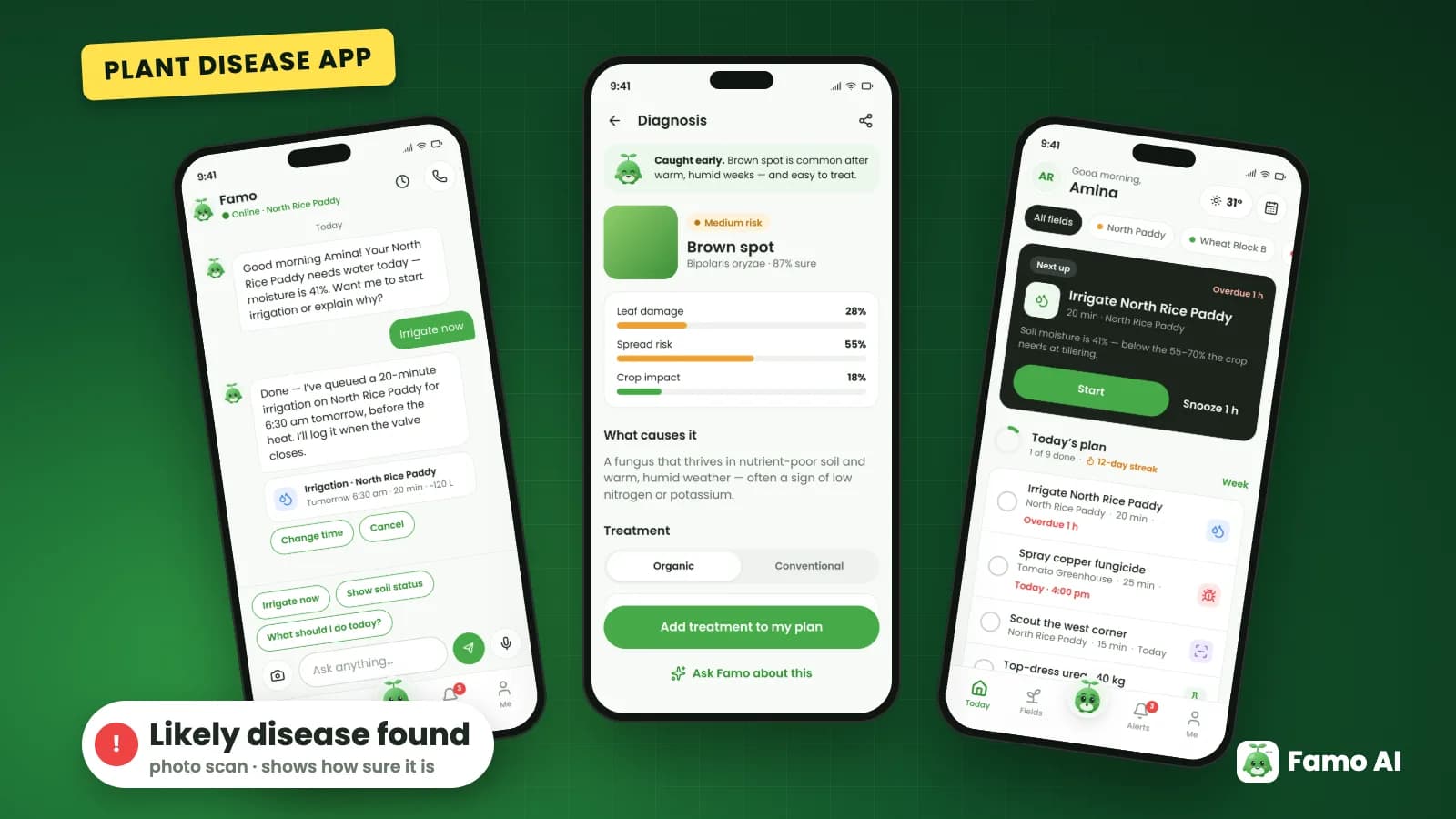
An app to identify plant diseases can save a crop, but only if you know what it does well and where it can mislead you. This guide explains how photo-based disease detection works, what a trustworthy app shows, and how to get a clear result.
In short
- The app compares your photo with thousands of known examples and suggests the most likely disease.
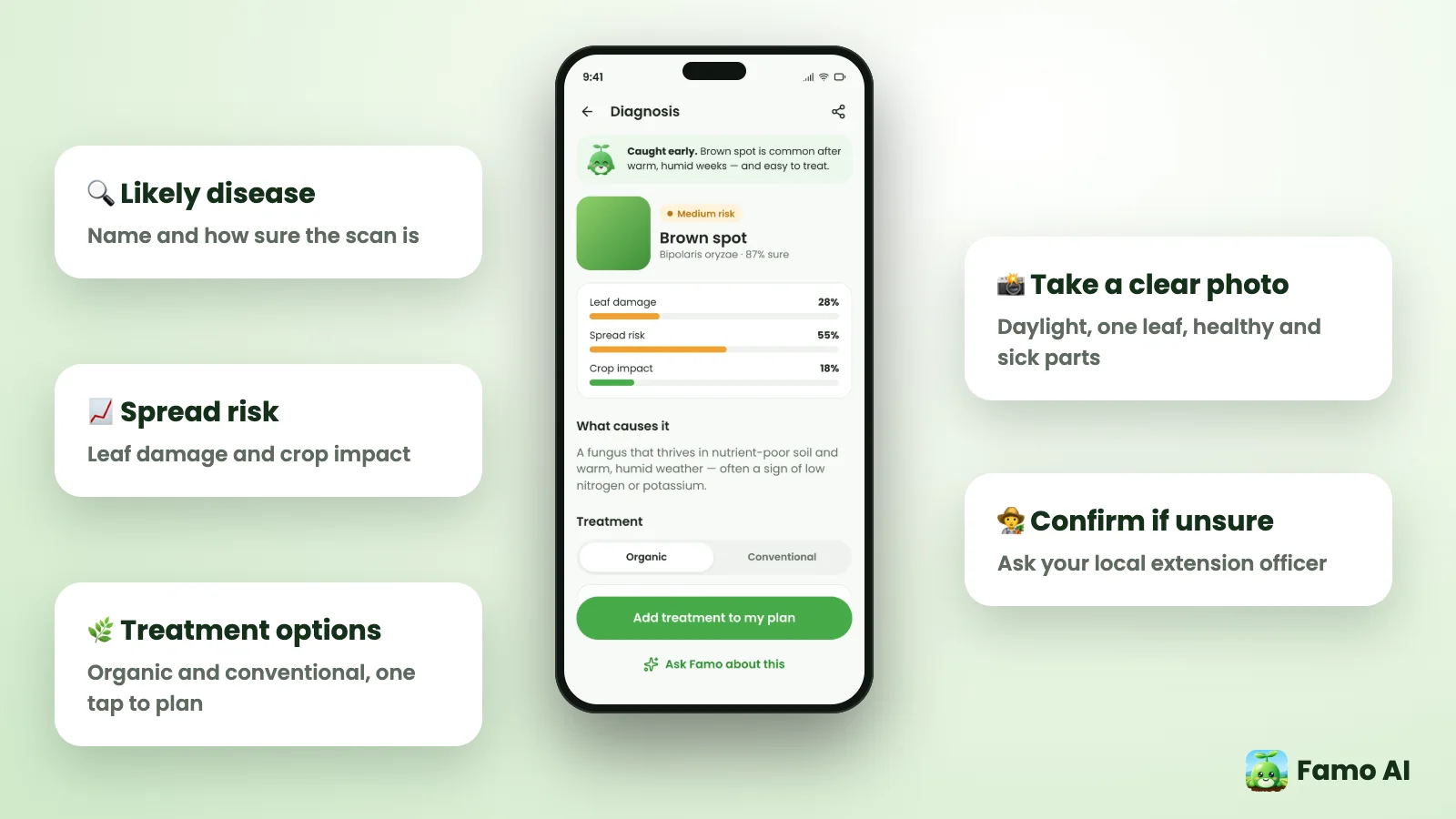
- A good app shows how sure it is, not just a name, and lists treatment options.
- Photo quality decides accuracy. Daylight, one leaf, sharp focus, healthy and sick parts together.
- It is a first check, not a laboratory. Confirm serious outbreaks with a local expert.
How photo-based disease detection works
The app uses artificial intelligence trained on large collections of labelled leaf photos. When you send a picture, it looks at colour, spot shape, edges and pattern, and returns the closest matches with a confidence score. It cannot see inside the plant, test the soil or know your field's history, so similar problems (a nutrient shortage, a pest, herbicide damage) can look alike.
What a good plant disease app should offer
| Look for | Why it matters |
|---|---|
| Confidence score, not just a name | Tells you when to double-check |
| Causes and spread risk | Helps you judge urgency |
| Organic and conventional options | You choose what fits your farm and rules |
| Your language, by voice or text | Advice you understand is advice you use |
| History and notes per field | Shows whether a problem is new or recurring |
| Clear limits | An honest app says when to call an expert |
How to take a photo the app can read
- Use daylight and avoid your own shadow on the leaf.
- Fill the frame with one leaf, showing the border between healthy and affected tissue.
- Hold steady and focus on the spots.
- Take two or three photos from different plants.
- Do not wipe or tear the leaf. Leave the symptoms as they are.
What an app cannot tell you
It cannot confirm a virus without a lab test, cannot measure soil nutrients (use a soil test for that), and may not know a rare disease in your region. If the result does not match what you see, trust your eyes and ask an expert.
How Famo AI helps
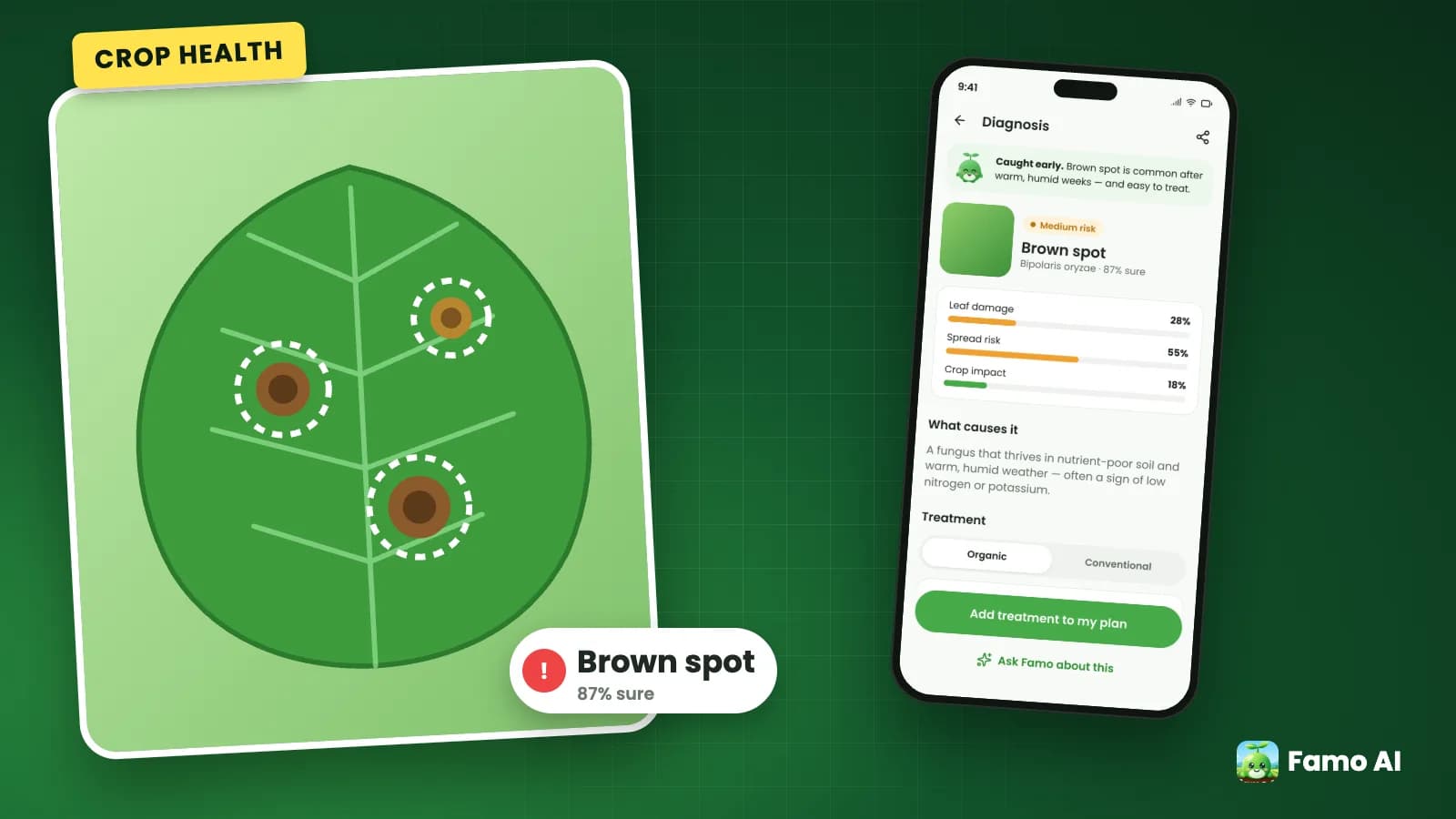
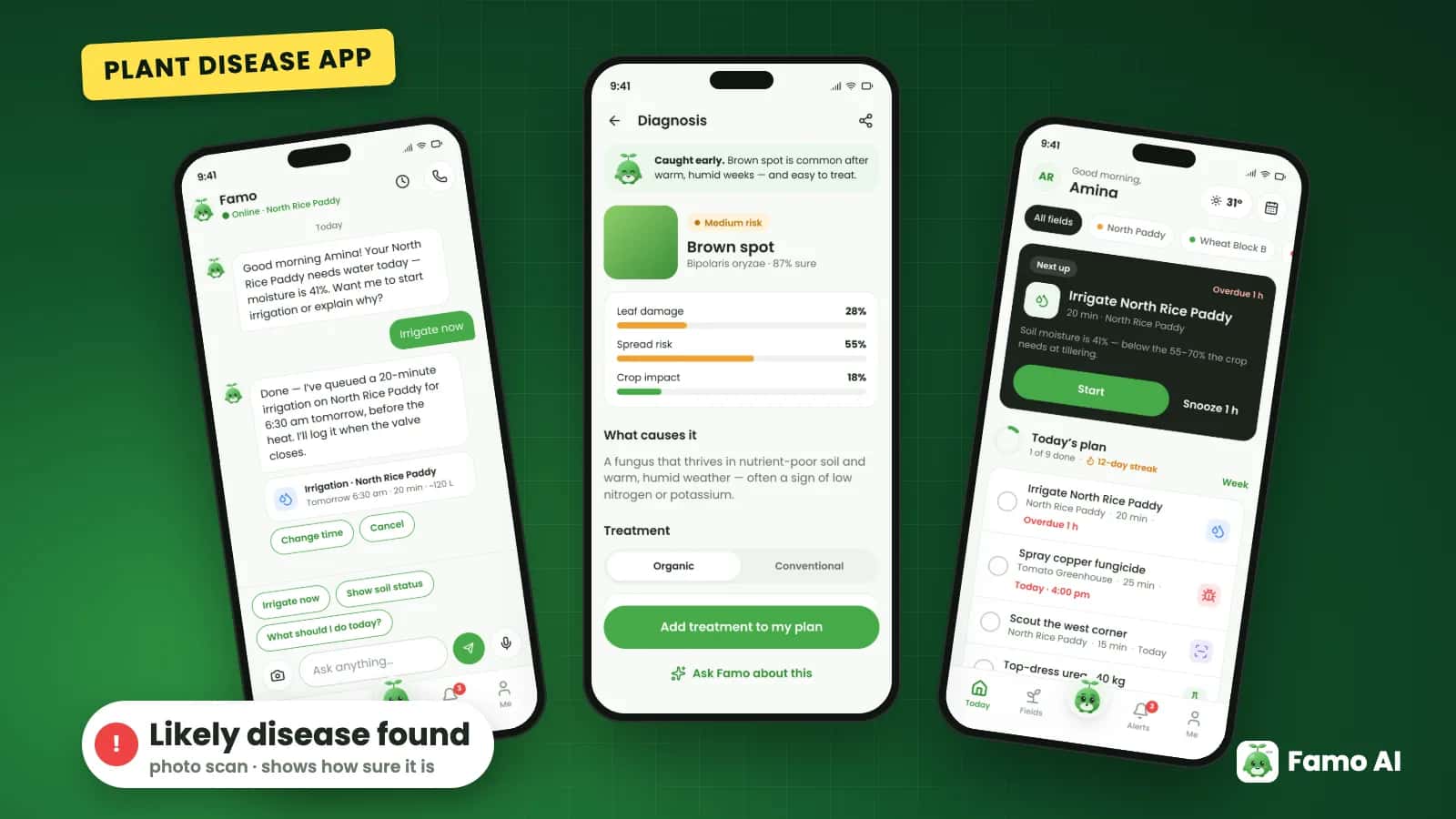
The Famo AI leaf scan suggests the likely disease, shows how confident it is, explains causes, rates leaf damage and spread risk, and offers organic and conventional treatments that you can add to your task plan in one tap. You can ask Famo follow-up questions in your language. The scan needs an internet connection.
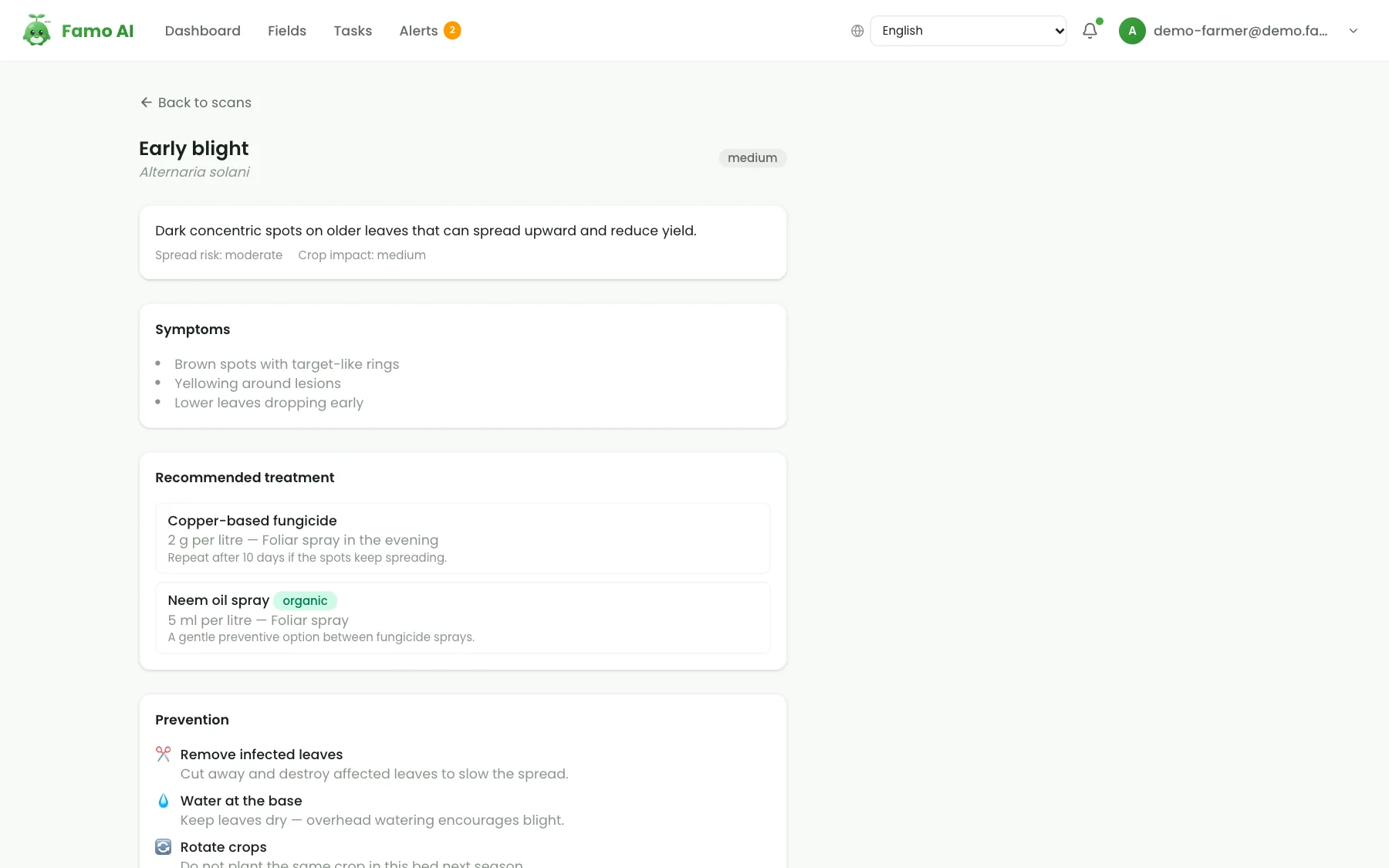
Get Famo AI on Google Play or try the live demo, no sign-up needed.
Frequently asked questions
Is there a free app to identify plant diseases?
Yes, several apps offer free scans. Check what is free (number of scans, crops covered), the languages offered and whether the app explains treatment, not just the name.
How accurate are plant disease apps?
They are good at common, clear cases and weaker on rare or mixed problems. Accuracy depends strongly on the photo, so follow the tips above.
Can an app tell me if my plant has a virus?
Not reliably. Viral diseases often need a lab test. An app can point to likely causes, such as insect vectors, and tell you what to check next.