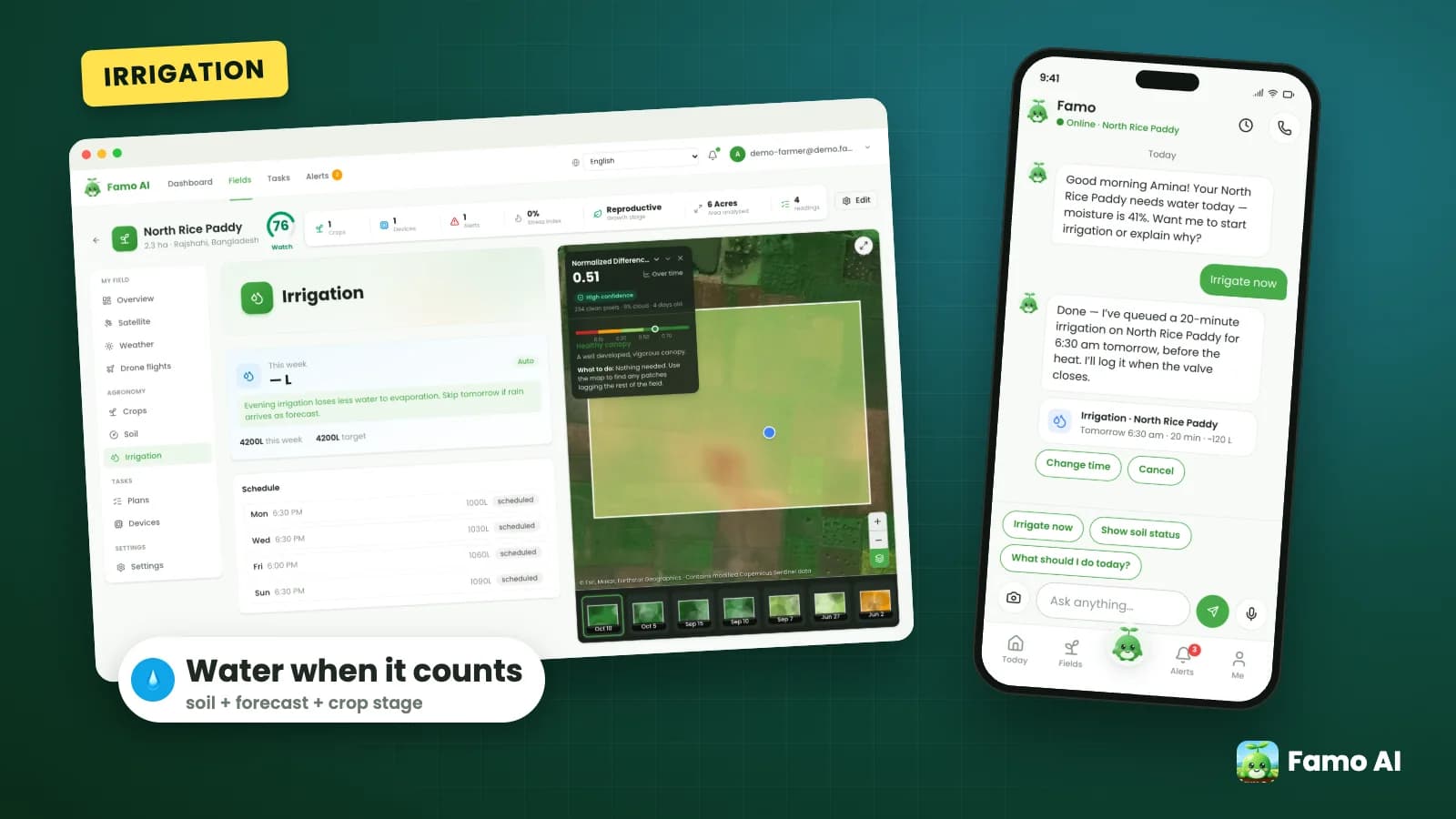
Most irrigation mistakes come from habit: watering on the same days every week, whatever the soil, crop or weather is doing. Water costs money, pumping costs fuel or electricity, and too much water can hurt a crop as badly as too little. The fix is simple: water when the soil says so, not when the calendar does.
In short
- Measure moisture at root depth, not just on the surface.
- Compare it to your crop's target range, and check the rain forecast before you water.
- Water in the cooler part of the day, early morning or evening, to lose less to evaporation.
- Give enough to refill the root zone, then stop. Frequent shallow watering is mostly wasted.
Step 1: Measure the soil, not the sky
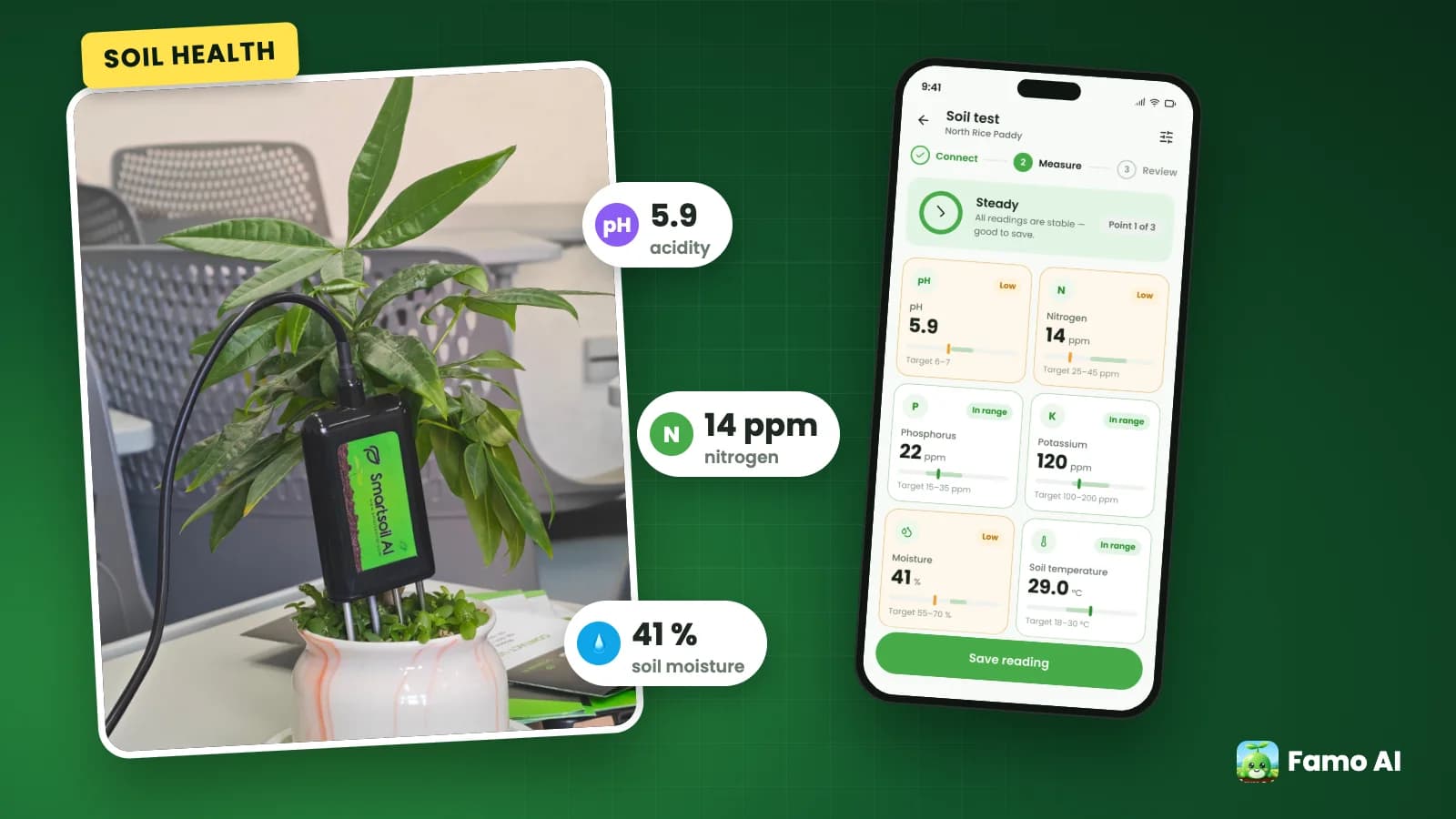
Look at the soil first. A soil moisture sensor gives a percentage you can track. The old finger test still helps as a check: push a finger a few centimetres into the soil. If it feels dry and crumbles, the surface is drying. If it feels cool and damp and sticks together, there is still water for the roots.
Clay holds water for days, sandy soil can dry out in hours, and loam sits between the two. The same reading can mean "fine" in clay and "water now" in sand, so look at your own soil's pattern.
Step 2: Compare with what your crop needs
Crops do not need the same amount of water at every stage. Young seedlings need steady moisture to establish. Flowering and grain or fruit filling are usually the most sensitive stages, and water stress there costs the most yield. Rice is different again: many rice farmers can save water by letting fields dry slightly between irrigations, using a method often called alternate wetting and drying. Ask your local extension office what suits your variety.
Step 3: Check the forecast
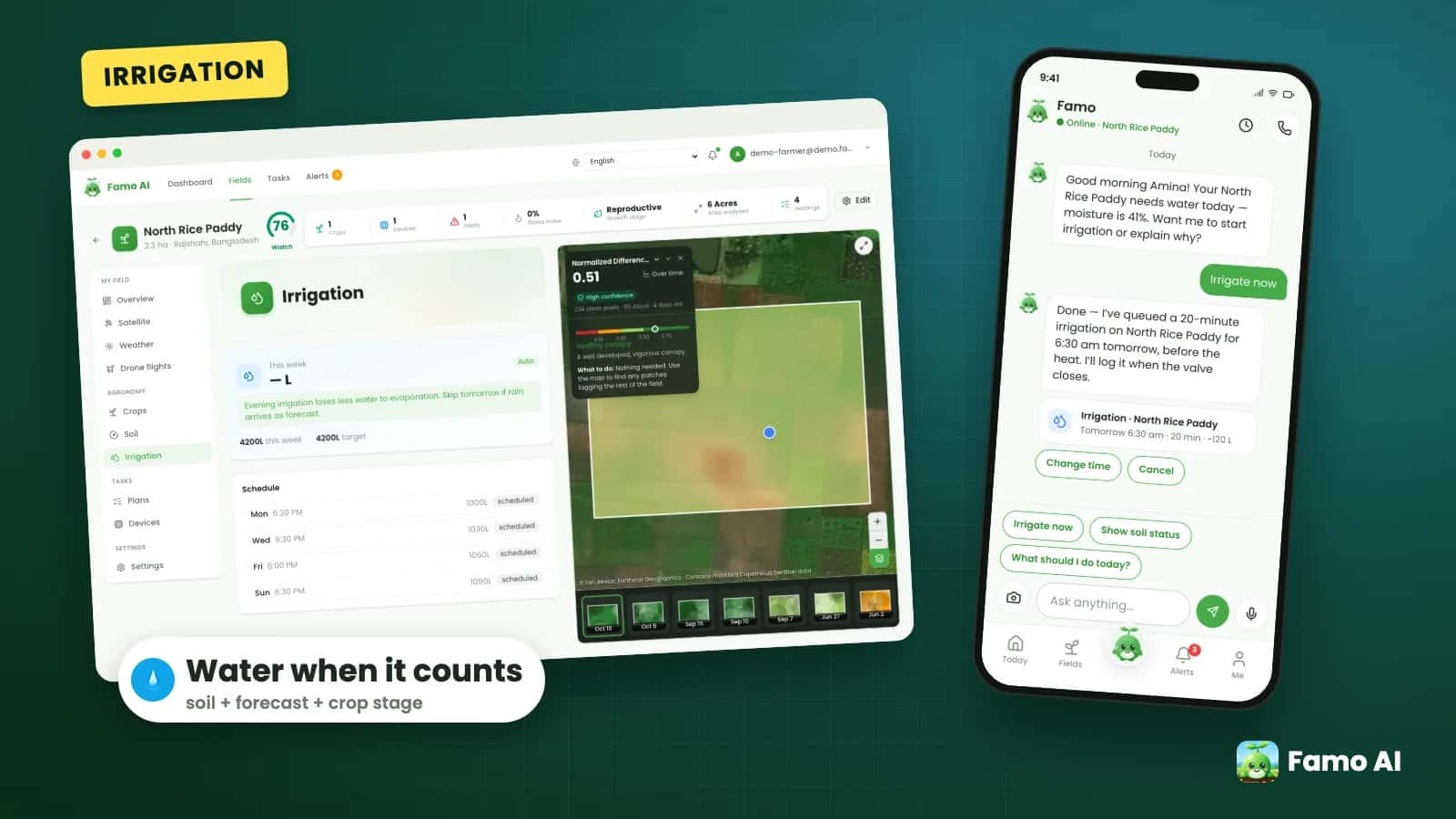
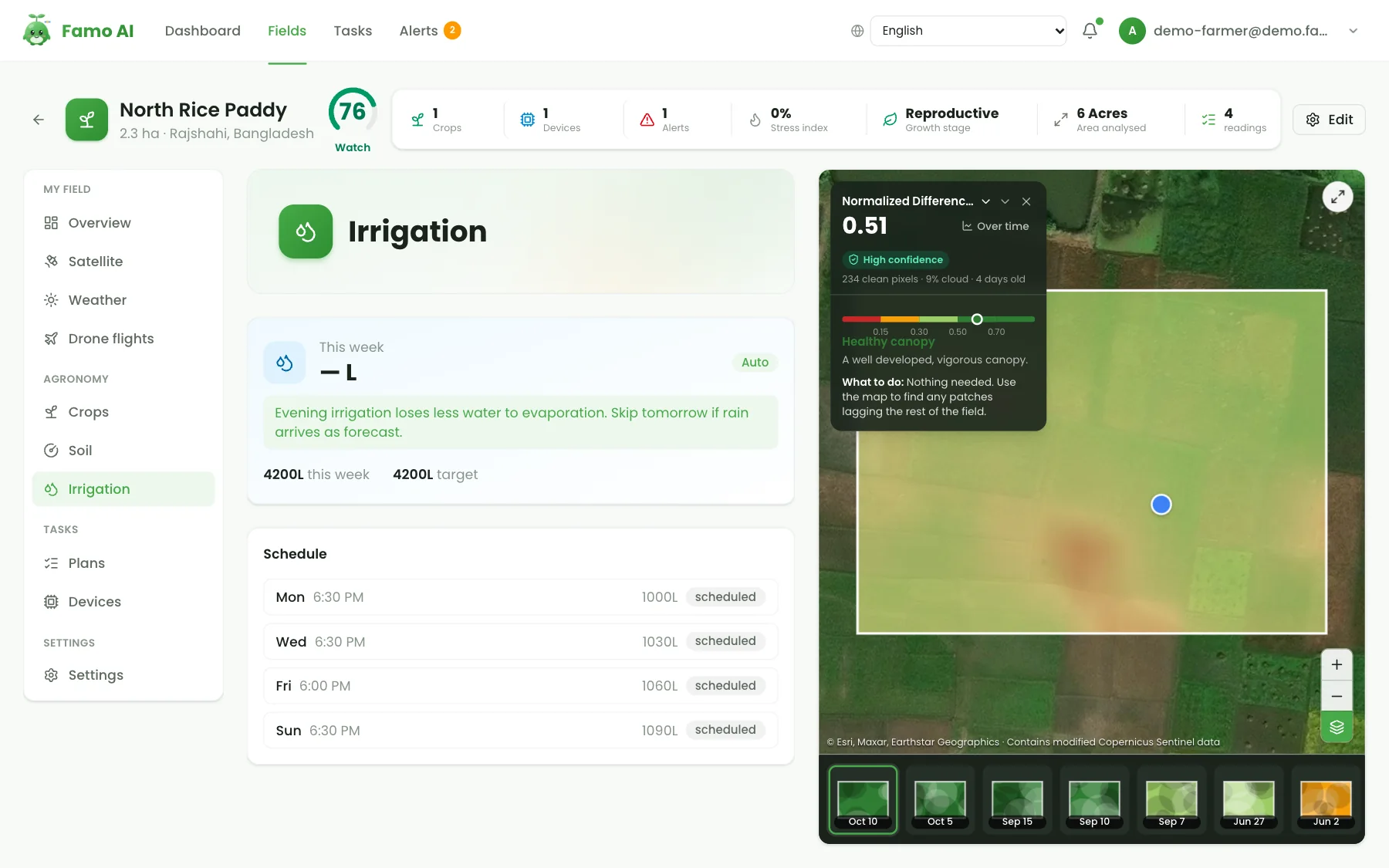
If rain is coming in the next day or two, hold off. Watering just before rain wastes water and can leach nutrients. Famo AI reads the forecast for your field's location and tells you when watering can safely wait.
Step 4: Choose the time
| Time | Effect |
|---|---|
| Early morning | Best. Plants use the water through the day, and leaves dry quickly. |
| Evening | Good. Less evaporation than midday, but wet leaves overnight can favour disease. |
| Midday heat | Avoid. A large share of the water evaporates. |
Step 5: Give enough, then stop
Water long enough to wet the whole root zone, then let the soil dry down before the next irrigation. Watching your moisture reading rise to the target range is the clearest sign you can stop.
Common mistakes
- Watering on a fixed calendar whatever the weather.
- Watering just before rain.
- Judging by the surface. The top can look dry while the roots still have water, or look wet while the roots are dry.
- Ignoring soil type. Sandy soil needs smaller, more frequent watering than clay.
- Overwatering. Waterlogged roots cannot breathe, leaves turn yellow, and disease spreads.
How Famo AI helps
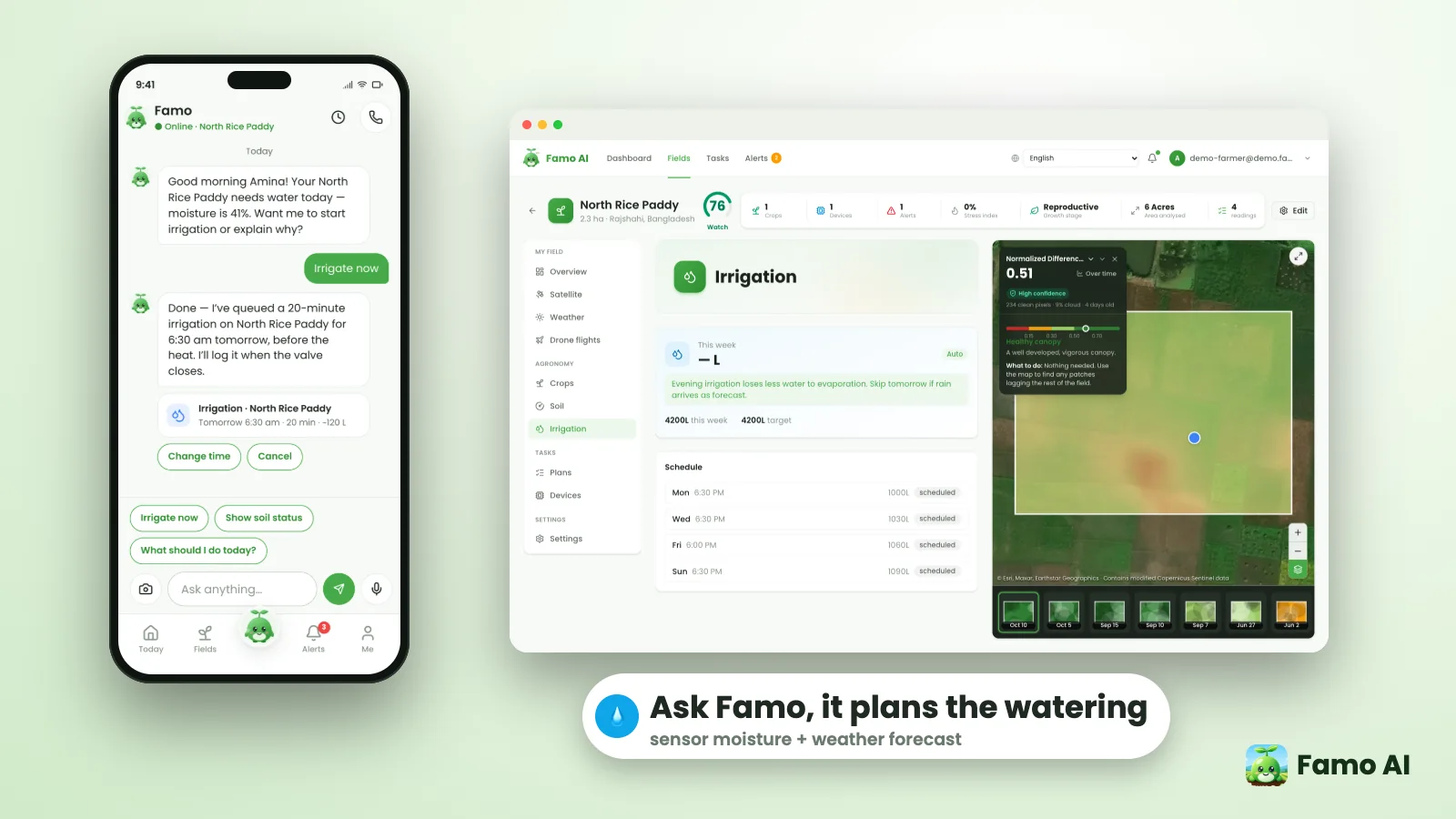
Famo AI combines three things you would otherwise check by hand: the soil moisture from your sensor, the weather forecast for your field, and your crop stage. From these it suggests when and how much to irrigate, adds the task to your list, and records what you did. You can also just ask Famo by voice: "Does my field need water today?" Smart irrigation devices can be connected to the same dashboard. Read more on the Famo Open Field page.
Get Famo AI on Google Play or try the live demo.
Frequently asked questions
How much water does my crop need?
It depends on the crop, its stage, your soil and the weather. Instead of a fixed number, use moisture readings against your crop's target range and refill the root zone.
How can I tell if I am overwatering?
Signs include standing water, yellowing leaves, a musty smell and moisture readings far above the target range. Reduce watering and improve drainage.
Can satellites tell me when to irrigate?
Satellite images show how healthy and stressed a crop looks, including a moisture-related index, which helps you spot dry patches. They estimate the plants rather than measure the soil directly, so they work best together with a soil sensor or a finger test.
Does smart irrigation save water?
It can, because you water only when needed. Results depend on how you irrigated before, so measure your own use before and after.