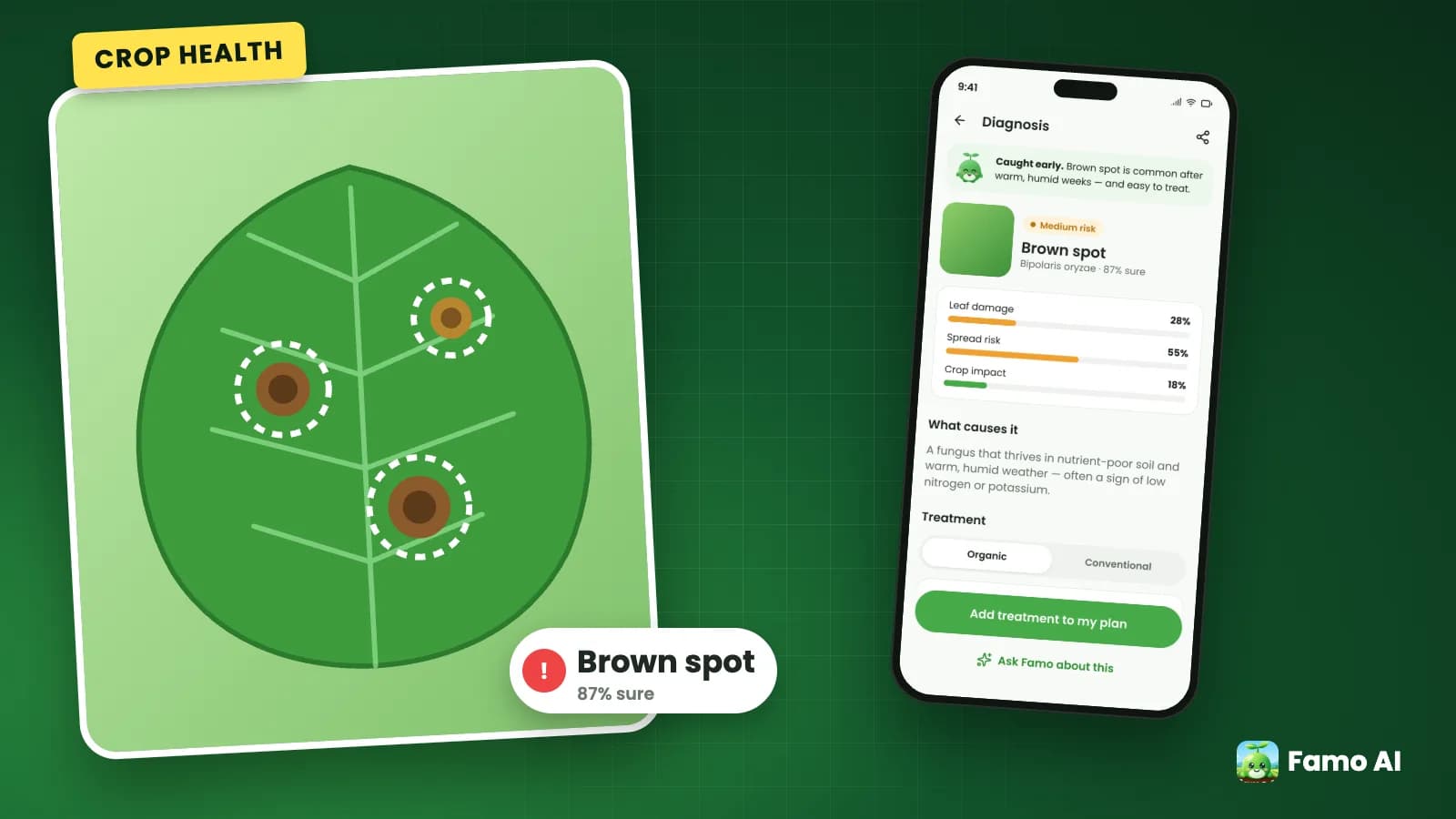
Rice diseases are easiest and cheapest to deal with in the first few days. By the time half a field looks sick, the loss is already happening. This guide shows the early signs of three common rice leaf diseases and how to take a good photo for an AI scan.
In short
- Look closely at the leaf shape and colour of the spots. The pattern is the clue.
- Check often, especially after warm, humid or rainy spells and after heavy nitrogen fertiliser.
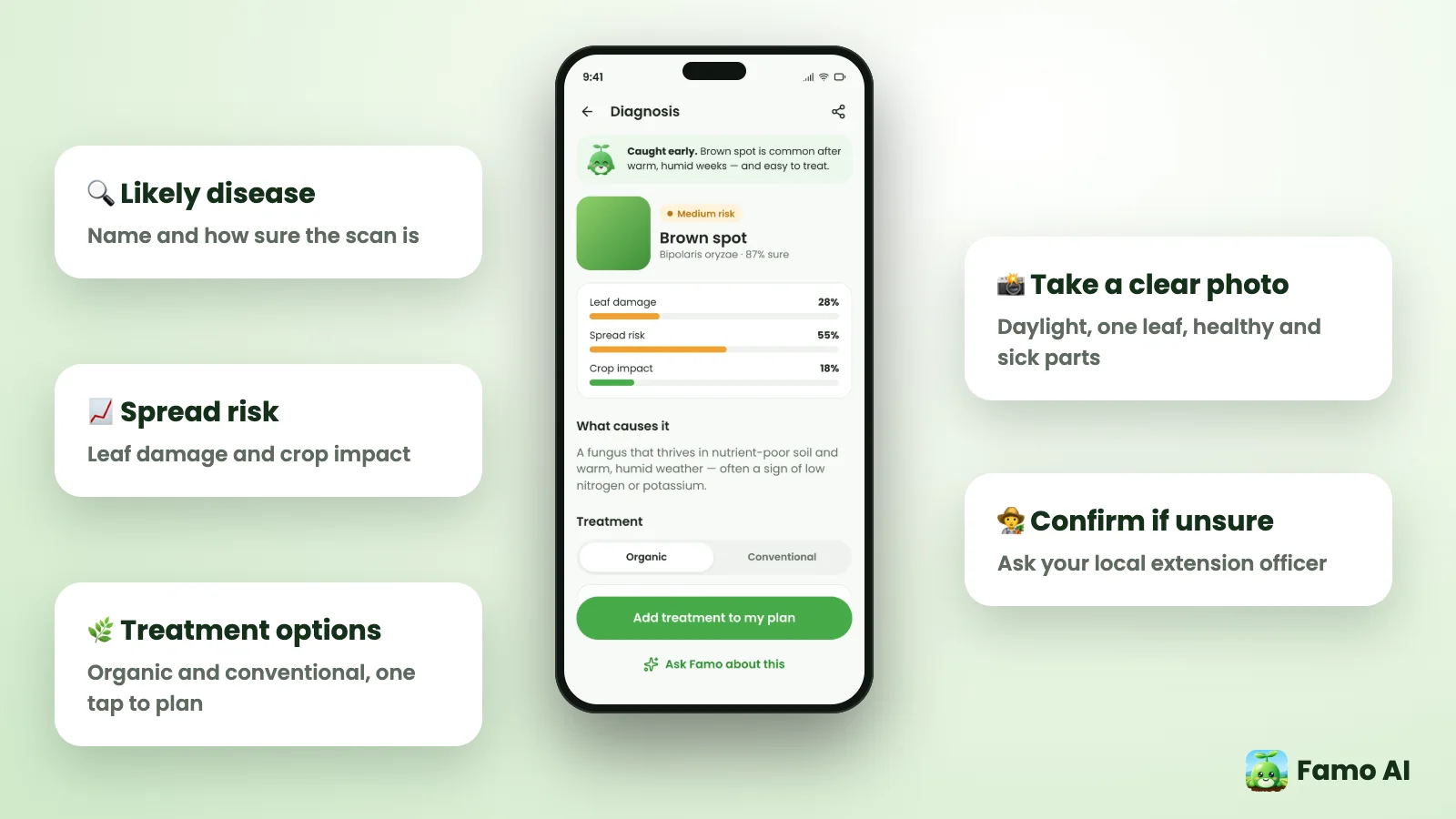
- Photograph in daylight, one leaf filling the frame, showing both healthy and affected parts.
- An app can point you in the right direction, but it is not a laboratory. For serious outbreaks, ask your local extension officer.
The three diseases to know
| Disease | What you see on the leaf | Often favoured by | First step |
|---|---|---|---|
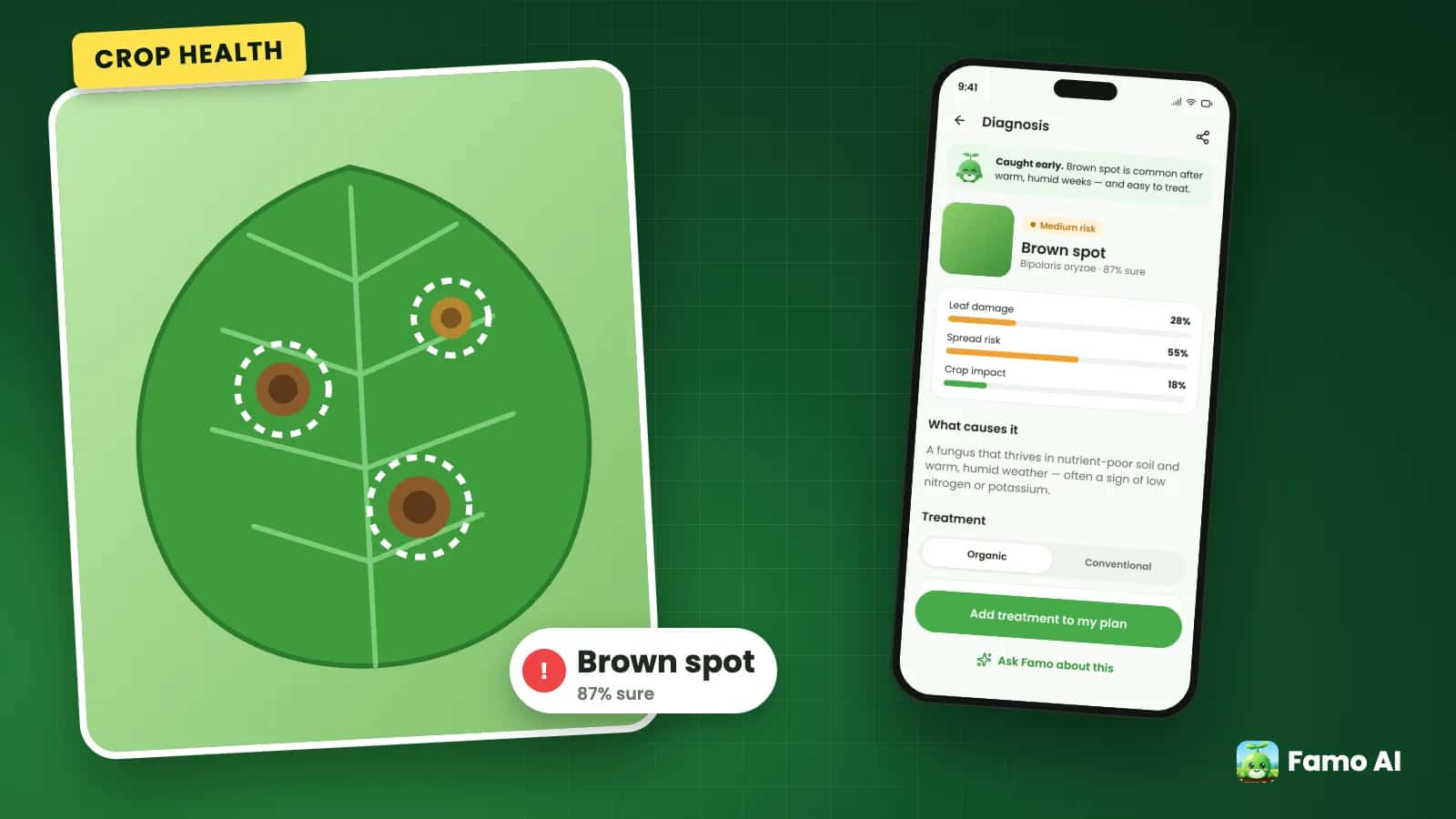
| Brown spot | Small oval brown spots, often with a grey or pale centre | Poor or unbalanced soil nutrition, stress, warm humid weather | Fix nutrition (soil test, balanced fertiliser), reduce stress |
| Blast | Diamond or spindle-shaped spots with a grey centre and brown edge; can also hit the neck of the panicle | High humidity, cool nights, too much nitrogen | Avoid extra nitrogen, ask for local advice early |
| Bacterial leaf blight | Water-soaked, yellow to straw-coloured streaks starting at the leaf tip or edges | Wet, windy weather and injured leaves | Drain extra water, avoid extra nitrogen, use resistant varieties next season |
These are the typical signs. Similar damage can come from nutrient shortage, pests or herbicide, so a clear photo and a second opinion are valuable.
How to take a good leaf photo
- Use daylight. Avoid harsh midday glare and your own shadow on the leaf.
- Fill the frame with one leaf. Show the edge between healthy and affected tissue.
- Hold steady and focus on the spots. A blurry photo gives a poor answer.
- Take two or three photos from different plants.
- Do not wipe or pick the leaf apart. Leave the symptoms as they are.
- Note where in the field it was, and whether it is spreading.
What to do first
- Do not rush to spray. Confirm the problem first, because the wrong product wastes money.
- Look at nutrition and water. Many leaf diseases get worse with unbalanced fertiliser or stress.
- Remove the worst-infected plant material and keep tools and boots clean when moving between fields.
- Use only products registered for rice in your country, at the rates on the label and on your adviser's advice. Famo AI shows organic and conventional options separately so you can choose.
- Record what you did so you can see whether it worked.
When to call an expert
Call your extension officer or an agronomist if the damage spreads over several days, if it reaches the panicle, or if the scan result and the symptoms do not match.
How Famo AI helps
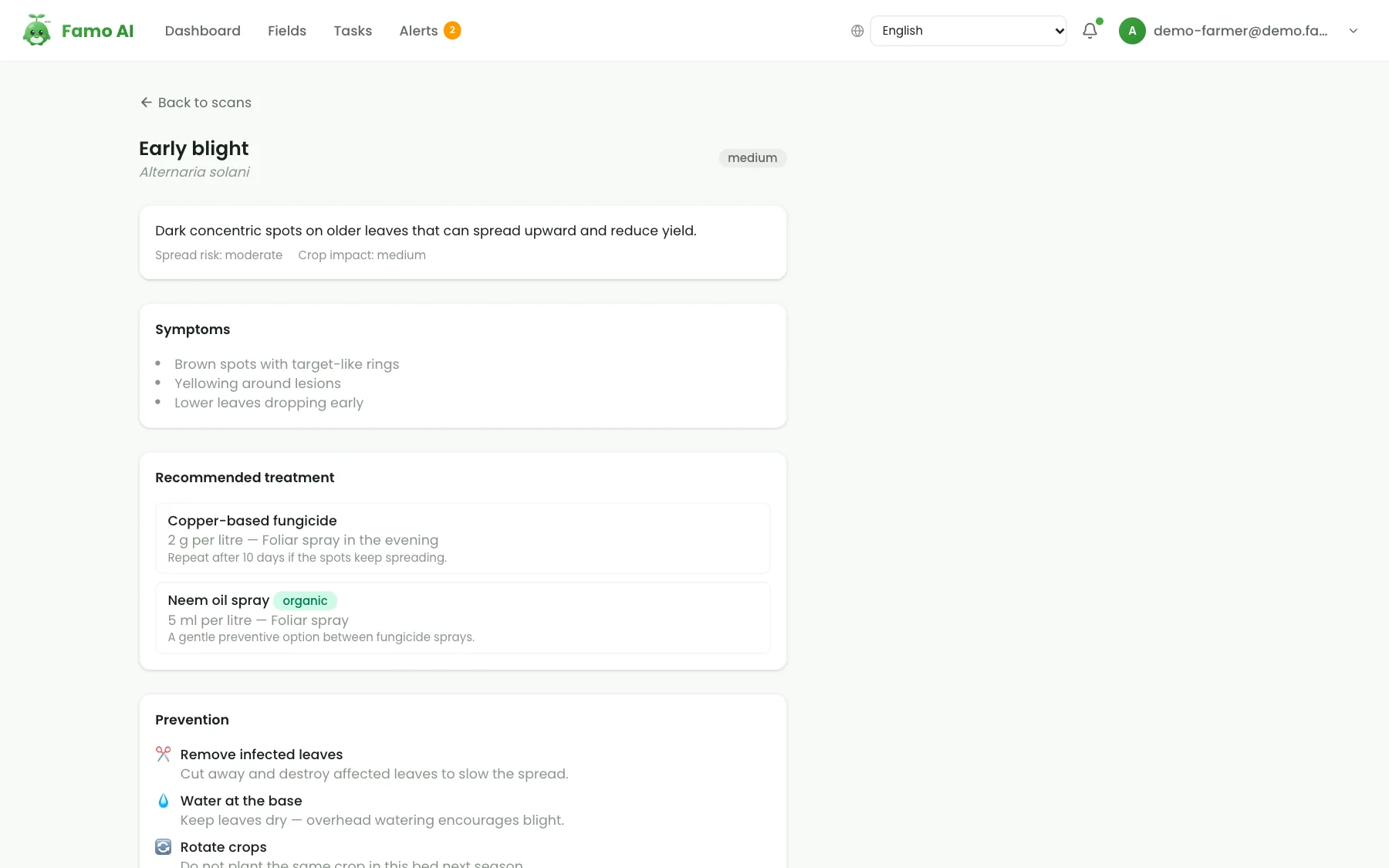
The Famo AI leaf scan looks at your photo and suggests the most likely disease, shows how confident it is, explains likely causes, rates the leaf damage and spread risk, and offers organic and conventional treatment options. One tap adds the treatment to your task plan, and you can ask Famo follow-up questions in your language. The scan needs an internet connection. Read how it works in Crop disease detection from a photo.
Get Famo AI on Google Play or try the live demo.
Frequently asked questions
Is the AI diagnosis always right?
No. AI is good at common, clear cases and helps you decide faster, but similar problems can look alike. Use it as a first check and confirm important decisions with local experts.
Does the leaf scan work without internet?
No. The scan needs a connection. Take the photo in the field, and if the signal is weak, run the scan when you reach a better one.
Which crops can it check?
Famo AI focuses on common field and vegetable crops. If a crop is not recognised, use the photo tips above and ask the advisor in the app.
Can I prevent these diseases?
You can reduce the risk: use healthy seed, resistant varieties, balanced fertiliser, good drainage and clean field practice, and scout regularly.