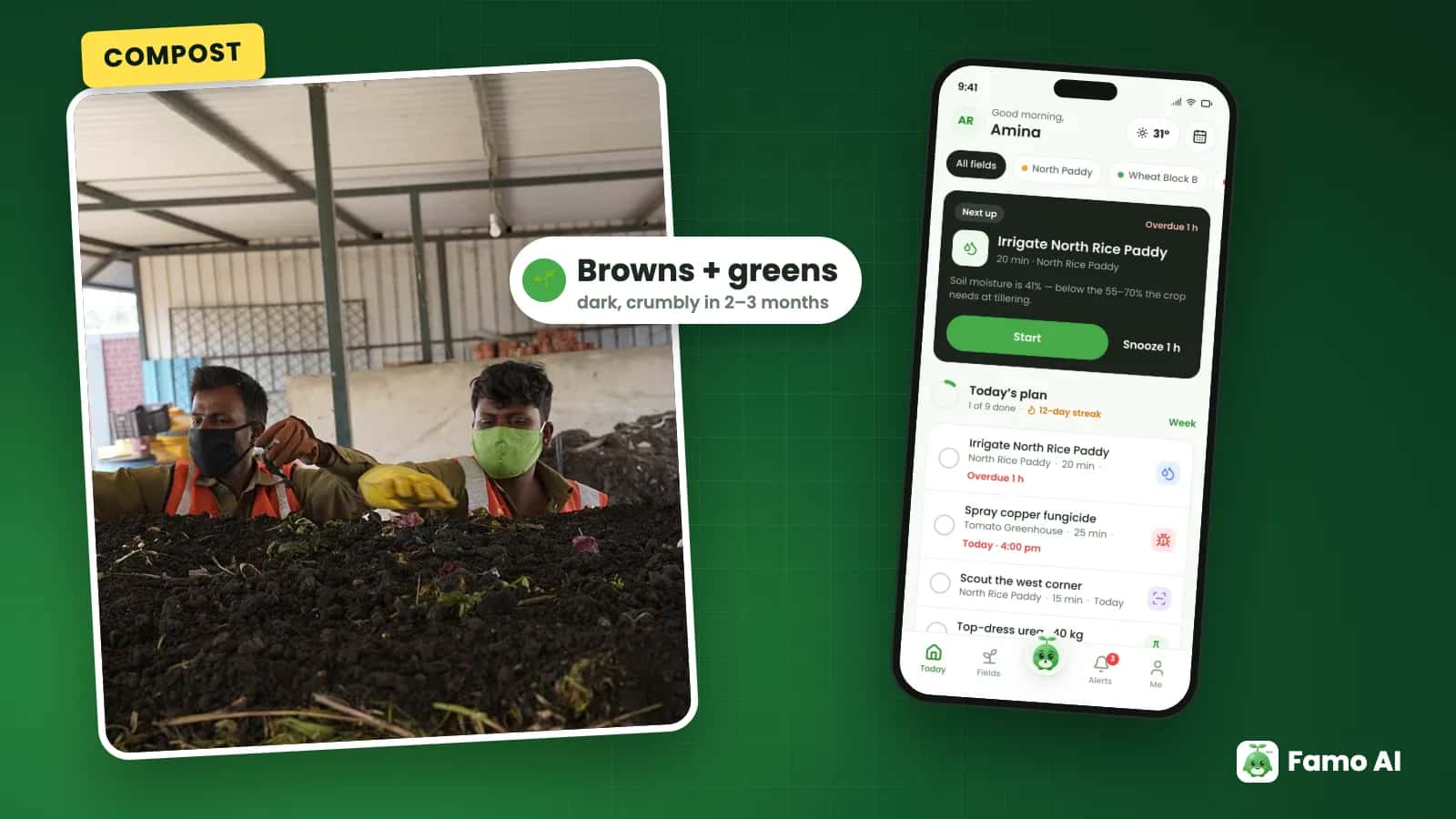
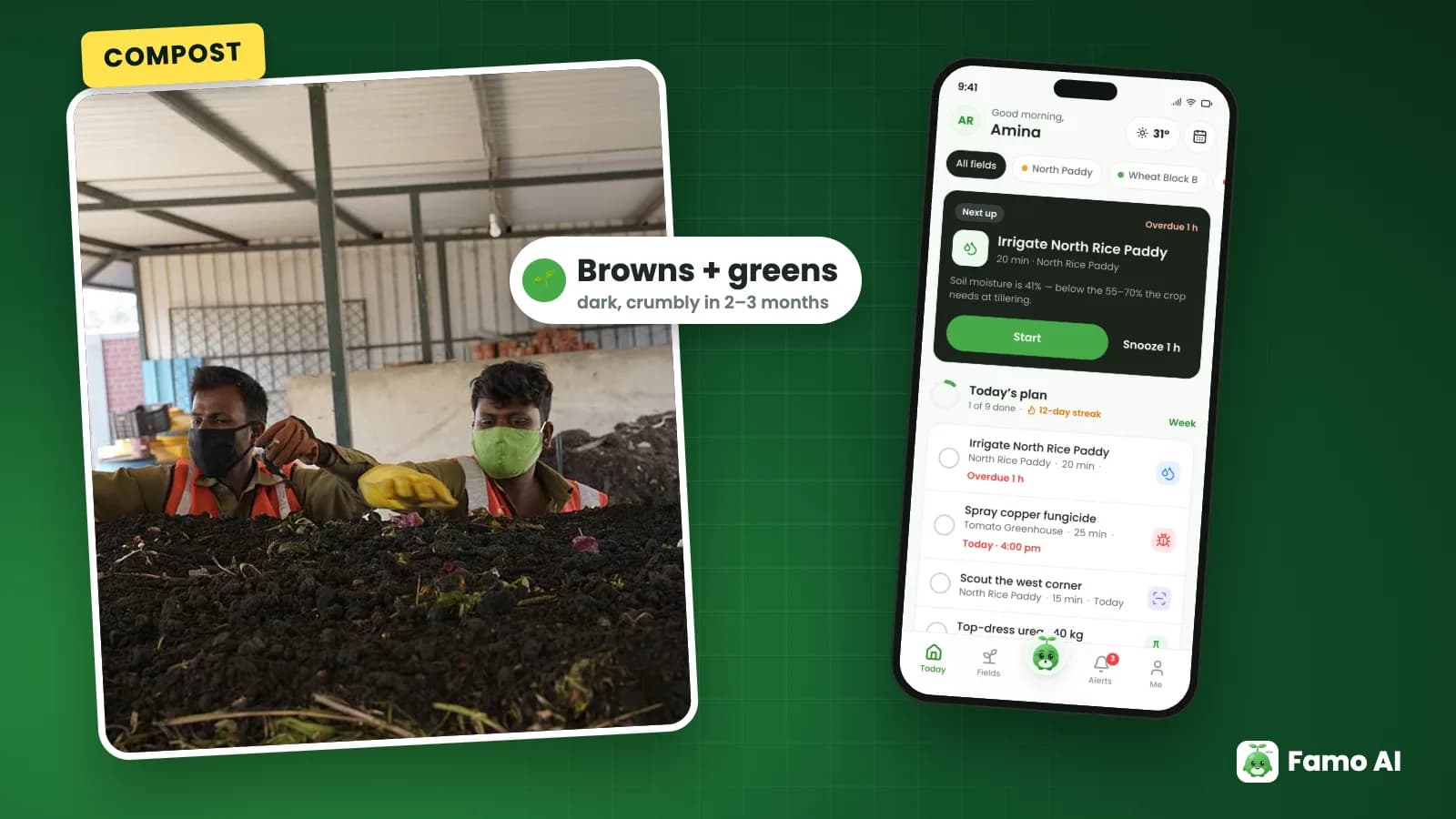
Good compost turns crop residue and manure into dark, crumbly organic fertilizer that feeds the soil. It costs little and improves soil structure, water holding and life. Here is a simple method that works at home or on a farm.
In short
- Mix "browns" (dry, carbon-rich) and "greens" (fresh, nitrogen-rich).
- Keep it as moist as a wrung-out sponge and turn it every week or two.
- Ready in about 2 to 3 months, dark, crumbly and earthy-smelling.
- Compost is slow and mild. It builds soil; it does not replace fast nitrogen.
What goes in
| Browns (carbon) | Greens (nitrogen) |
|---|---|
| Dry leaves, straw, rice husk, sawdust, cardboard | Fresh weeds, vegetable waste, grass clippings, animal manure |
Mix roughly two to three parts brown to one part green by volume. Avoid meat, dairy, oily food, diseased plants and plants with seeds you do not want.
Step by step
- Choose a shady, drained spot and build a heap or pit about a metre high.
- Layer browns and greens, chopping large pieces.
- Add water to damp, not soggy.
- Turn the heap every 1 to 2 weeks to add air.
- Wait until it is dark, crumbly and smells like soil.
- Spread it on beds or mix into the soil before planting.
A well-managed hot heap warms up and helps break down weed seeds and some pathogens.
Compost versus chemical fertilizer
| Compost / organic | Urea, DAP | |
|---|---|---|
| Nutrient strength | Low, varies | High, exact |
| Speed | Slow | Fast |
| Soil effect | Builds structure and life | Feeds the crop only |
| Best use | Soil building, base feed | Targeted top-ups |
Many farms use both: compost for soil health, mineral fertilizer to hit nutrient gaps shown by a soil test.
Using manure safely
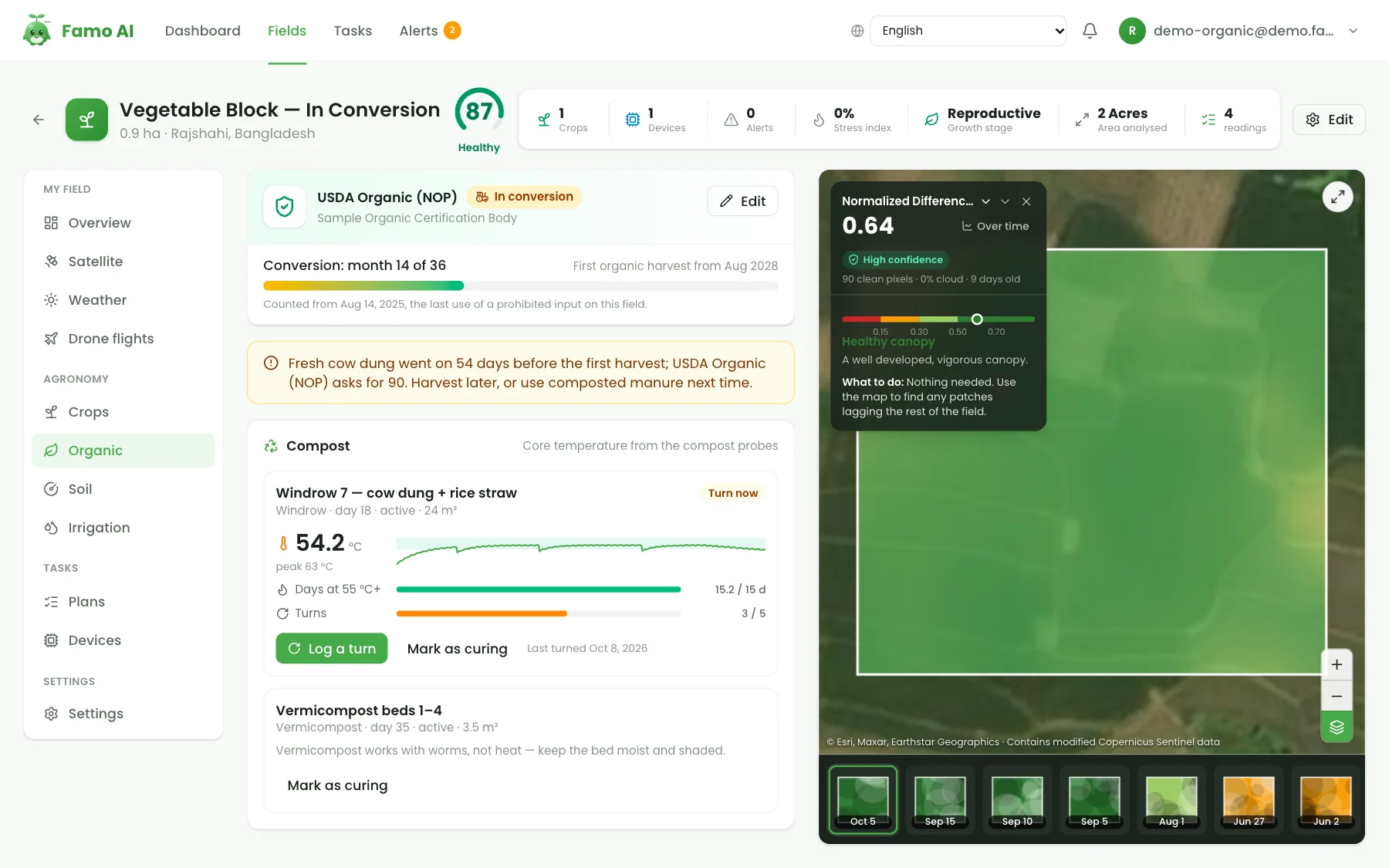
Fresh manure can burn plants and carry pathogens. Compost it first, and if you farm organically check your certifier's rules on timing before harvest.
How Famo AI helps
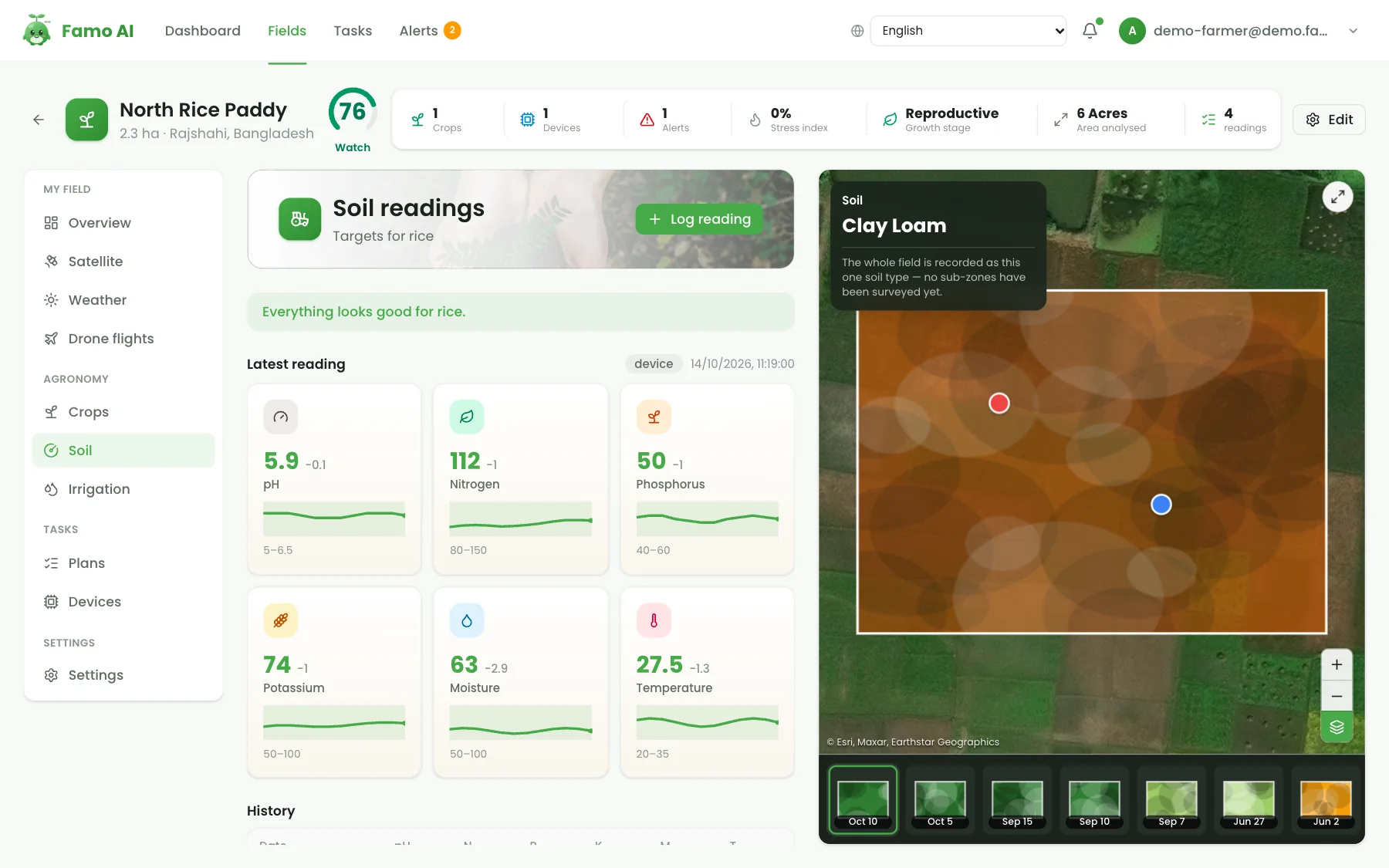
Famo Organic Farming helps you record compost batches, inputs and conversion progress for certification, and soil tests show whether your compost is improving nutrient levels.
Get Famo AI on Google Play or try the live demo, no sign-up needed.
Frequently asked questions
How long does compost take?
Usually 2 to 3 months, faster with regular turning and a good mix.
Why does my compost smell bad?
Too wet or too much green material. Add dry browns and turn it.
Can I use compost instead of urea?
Compost builds soil but is low in nitrogen; plan top-ups based on a soil test.