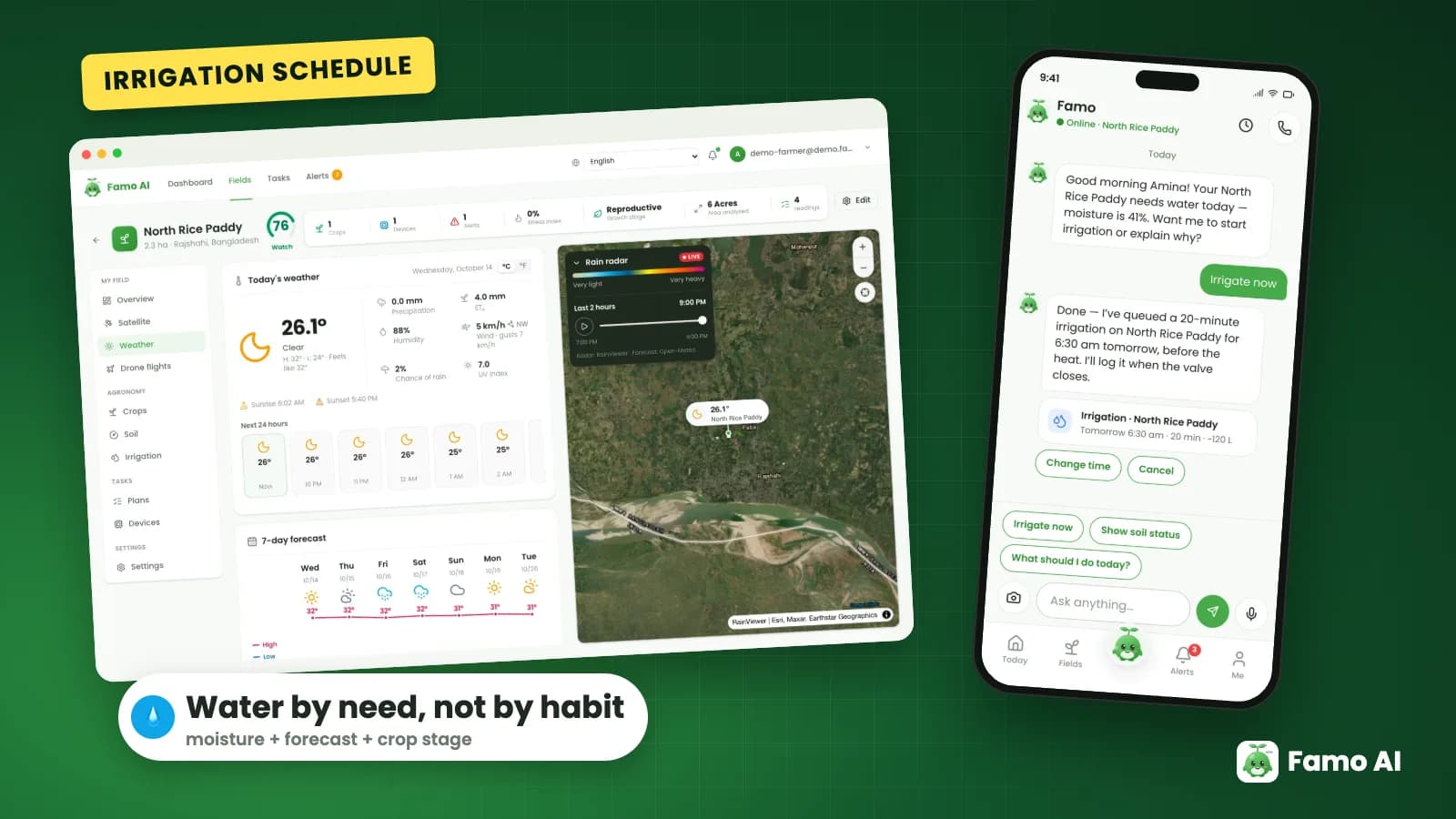
An irrigation schedule says when to water, how much and for how long. A good one saves water and fuel and protects yield. The examples below show the method; adapt them to your soil, rainfall and local extension advice.
In short
- A schedule balances three things: what the soil holds, what the crop needs at its stage, and the weather.
- Start from soil moisture, not the calendar. A calendar is only a first guess.
- Critical stages matter most, usually establishment, flowering and grain or fruit fill.
- Revise as you learn. Record what you watered and what happened.
What irrigation scheduling means
It is the planning of irrigation timing and amount so the root zone stays in a healthy moisture range: never so dry that the crop is stressed, never so wet that roots lack air or water is wasted.
Build a schedule in five steps
- Know your soil. Sandy soil dries fast and needs small, frequent irrigations; clay holds water for days.
- Know the crop stage. Water needs rise and fall through the season.
- Measure moisture with a sensor or the finger test at root depth.
- Check the forecast and skip irrigation before rain.
- Write it down and adjust after each cycle.
Example schedules (illustrative)
| Crop | Stage that matters | Example approach |
|---|---|---|
| Wheat | Crown root initiation (about 3 weeks after sowing), tillering, flowering, grain fill | Often 4 to 6 irrigations depending on soil and rain |
| Rice | Establishment, tillering, flowering | Many farmers use alternate wetting and drying: re-flood when the water drops about 15 cm below the soil surface |
| Vegetables (loam) | Transplanting, flowering, fruit set | Light, frequent irrigation to keep the root zone evenly moist |
These are starting points. Ask your local office for numbers that fit your variety and region.
How Famo AI helps
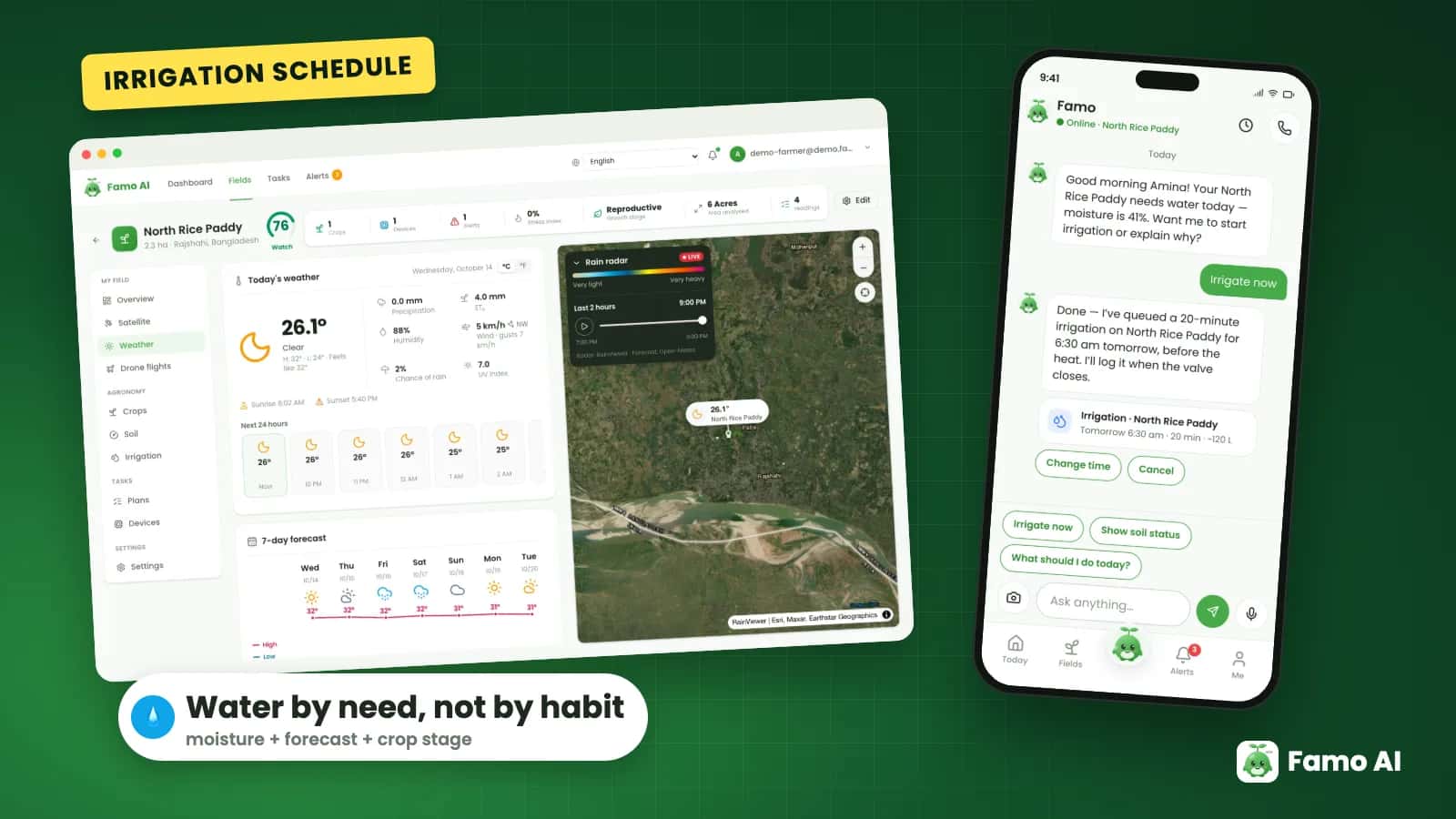
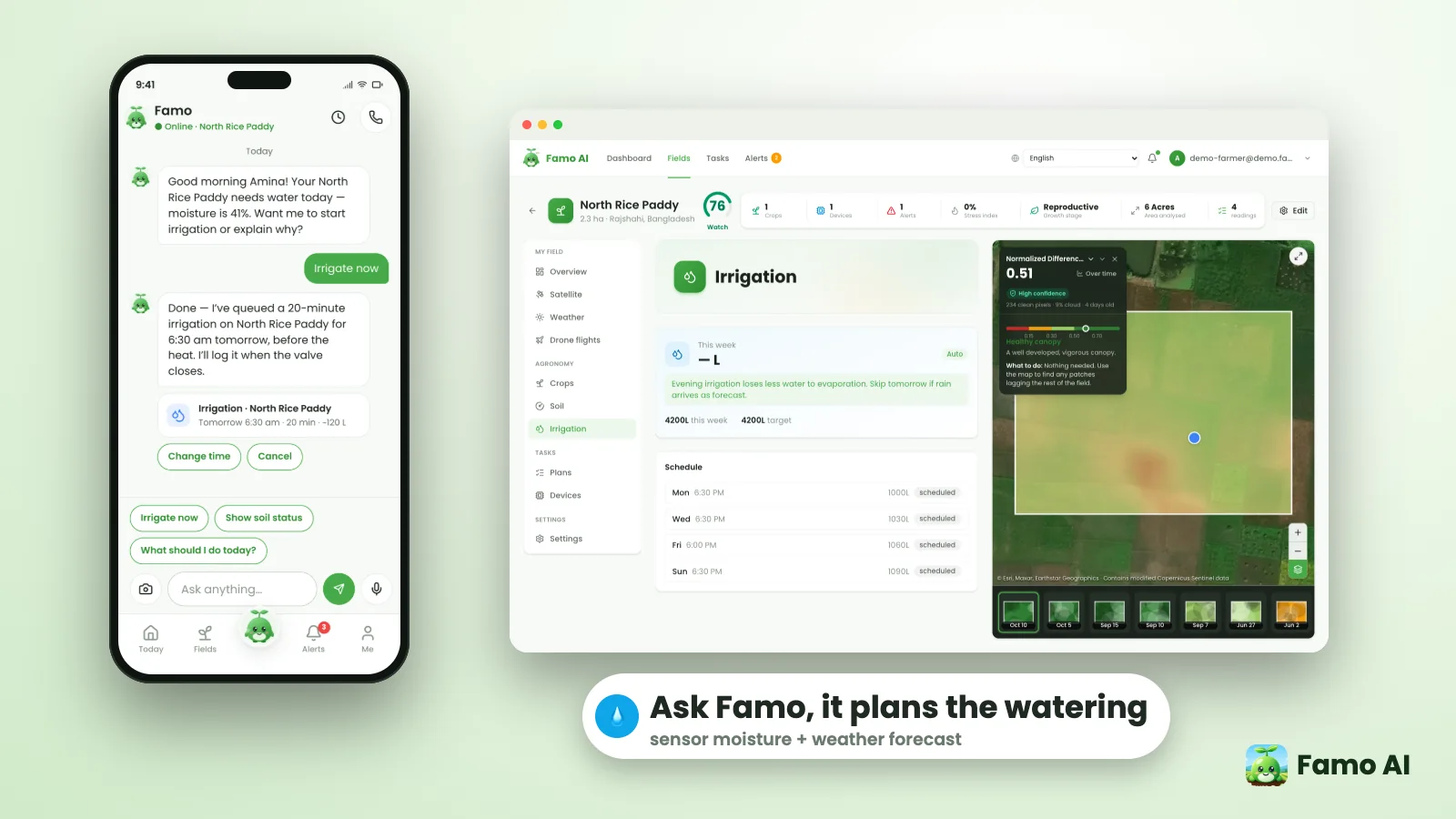
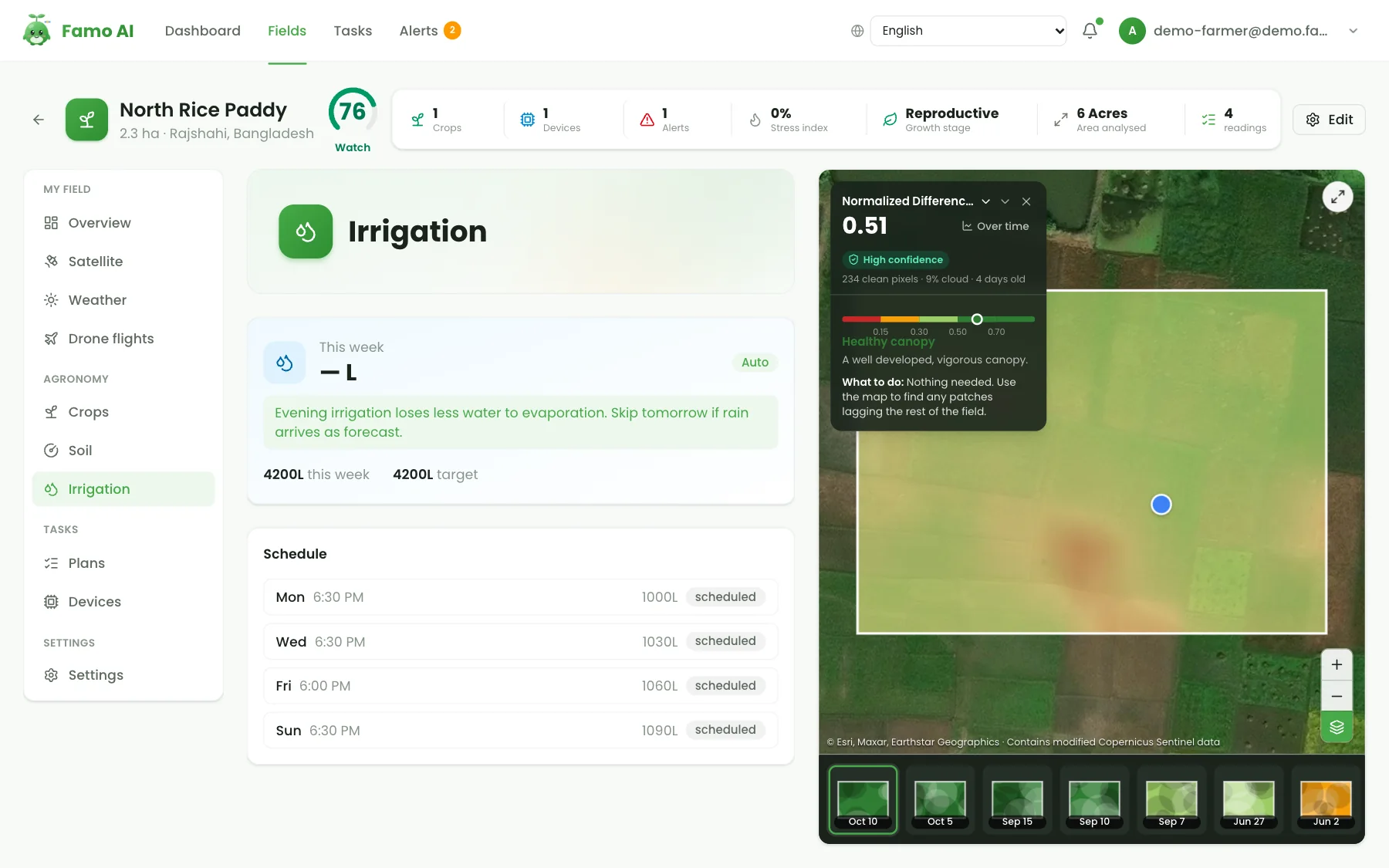
Famo AI combines the soil moisture from your sensor, the forecast for your field and your crop stage to suggest when and how much to irrigate, adds the task to your list and records what you did. See our guide on when to irrigate.
Get Famo AI on Google Play or try the live demo, no sign-up needed.
Frequently asked questions
How often should I irrigate?
It depends on soil, crop stage and weather, so use moisture readings rather than a fixed number of days.
What is the best time to irrigate?
Early morning is usually best; evening is next. Avoid midday heat.
Can I use the same schedule every season?
Use it as a template, but adjust for rainfall, temperature and crop stage each season.