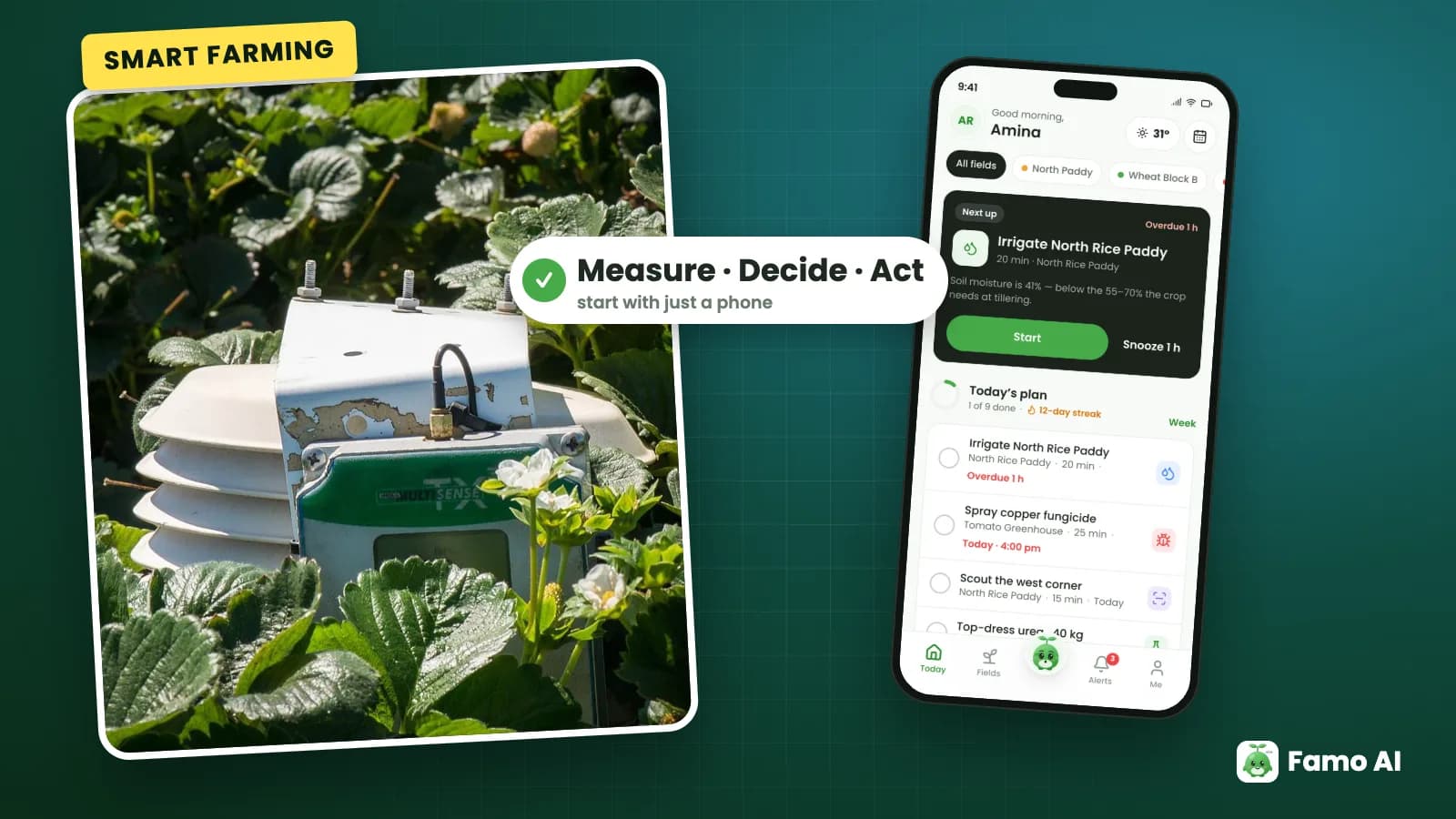
Smart farming, also called precision agriculture, means using data to make better decisions: giving each field, and each part of a field, the water, nutrients and care it actually needs. It does not require big machines; a phone can be enough to begin.
In short
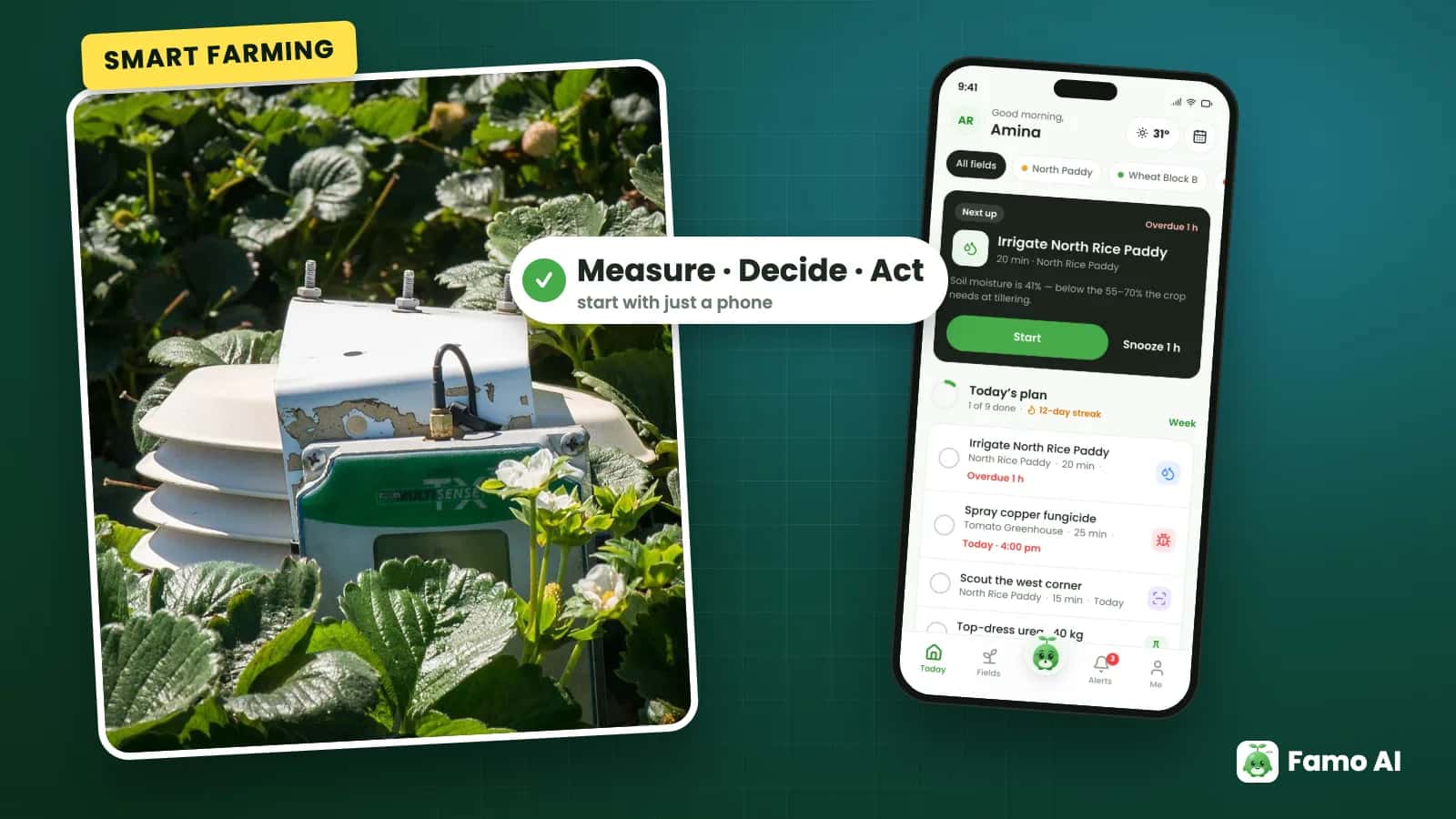
- Smart farming = measure, decide, act, record.
- Main tools: soil sensors, satellites, drones, weather data, AI advice and digital records.
- Benefits: less wasted water and fertiliser, earlier problem detection, better records.
- Start with what is cheap: field map, satellite checks, weather.
The main technologies
| Technology | What it does |
|---|---|
| Soil sensors | Measure moisture, pH and nutrients where roots grow |
| Satellites | Show crop health and stress across the field every few days |
| Drones | Give close-up maps and scouting views |
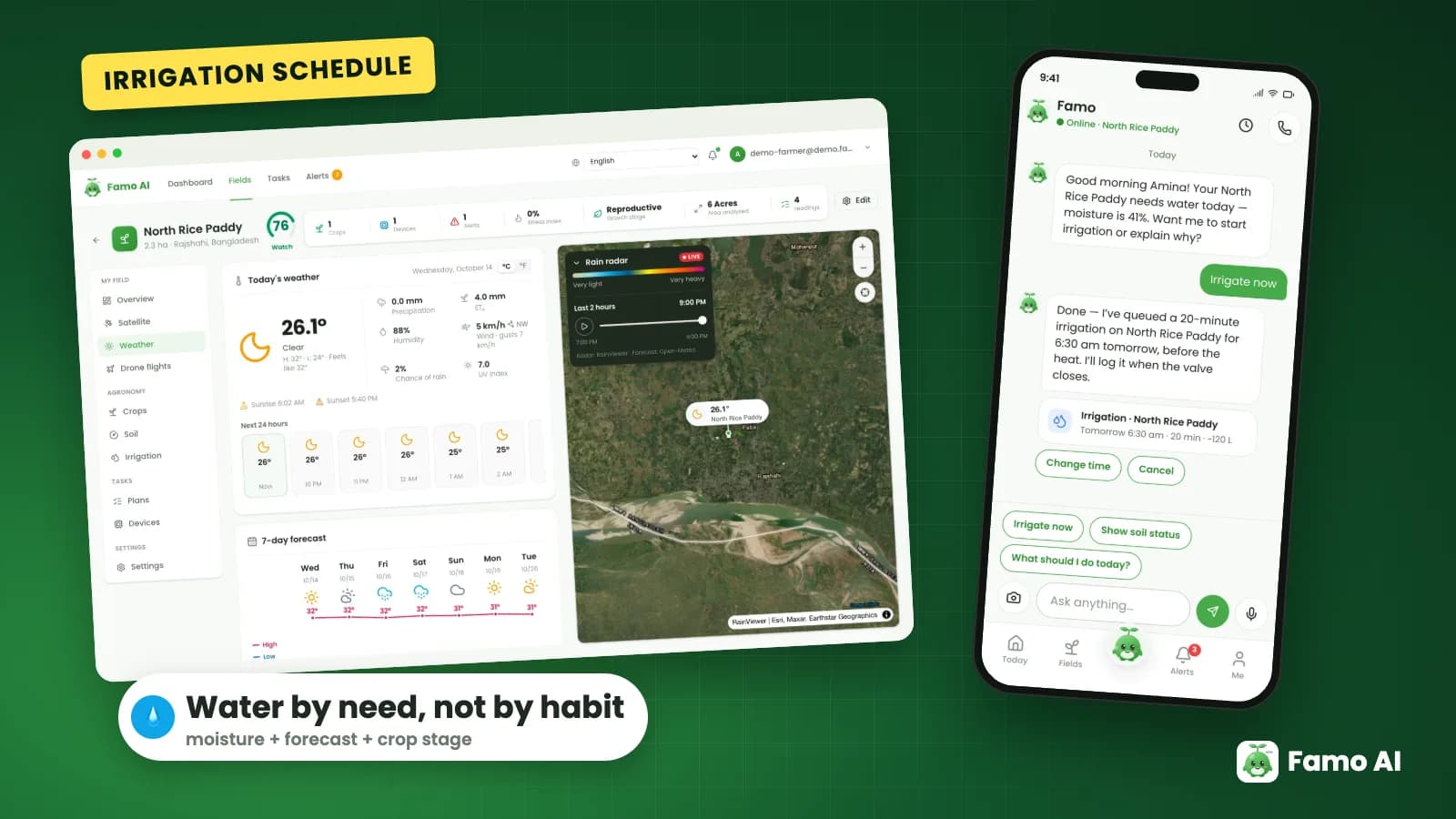
| Weather data | Field-level forecasts for irrigation and spraying |
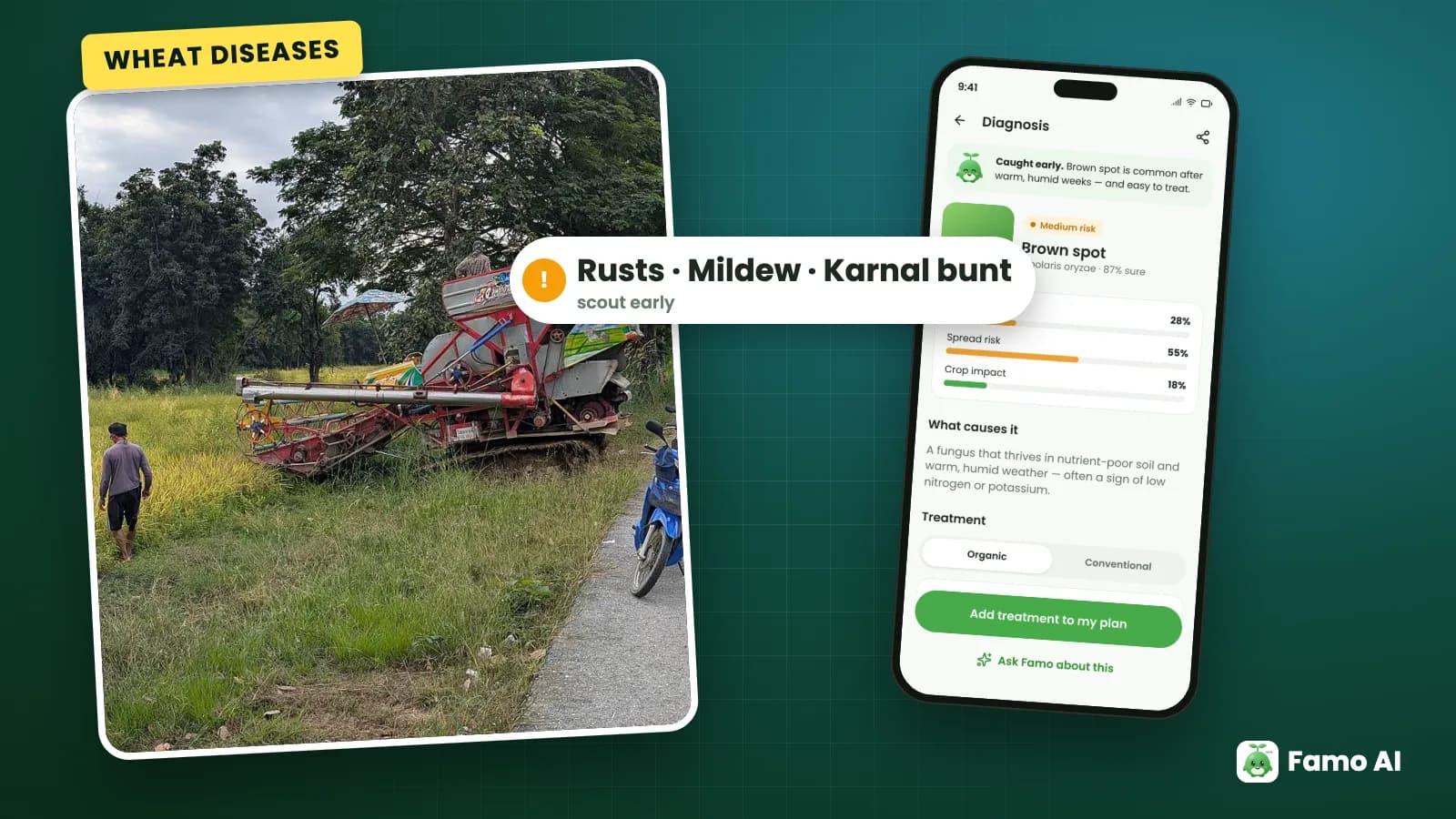
| AI | Spots patterns, diagnoses leaves, answers questions |
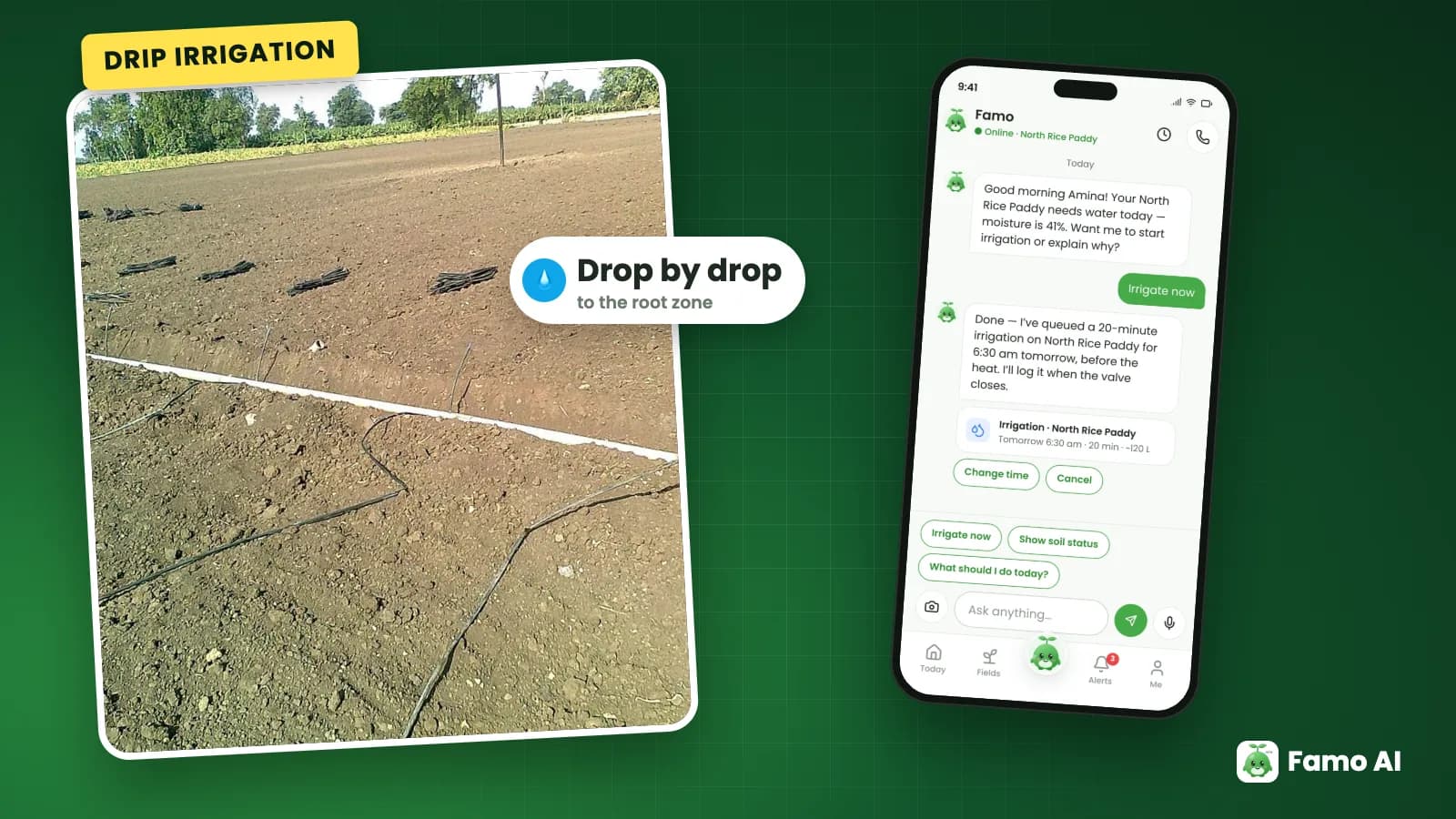
| Smart irrigation | Waters by need, not by calendar |
| Digital records | Keep a history of tasks, inputs and harvests |
Examples
- A farmer checks a satellite map, sees a weak patch and inspects it before it spreads.
- A grower reads soil moisture and delays irrigation because rain is forecast.
- A cooperative sees all members' fields in one dashboard and prioritises visits.
How to start on a small farm
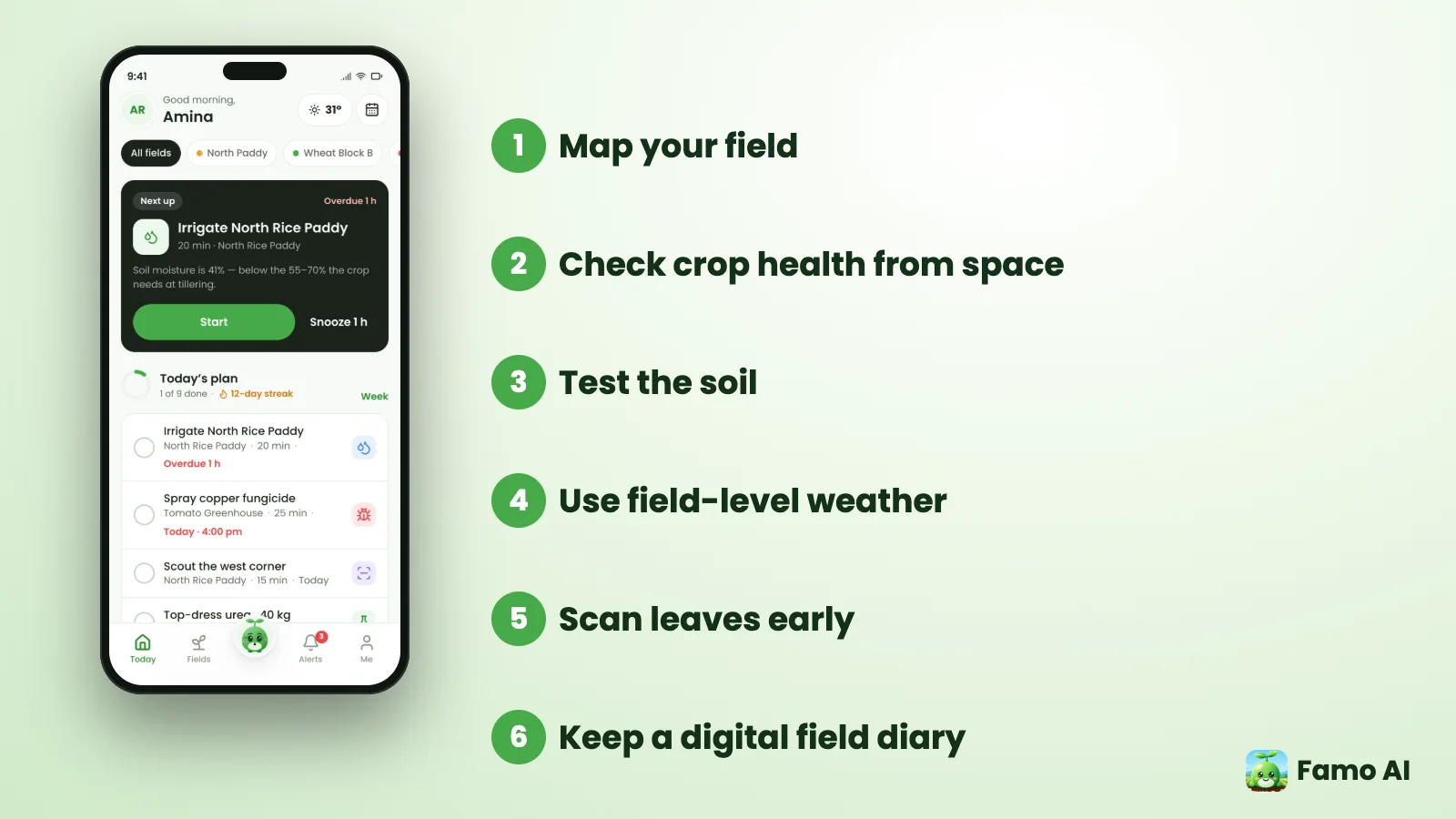
- Map your field.
- Check satellite crop health every week or two.
- Test soil before planting and mid-season.
- Use field-level weather for irrigation and spraying.
- Keep simple digital records.
How Famo AI helps
Famo AI brings these tools into one app and dashboard, in 12 languages, with a free Starter plan. See smart farming for small farms for a first-week plan.
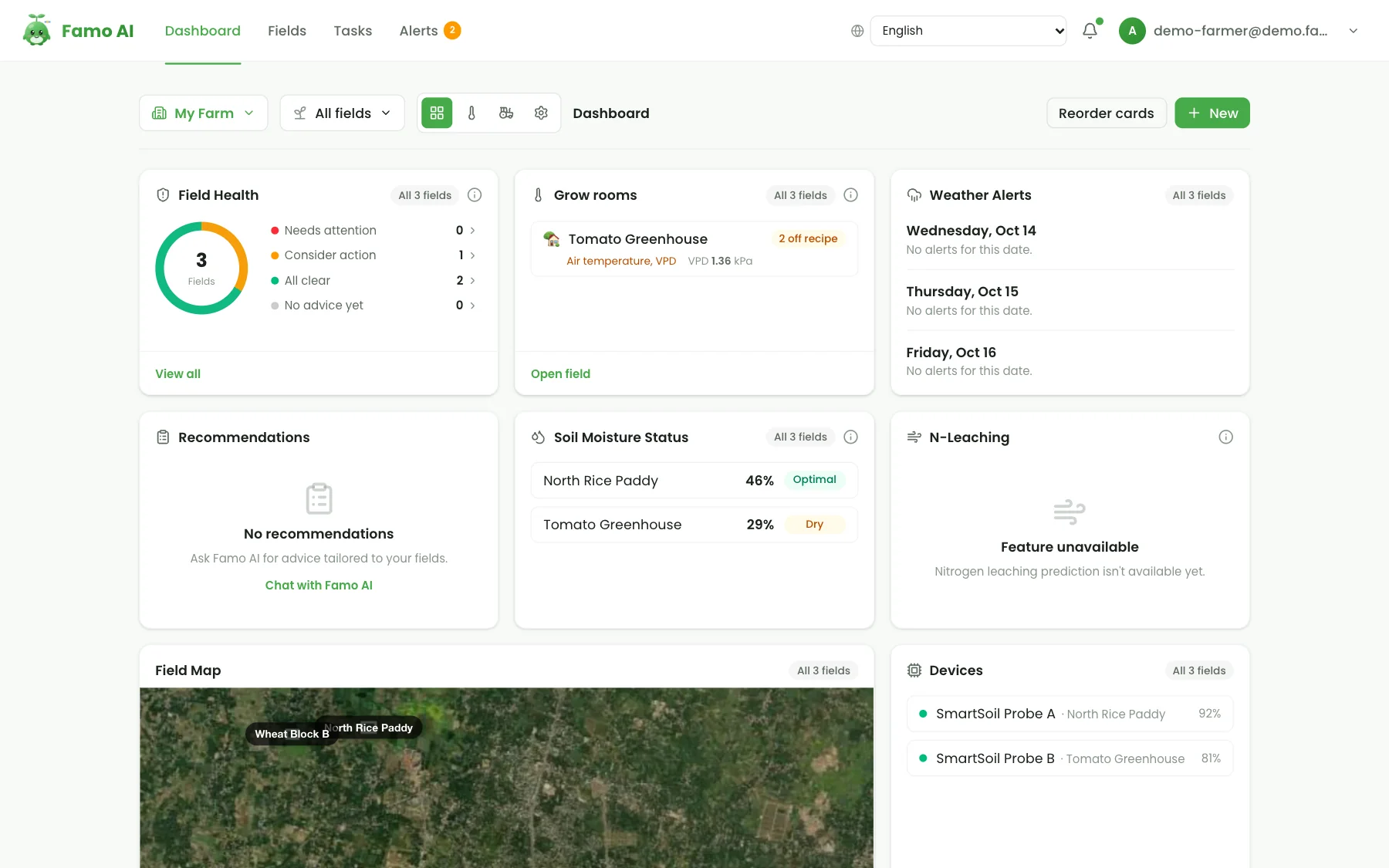
Get Famo AI on Google Play or try the live demo, no sign-up needed.
Frequently asked questions
Is smart farming only for large farms?
No. Many tools work at any size, and small farms often benefit most from avoiding wasted inputs.
What does smart farming cost?
You can start free with satellite checks and weather. Sensors and drones are optional extras you add as you grow.
What is the difference between smart farming and precision agriculture?
They overlap heavily. Precision agriculture stresses managing variation within fields; smart farming is the wider use of digital tools.