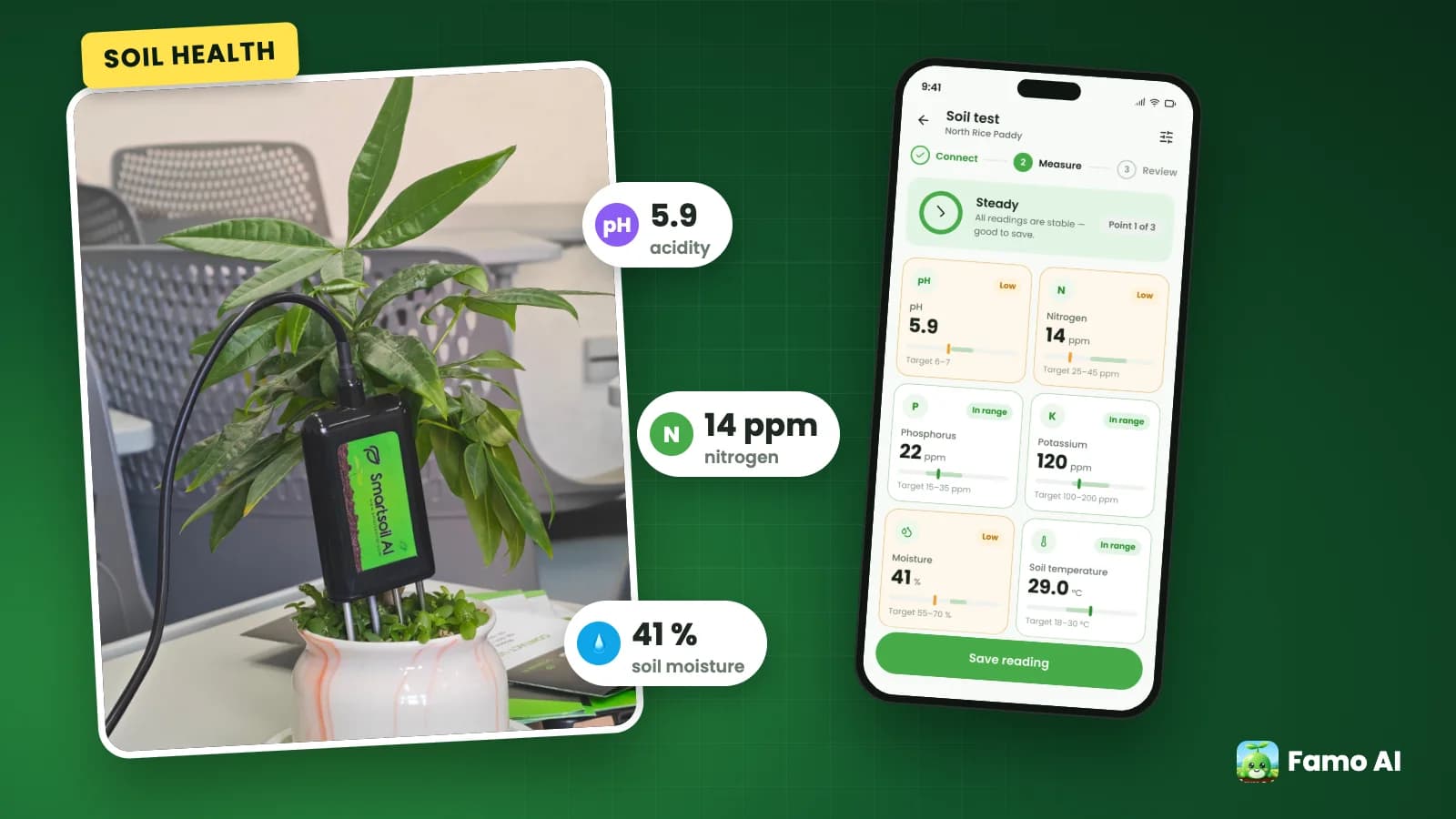
Testing your soil tells you something your crop cannot: whether it can actually use the fertiliser you give it. With a soil sensor and a phone you can do a proper test in about ten minutes, right in the field.
In short
- pH decides what your crop can use. Most field crops grow best between pH 6.0 and 7.0; rice tolerates more acidic soil.
- Test 5 to 10 spots, at the same depth, and average them. One spot can mislead you.
- Soil must be moist and touching the probe. Do not test bone-dry, stony or waterlogged ground.
- Test before planting and again mid-season, and write down the date so you can compare.
Why test your soil at all?
Fertiliser is the biggest input cost on many farms, and it is easy to waste. If the soil is too acidic or too alkaline, nutrients can be present but locked away from the roots. If a nutrient is already high, adding more only costs money and can harm the soil and nearby water. A test turns guessing into a decision.
What you need
- A soil sensor, such as the SmartSoil 8-in-1 sensor, or a lab test kit
- A phone with the Famo AI app, or a notebook
- A clean trowel and a marker or stick to flag your test spots
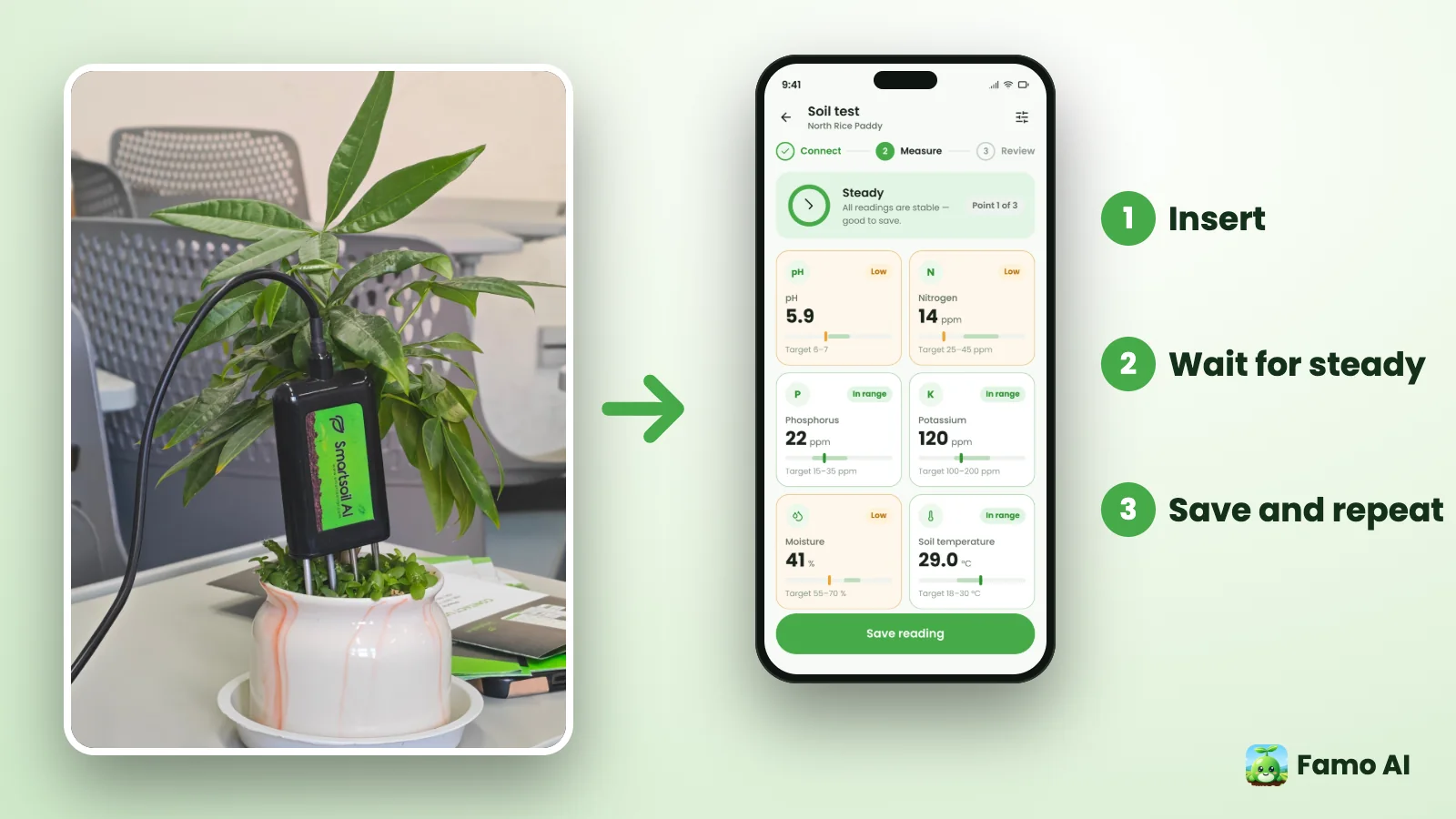
Step by step
- Choose representative spots. Walk the field in a zigzag or a big "W". Skip field edges, compost heaps and places next to irrigation outlets.
- Clear the surface. Brush away leaves, stones and loose crop residue.
- Insert the sensor. Push the probes fully into the soil with firm, steady pressure, so there is no air gap around them.
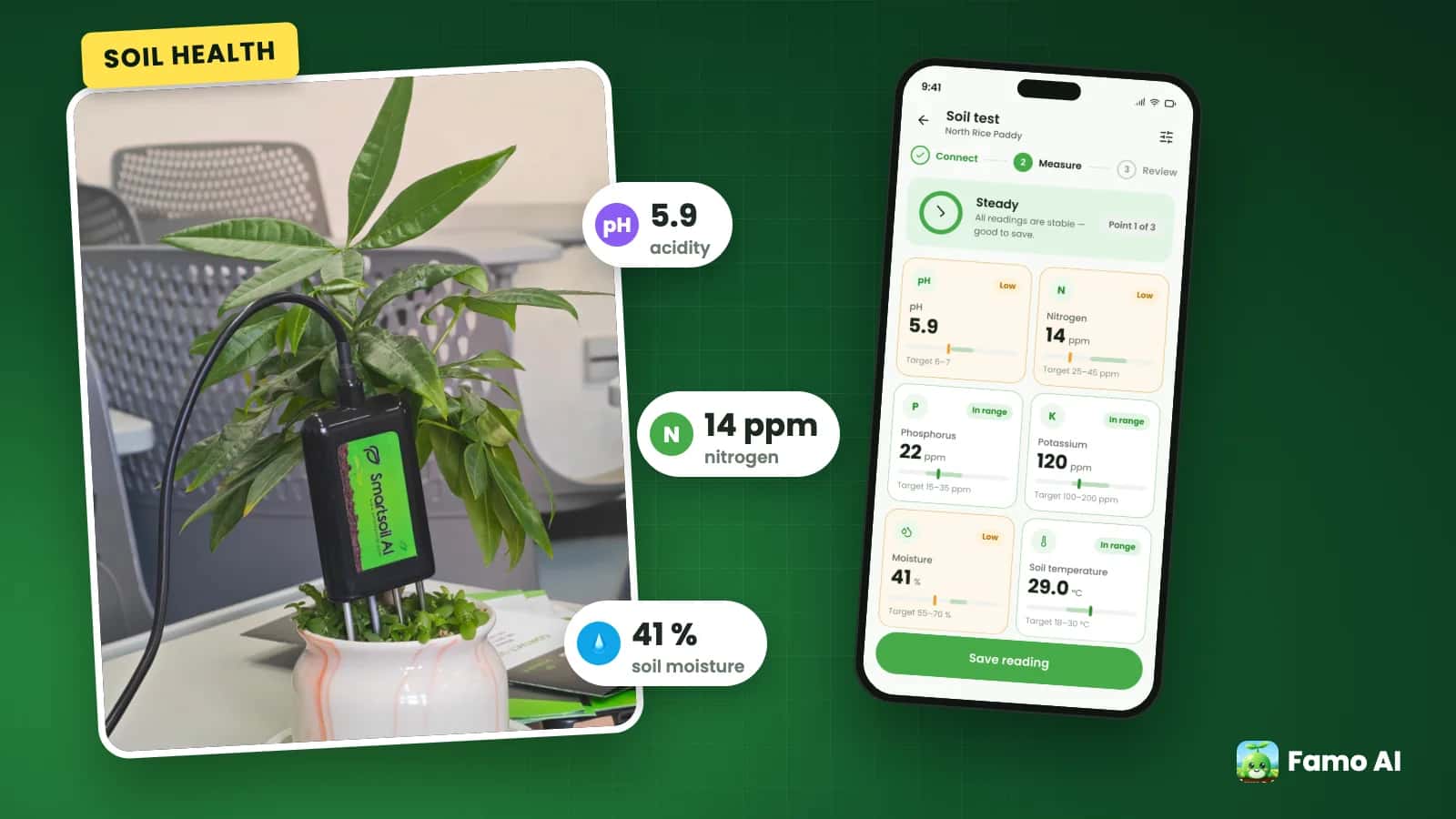
- Wait until the reading is steady. In Famo AI the screen tells you when readings are stable. Do not save a number that is still moving.
- Save the point, then repeat. Take readings at three to five more spots. Famo AI combines them into one summary for the field.
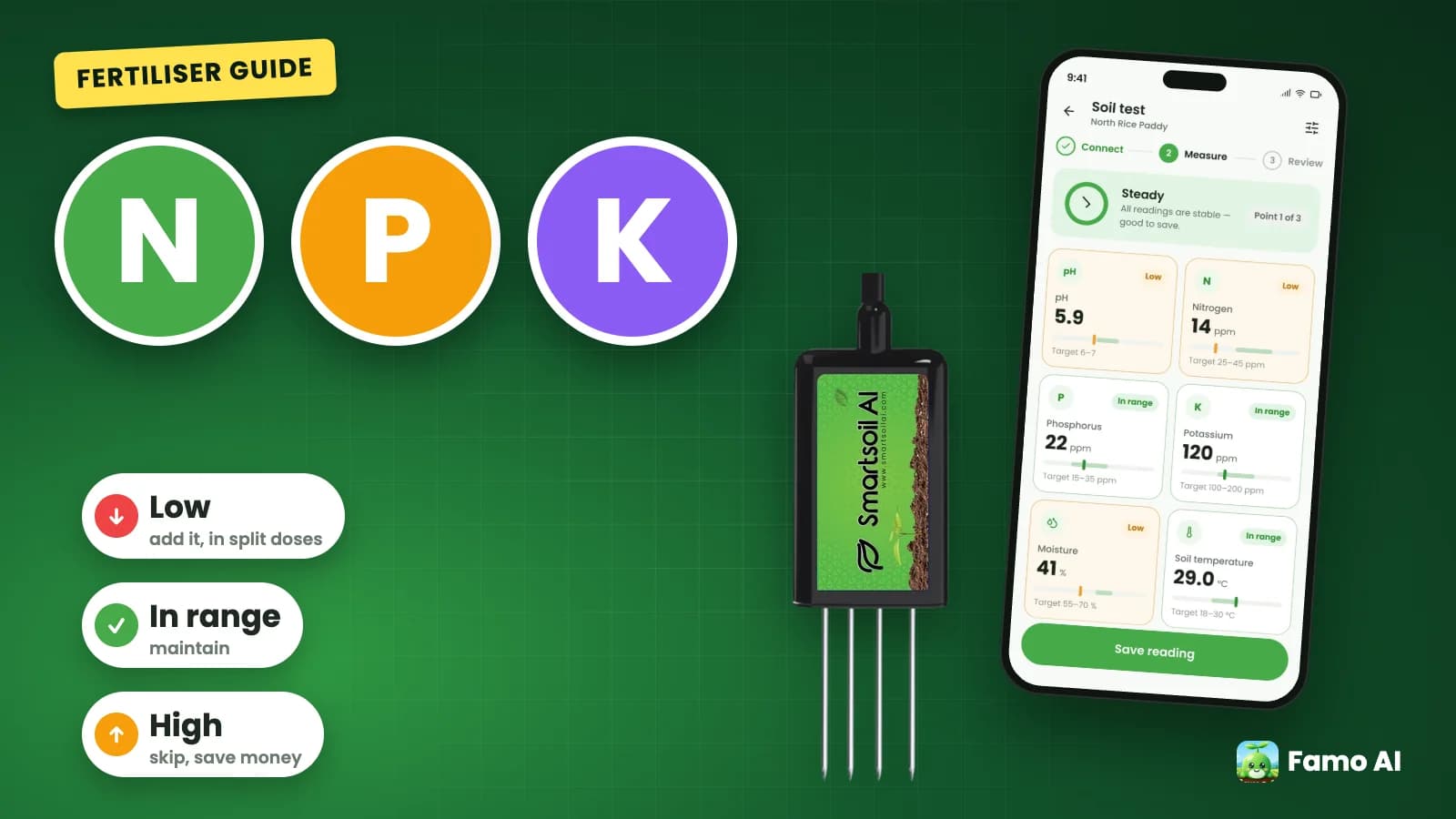
- Check each result against its target range. Anything marked low or high needs attention.
- Write down the date and field name. The real value comes from comparing tests over a season and from year to year.
What does my pH number mean?
| pH | What it usually means | What to think about |
|---|---|---|
| Below 5.5 | Strongly acidic | Some nutrients are hard for roots to take up. Ask a local adviser before adding lime. |
| 5.5 to 6.0 | Slightly acidic | Fine for rice and some crops; watch phosphorus. |
| 6.0 to 7.0 | Best range for most crops | Maintain with organic matter and balanced fertiliser. |
| Above 7.5 | Alkaline | Iron, zinc and phosphorus can become less available. |
Targets differ by crop and by soil, so treat this as a guide and follow your local extension service for exact rates.
Common mistakes to avoid
- Testing right after fertiliser. Wait until it has mixed into the soil, or you will read the fertiliser, not the soil.
- Testing very dry or flooded soil. Readings drift. Test when the soil is moist, not muddy.
- Using only one spot. Fields vary. Always average several points.
- Mixing depths. Take every reading at the same depth, or tests cannot be compared.
- Ignoring pH. If pH is far off, adding more nutrients may not help.
How Famo AI helps
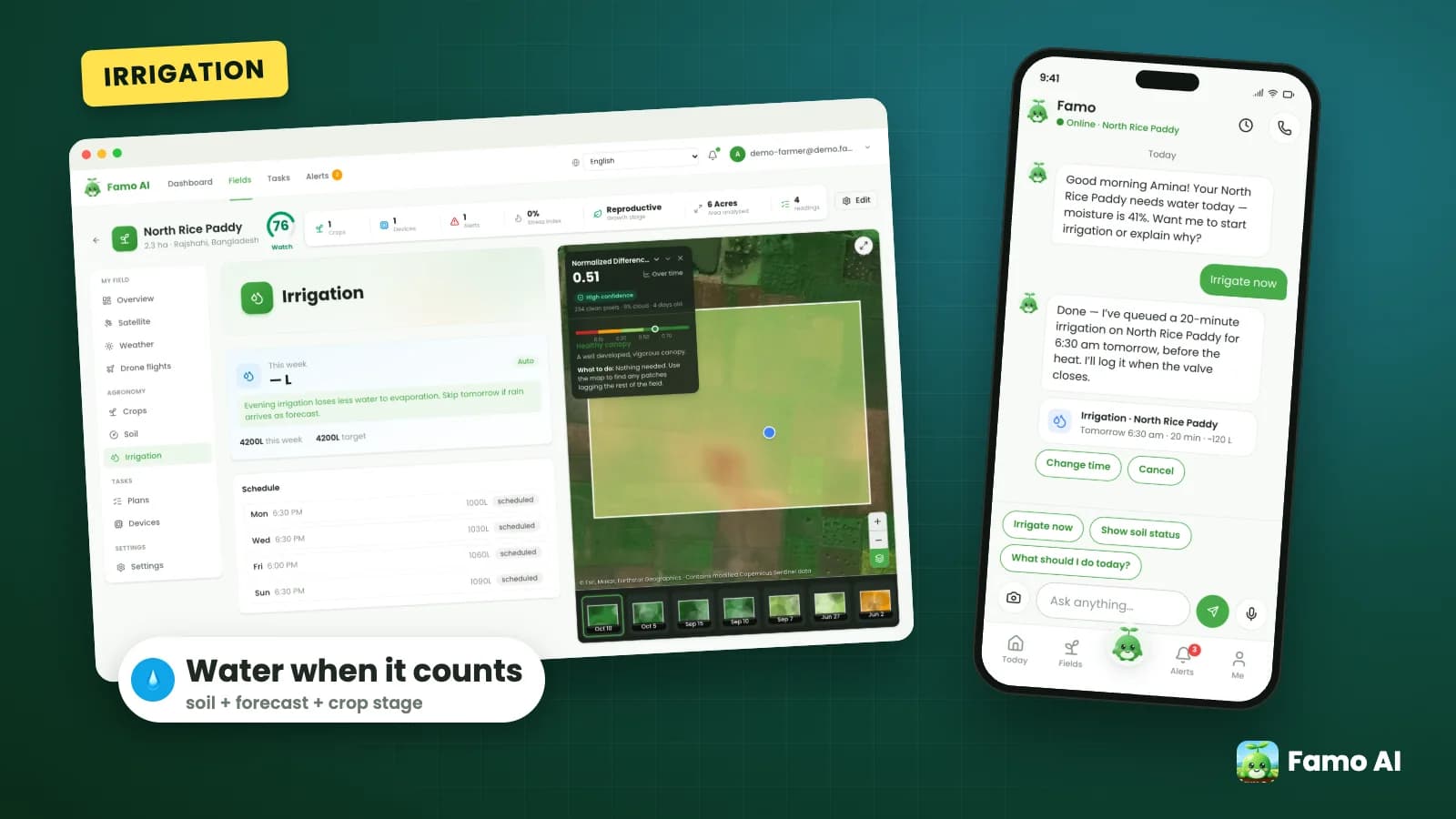
Famo AI turns a reading into a plan. It shows each value next to a target range, marks what is low, in range or high, and adds follow-up tasks to your list. It stores every test, so you can see a trend instead of a single number. Dashboards on the web show the same data on a bigger screen. See how the sensor and app work together on the Famo Open Field page.
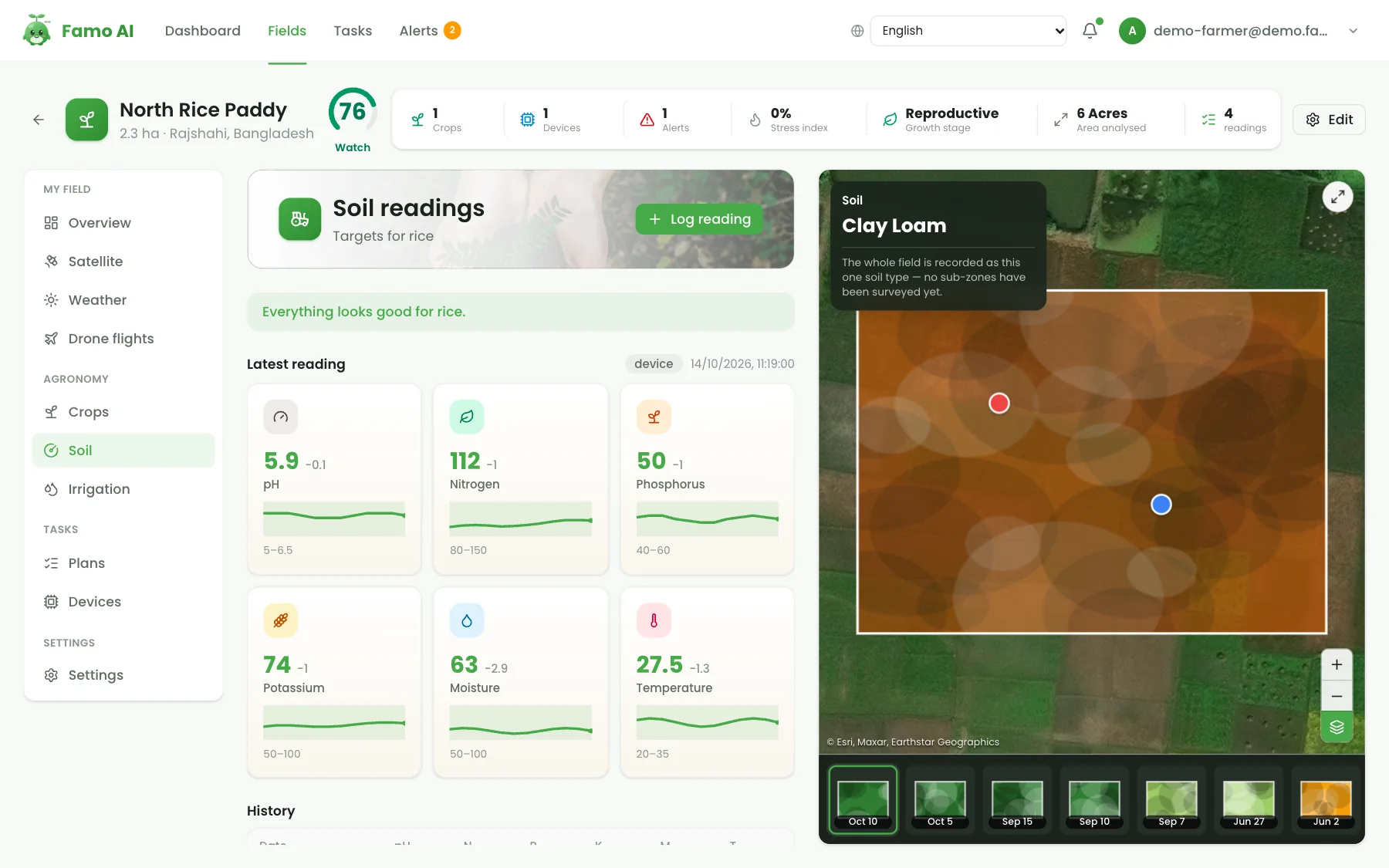
Want to try it yourself? Get Famo AI on Google Play or open the live demo, no sign-up needed.
Frequently asked questions
How often should I test my soil?
Test before planting, again at a key growth stage, and after harvest. If you change fertiliser or irrigation, test again to see the effect.
Can I test soil with only a phone?
A phone alone cannot measure soil. You need a sensor or a lab test. The phone shows and explains the results, keeps your history and plans what to do next.
How accurate is a field soil sensor?
A field sensor gives a quick, useful estimate that is excellent for spotting differences between spots and tracking change over time. For large fertiliser decisions, check it against a laboratory test now and then.
Does it work for every crop?
The readings apply to any crop, but the target ranges depend on the crop. Always compare results with your crop's needs and your local advice.
Sources and further reading
- FAO Soils Portal, an introduction to soil health and management
- Famo AI: how it works
- Soil testing in seconds with the SmartSoil 8-in-1 sensor