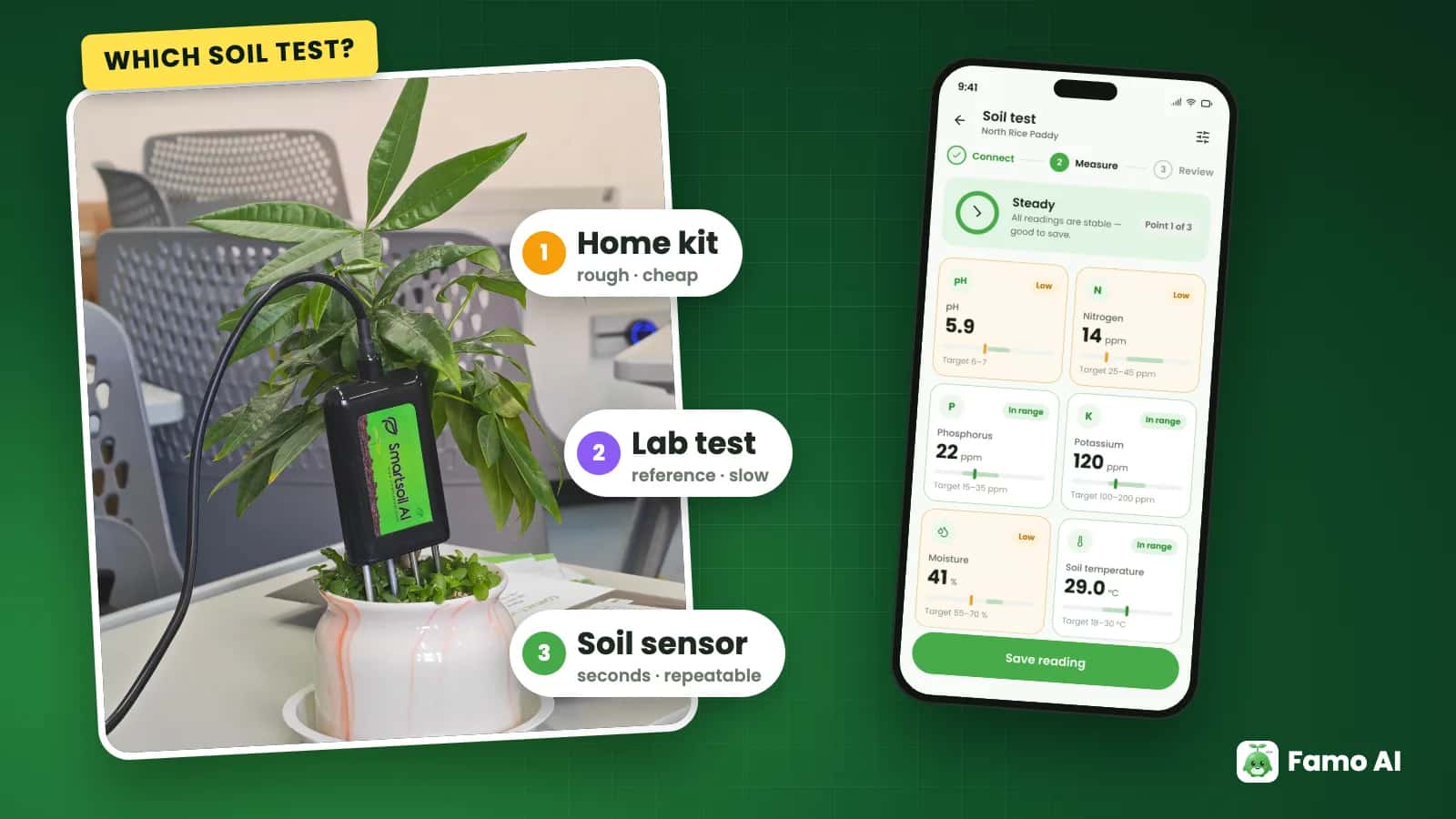
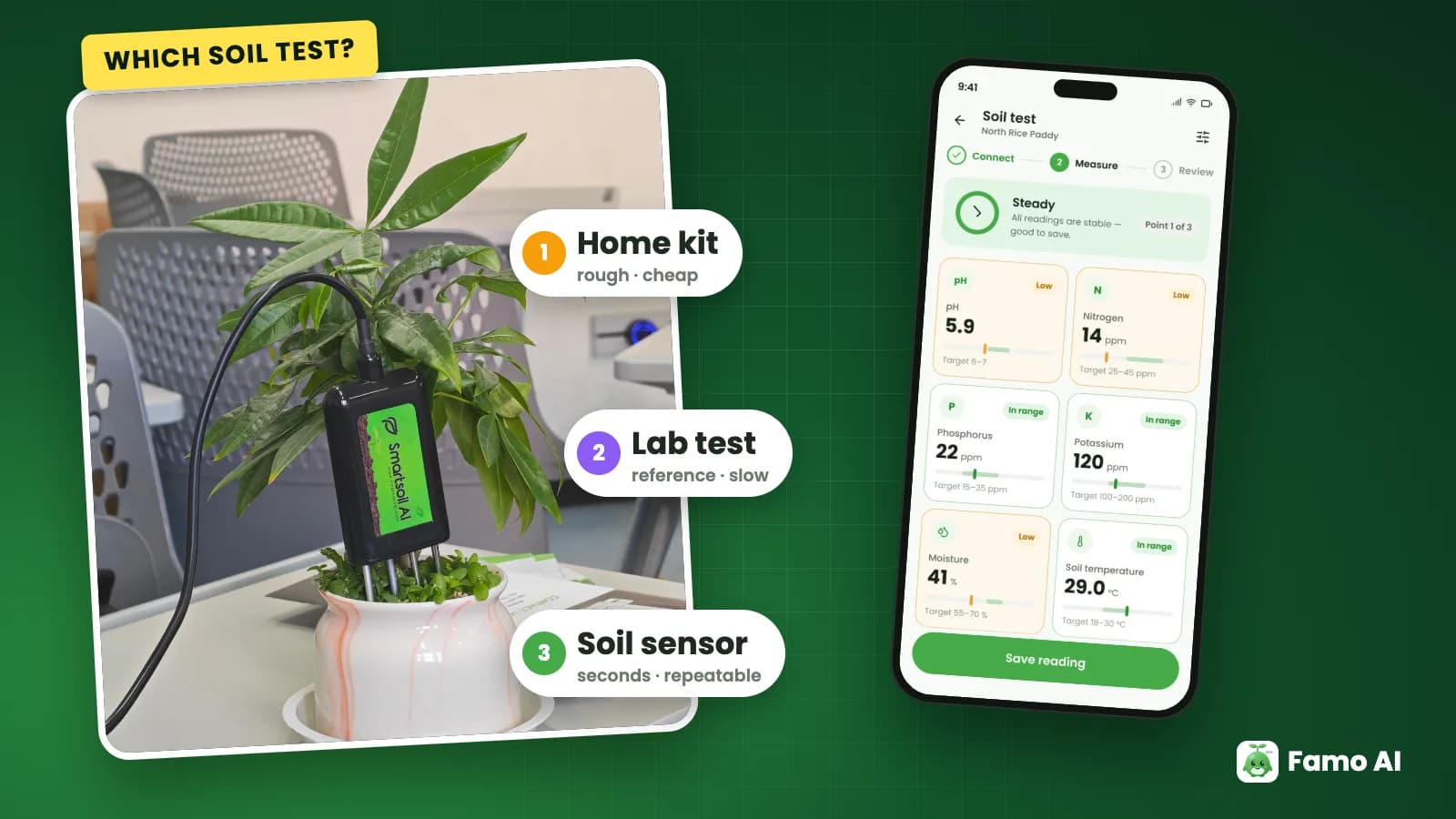
There are three common ways to test soil: a home kit, a laboratory test and an electronic sensor. Each has a job. This comparison helps you pick without overpaying or relying on the wrong tool.
In short
- Kits are cheap and rough, good for a first look at pH and basic nutrients.
- Labs are the reference, best for big fertiliser decisions and documentation.
- Sensors are fast and repeatable, best for frequent checks and tracking change.
- Many farms combine a sensor with an occasional lab test.
Side by side
| Home kit | Laboratory | Soil sensor | |
|---|---|---|---|
| Cost per test | Low | Medium | Very low after purchase |
| Speed | Minutes | Days to weeks | Seconds |
| Accuracy | Rough | Highest | Good field estimate |
| Measures | pH, sometimes N, P, K by colour | Wide range, organic matter, micronutrients | pH, N, P, K, moisture, temperature and more |
| Best for | A first look | Major decisions, certification | Frequent checks, trends, many points |
| Weakness | Subjective colours | Slow, one-off | Needs correct use and occasional lab check |
How to choose
- Starting out, small plot: a kit is enough to learn your pH.
- Planning a big fertiliser spend or certification: send samples to a lab.
- Managing fields season after season: a sensor gives quick, repeatable readings you can track.
- Best value: use a sensor for routine checks and a lab for a yearly cross-check.
Making any test count
Sample 5 to 10 spots at the same depth, average them, avoid testing right after fertiliser and write down date and field so you can compare over time.
How Famo AI helps
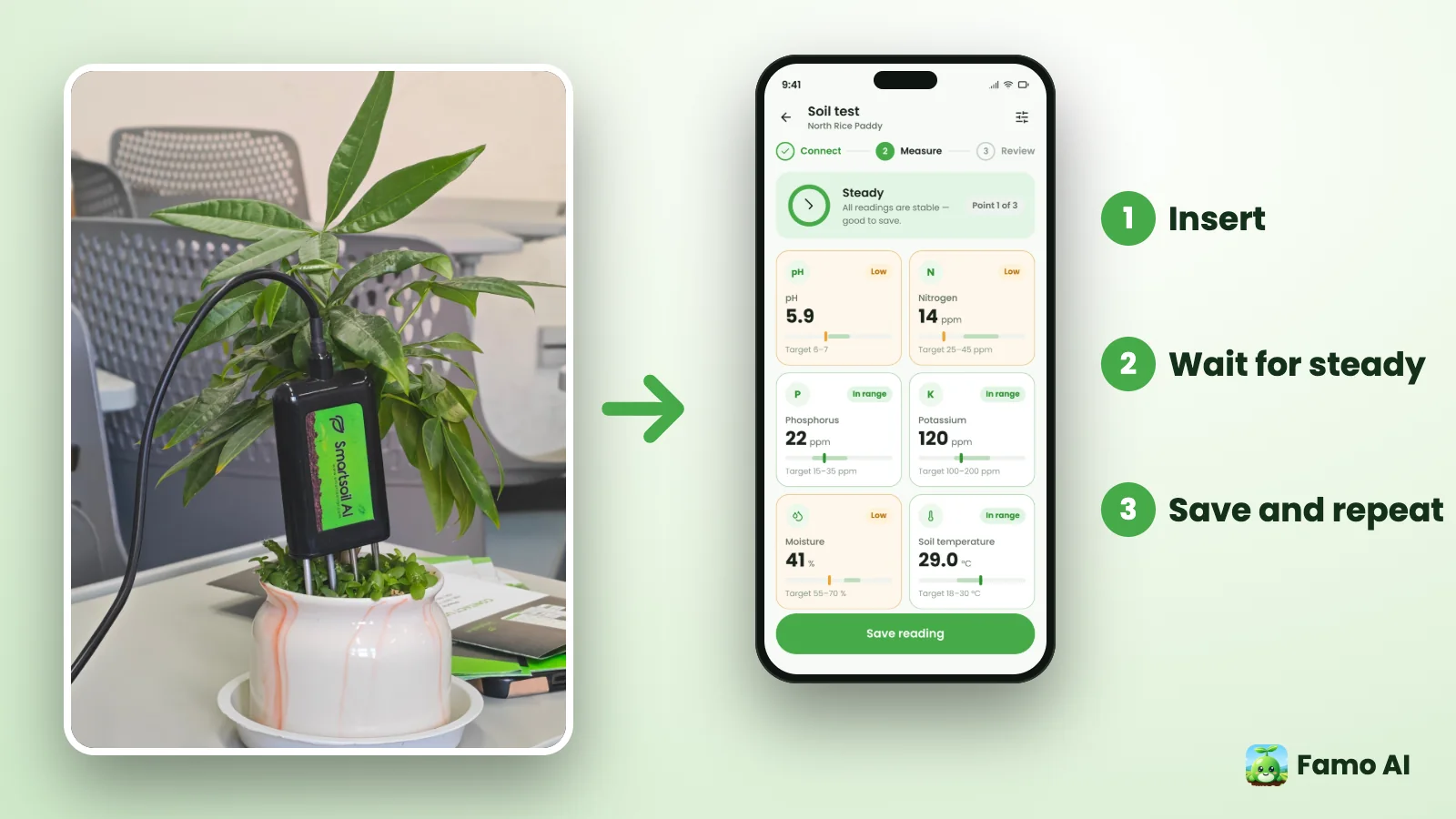
The SmartSoil 8-in-1 sensor with the Famo AI app gives pH, nutrients, moisture and temperature in one reading, shows each against a target range and keeps the history. See soil testing in seconds with the sensor.
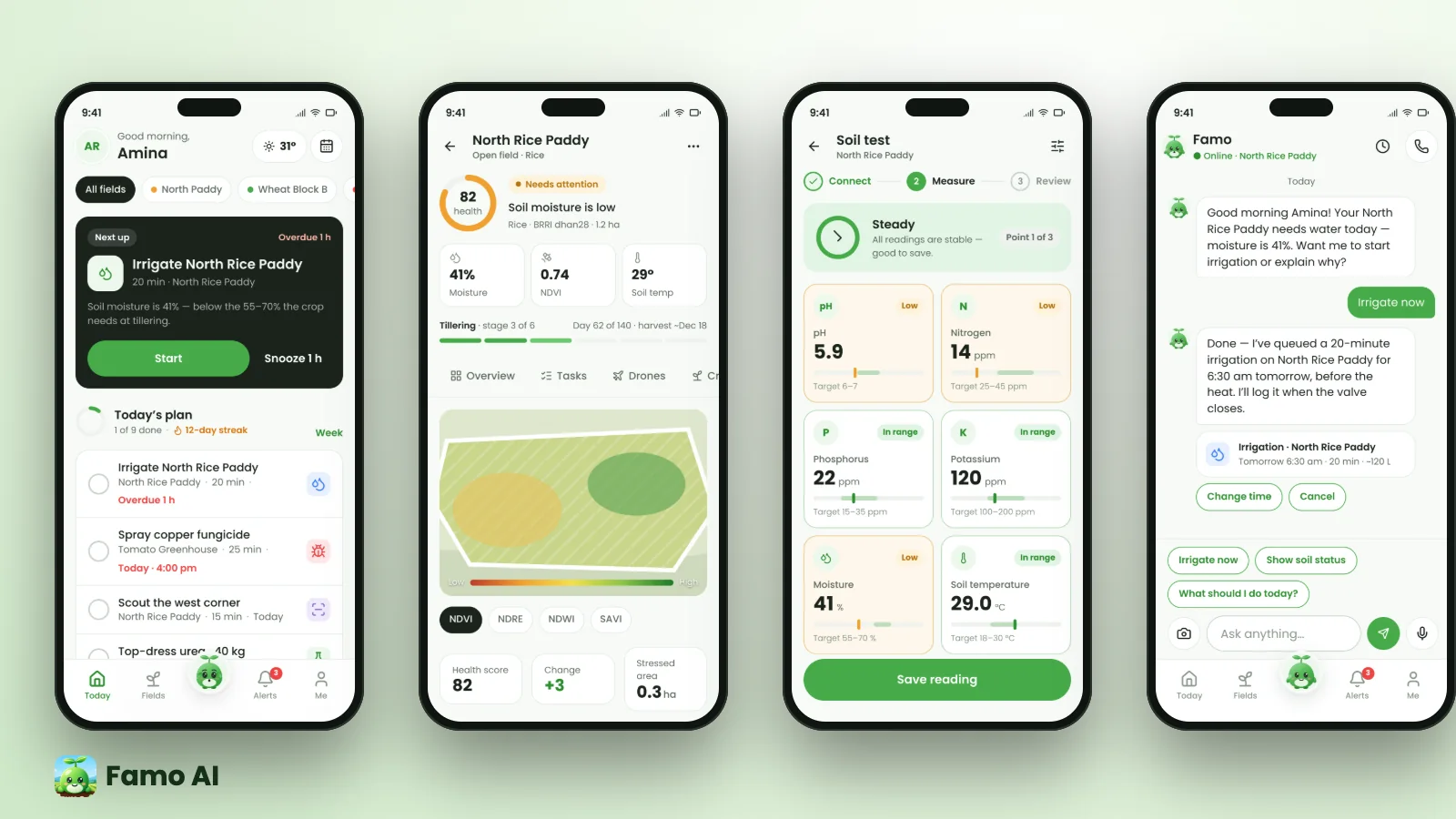
Get Famo AI on Google Play or try the live demo, no sign-up needed.
Frequently asked questions
Are home soil test kits accurate?
They give a rough guide, good for pH and trends, but less precise than a lab.
How much does a lab soil test cost?
It varies by country and what you test for; ask local labs for quotes.
Can a soil sensor replace a lab test?
For routine checks, often yes; for major or official decisions, confirm with a lab now and then.