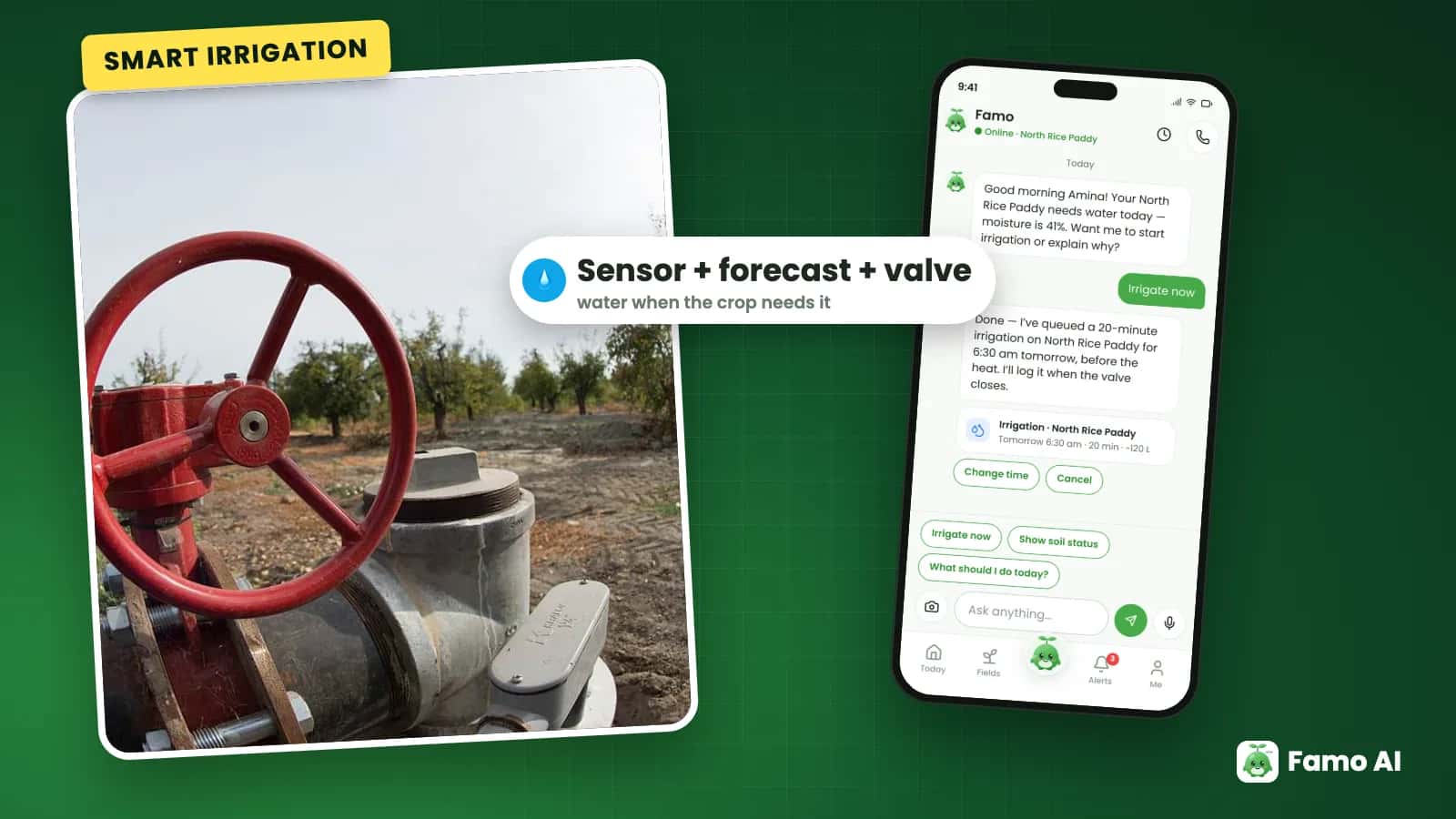
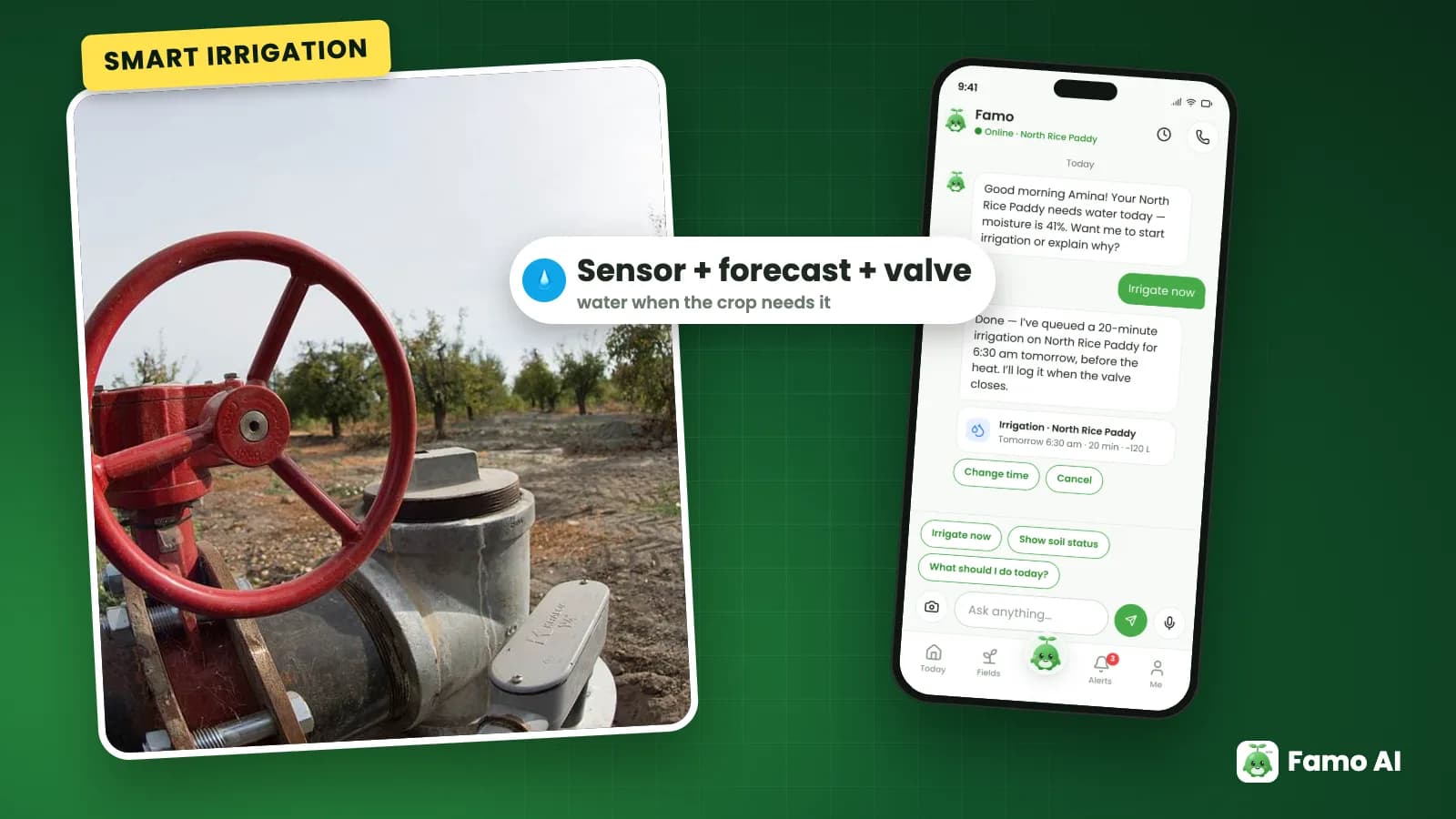
A smart irrigation system waters when the crop needs it, using soil moisture, weather and crop stage, instead of a fixed timer. Here is how it works, what it is made of and when it pays off.
In short
- Smart irrigation = sensors + weather + a controller that decides.
- Three levels: timer, sensor-triggered, and AI-planned.
- Savings depend on how you irrigated before. Measure your water use first.
- Reliability matters. Waterproofing, calibration and power are the usual weak points.
What it is made of
| Part | Role |
|---|---|
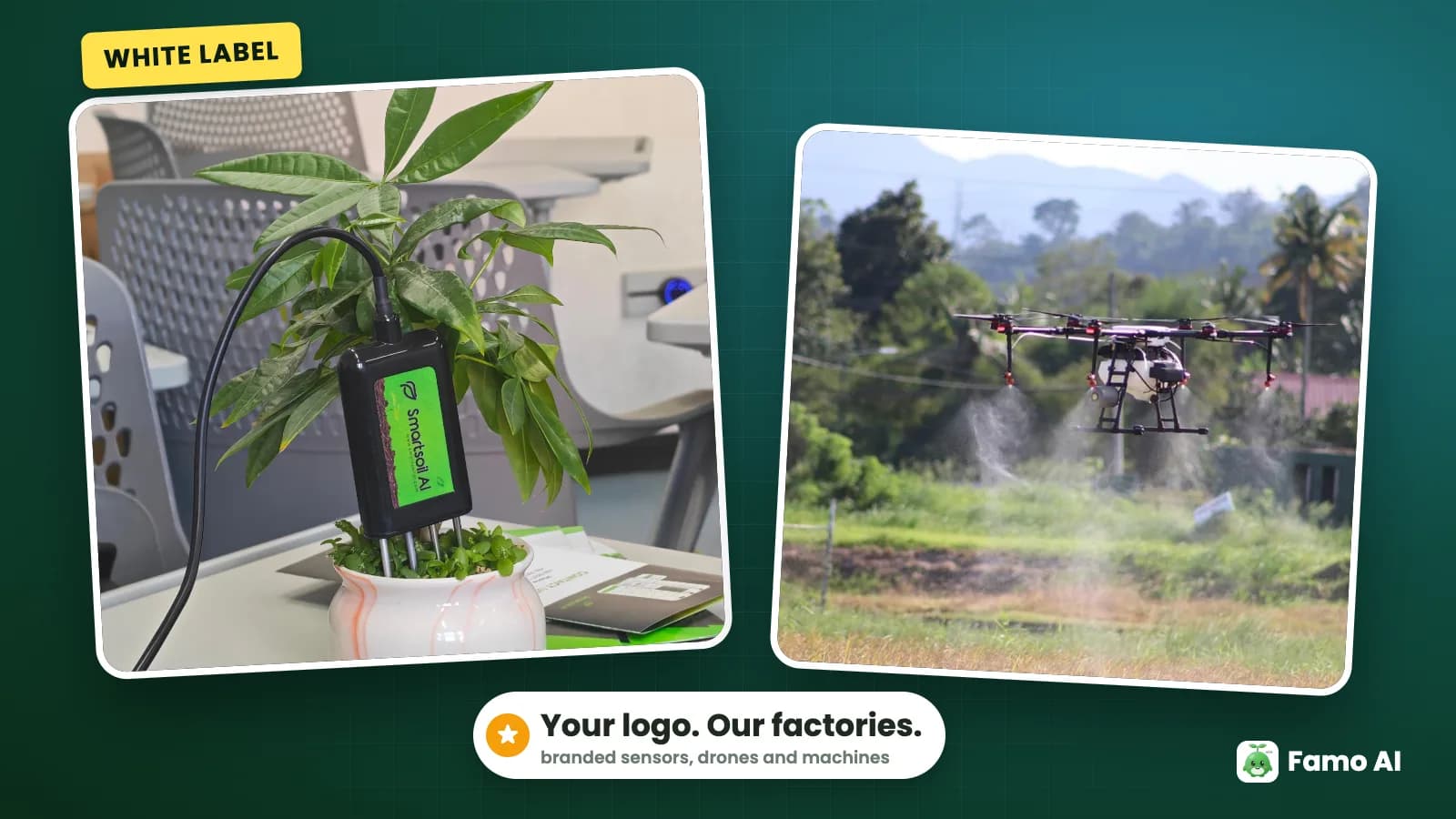
| Soil moisture sensors | Tell the system how dry the root zone is |
| Weather data | Rain, wind and temperature forecasts |
| Controller | Applies the rules and decides when to water |
| Valves and pump | Do the watering |
| App or dashboard | Shows status and lets you override |
Three levels
| Level | How it decides |
|---|---|
| 1. Timer | Fixed times; ignores weather and soil |
| 2. Sensor-triggered | Starts when soil moisture drops below a limit |
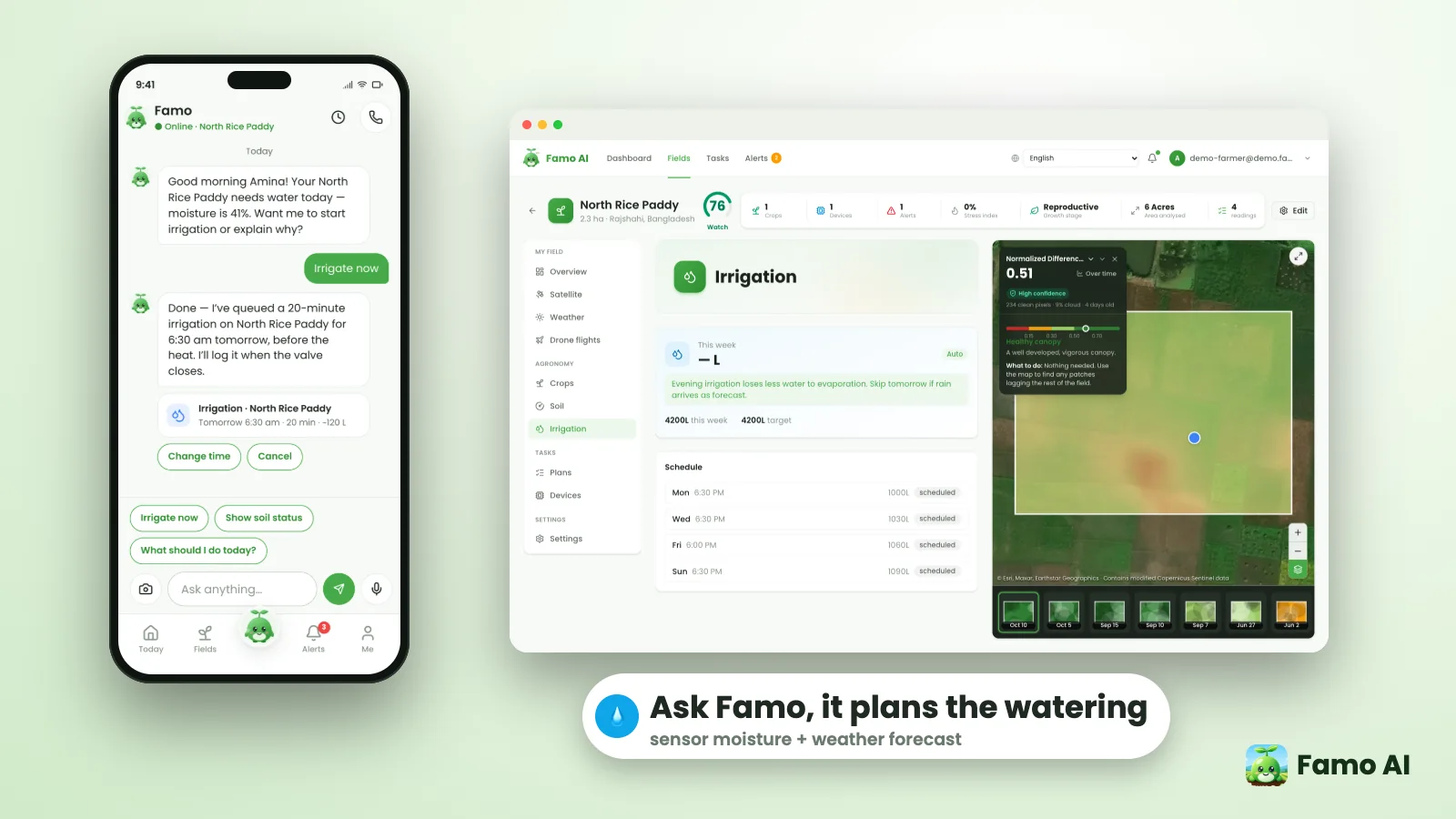
| 3. AI-planned | Combines moisture, forecast and crop stage to plan when and how much |
DIY or ready-made?
Hobby kits using microcontrollers and cheap sensors are popular and fine for learning. For a working farm, check that sensors are rugged and waterproof, readings are calibrated and the system keeps working through power or signal loss.
When it is worth it
It tends to pay off where water or pumping is costly, crops are high value or irrigation was previously over-generous. Track litres or pump hours before and after.
How Famo AI helps
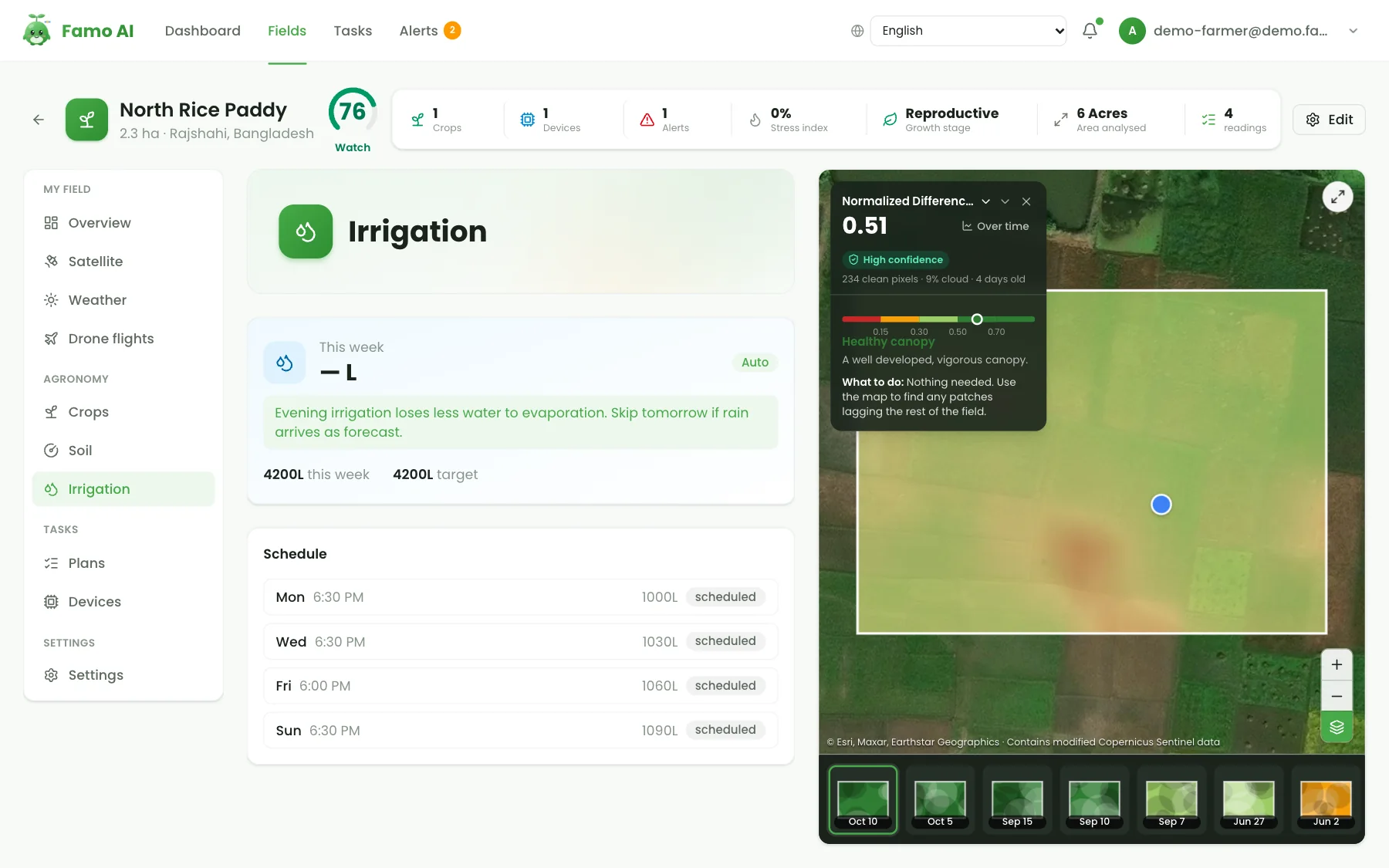
Famo AI plans irrigation from your soil moisture, the field forecast and the crop stage, and compatible smart irrigation devices can connect to the same dashboard. You stay in control and can approve or change any plan.
Get Famo AI on Google Play or try the live demo, no sign-up needed.
Frequently asked questions
How does a smart irrigation system know when to water?
It reads soil moisture, checks the forecast and applies rules or AI planning for your crop stage.
Do I need an internet connection?
Cloud planning and forecasts do; a simple sensor-and-valve setup can run locally.
How much water can it save?
It depends on your starting point; measure your usage before and after.