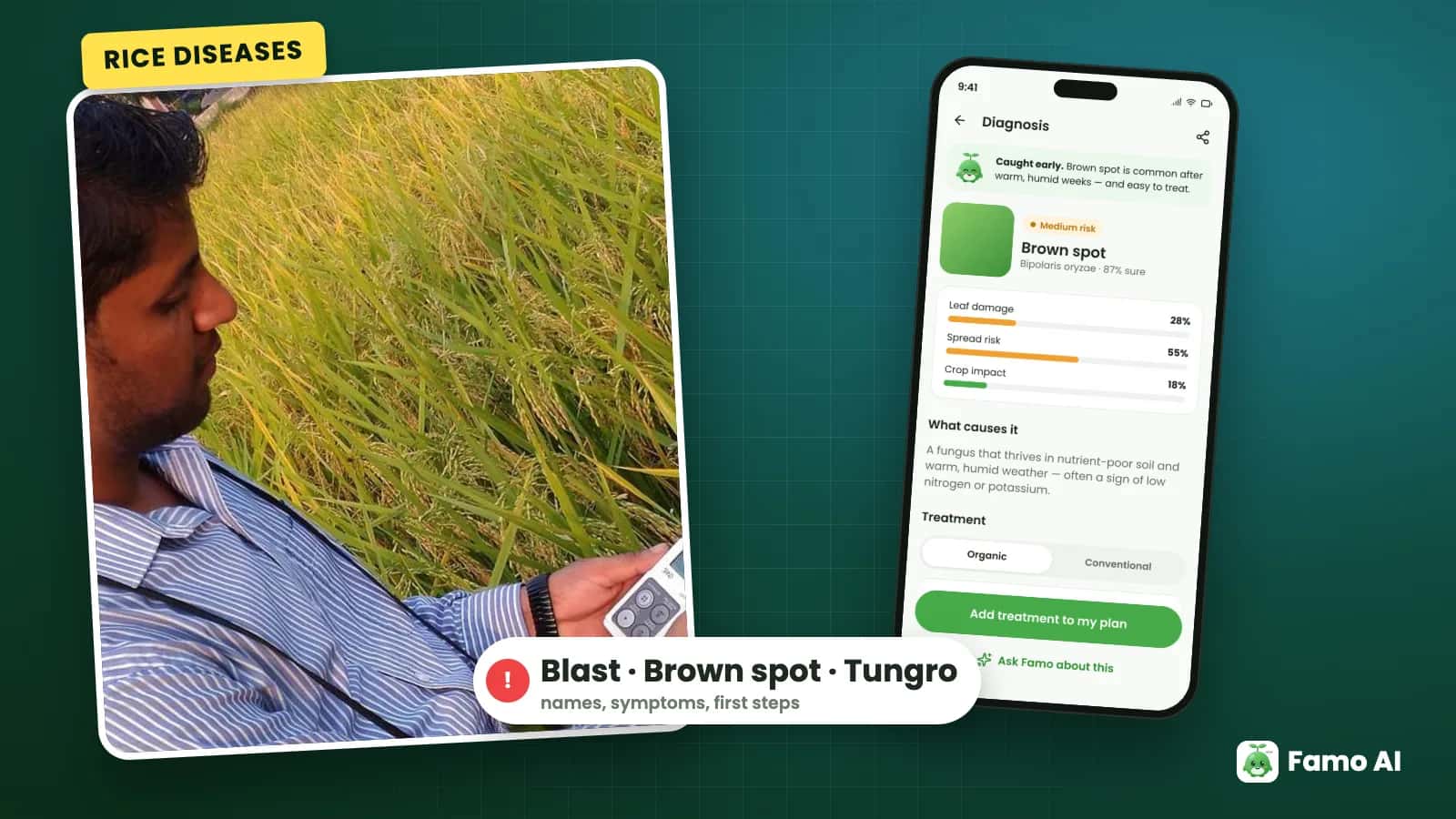
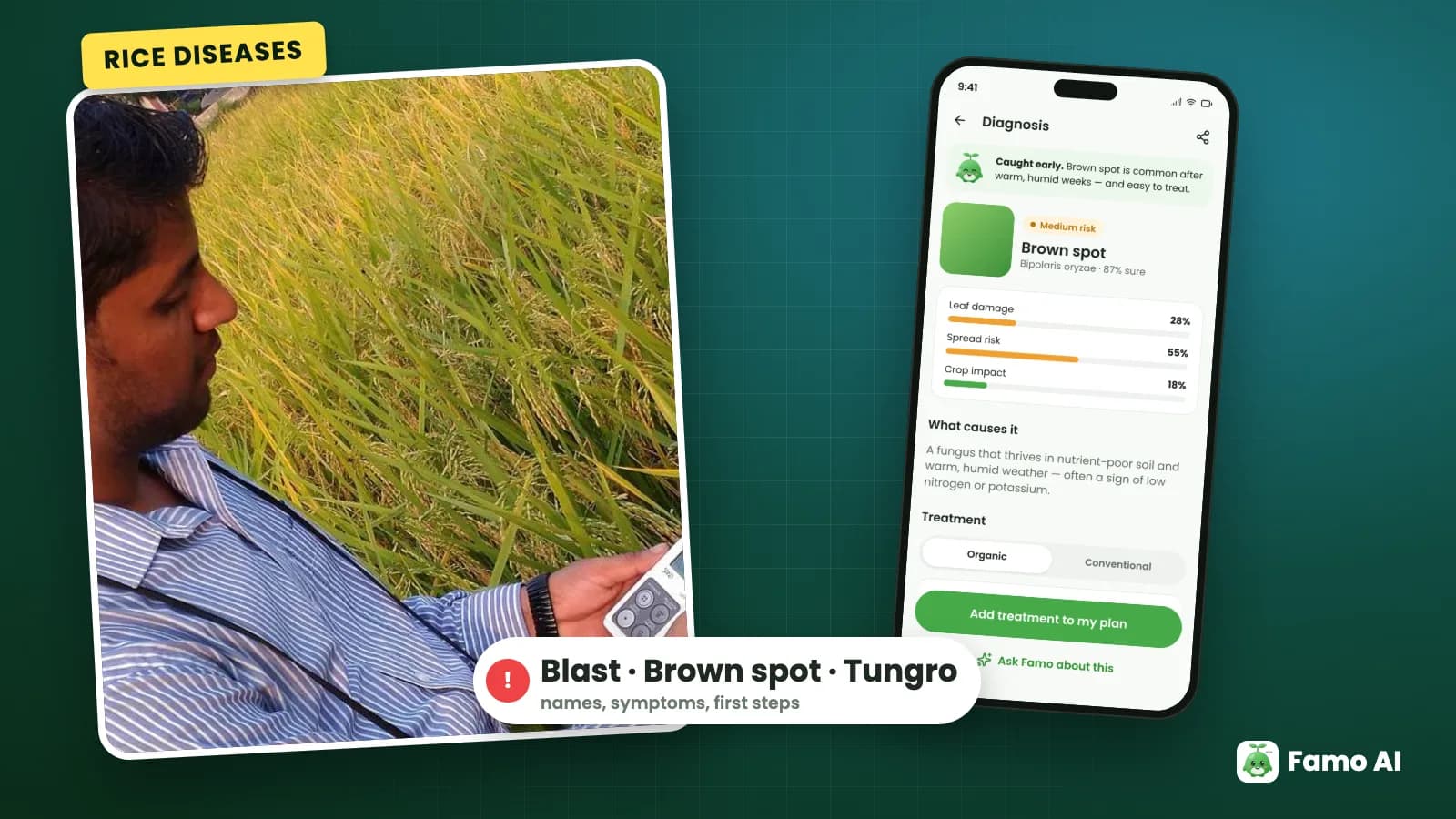
Knowing the names and symptoms of rice diseases helps you act while treatment is still cheap. This list covers the diseases farmers meet most, what each looks like, what favours it and what to do first. For help taking a diagnostic photo, see our rice leaf disease photo guide.
In short
- Look at the lesion shape, the colour and where on the plant it starts. That pattern identifies most diseases.
- Excess nitrogen, humidity and standing wet leaves favour many rice diseases.
- Balanced fertiliser, clean seed and good water management prevent more than they cure.
- Confirm with your local extension officer before spraying anything.
Main rice diseases at a glance
| Disease | What you see | Favoured by | First step |
|---|---|---|---|
| Blast | Diamond or spindle spots with a grey centre; neck rot on the panicle | High humidity, cool nights, too much nitrogen | Avoid extra nitrogen; get local advice early |
| Brown spot | Small oval brown spots, often with a grey centre | Poor or unbalanced nutrition, stress | Correct nutrition after a soil test |
| Bacterial leaf blight | Water-soaked yellow to straw-coloured streaks from leaf tip or edge | Wet, windy weather, injured leaves | Drain extra water; use resistant varieties next season |
| Sheath blight | Oval greenish-grey lesions on the sheath near the water line | Dense planting, high humidity, heavy nitrogen | Space plants, avoid excess nitrogen |
| Tungro | Yellow-orange leaves, stunted plants | Spread by green leafhoppers | Control the insect, remove infected plants, use resistant varieties |
| False smut | Orange to green velvety balls on grains | Humid, rainy weather at flowering | Local advice on timing; use clean seed |
| Bakanae | Tall, thin, pale seedlings | Infected seed | Use clean or treated seed |
Insect pests often mistaken for disease
| Pest | Sign |
|---|---|
| Leaf folder | Leaves folded lengthways with white scraped streaks inside |
| Stem borer | Dead central shoot in young plants, white empty panicles later |
| Brown planthopper | Patches that dry out and turn brown, "hopper burn" |
What to do first
- Confirm the problem with a clear photo and a second opinion.
- Check nutrition and water before reaching for a spray.
- Remove badly infected material and keep tools and boots clean between fields.
- Use only products registered for rice in your country, at label rates and on your adviser's advice.
- Write down what you did to learn what worked.
How Famo AI helps
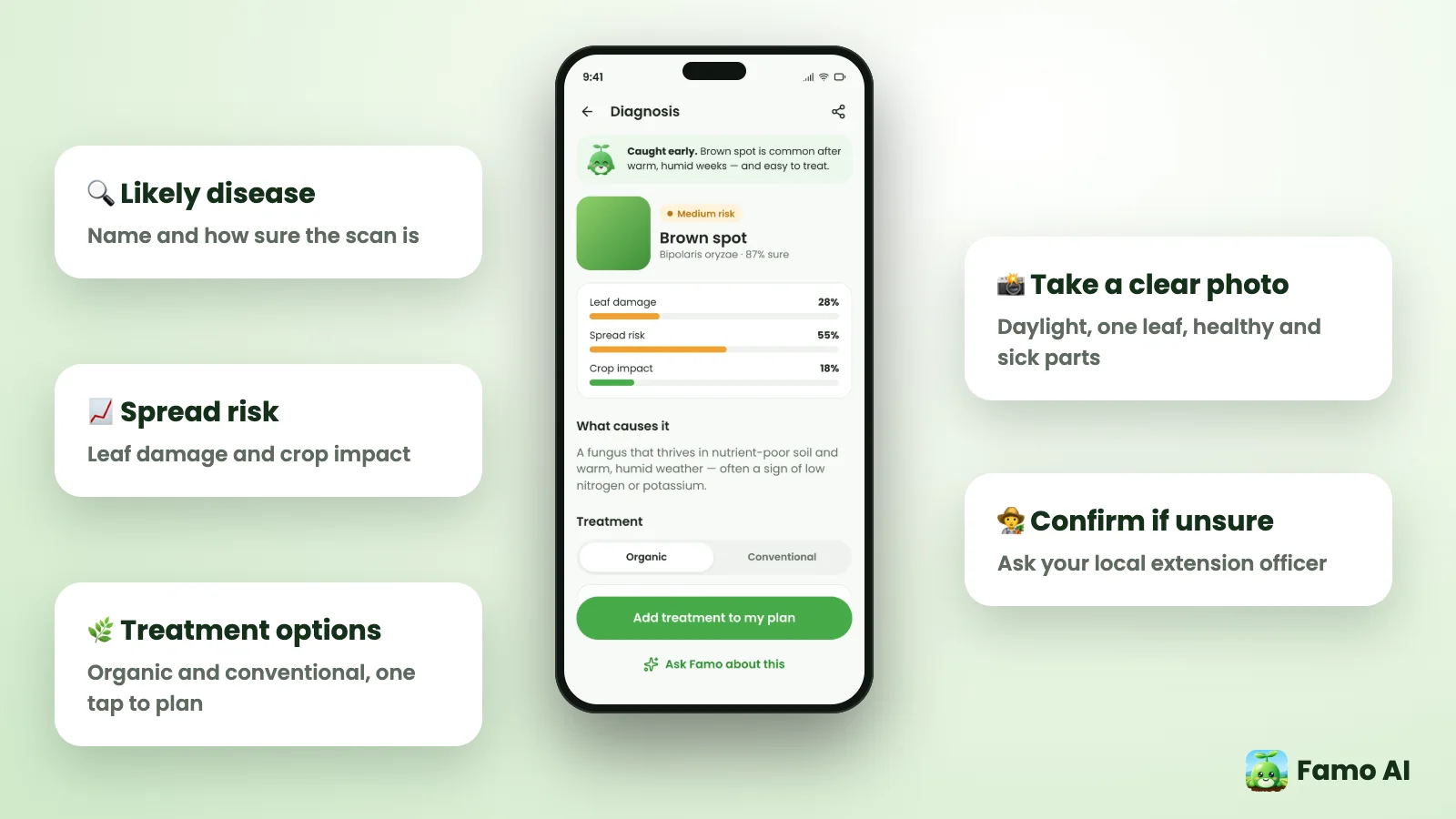
Famo AI can scan a rice leaf photo, name the likely disease, rate the spread risk and add the treatment to your task list, in your own language. It also keeps a history for each field so you can see whether a disease comes back in the same place.

Get Famo AI on Google Play or try the live demo, no sign-up needed.
Frequently asked questions
What is the most common rice disease?
Blast and brown spot are among the most common worldwide, along with bacterial leaf blight and sheath blight. Which one dominates depends on your region and weather.
How can I prevent rice diseases?
Use clean seed and resistant varieties, balance your fertiliser, avoid dense planting, manage water, and scout regularly so you catch problems early.
Can I identify a rice disease from a photo?
Often, yes, for the common ones. Use daylight and a sharp close-up, and confirm serious cases with an expert.